
How to Care for Borage
Borage is an easy sun-loving annual with vivid star-shaped blue flowers; give it full sun, moderate water, and light soil.
Read the full Borage encyclopedia entry →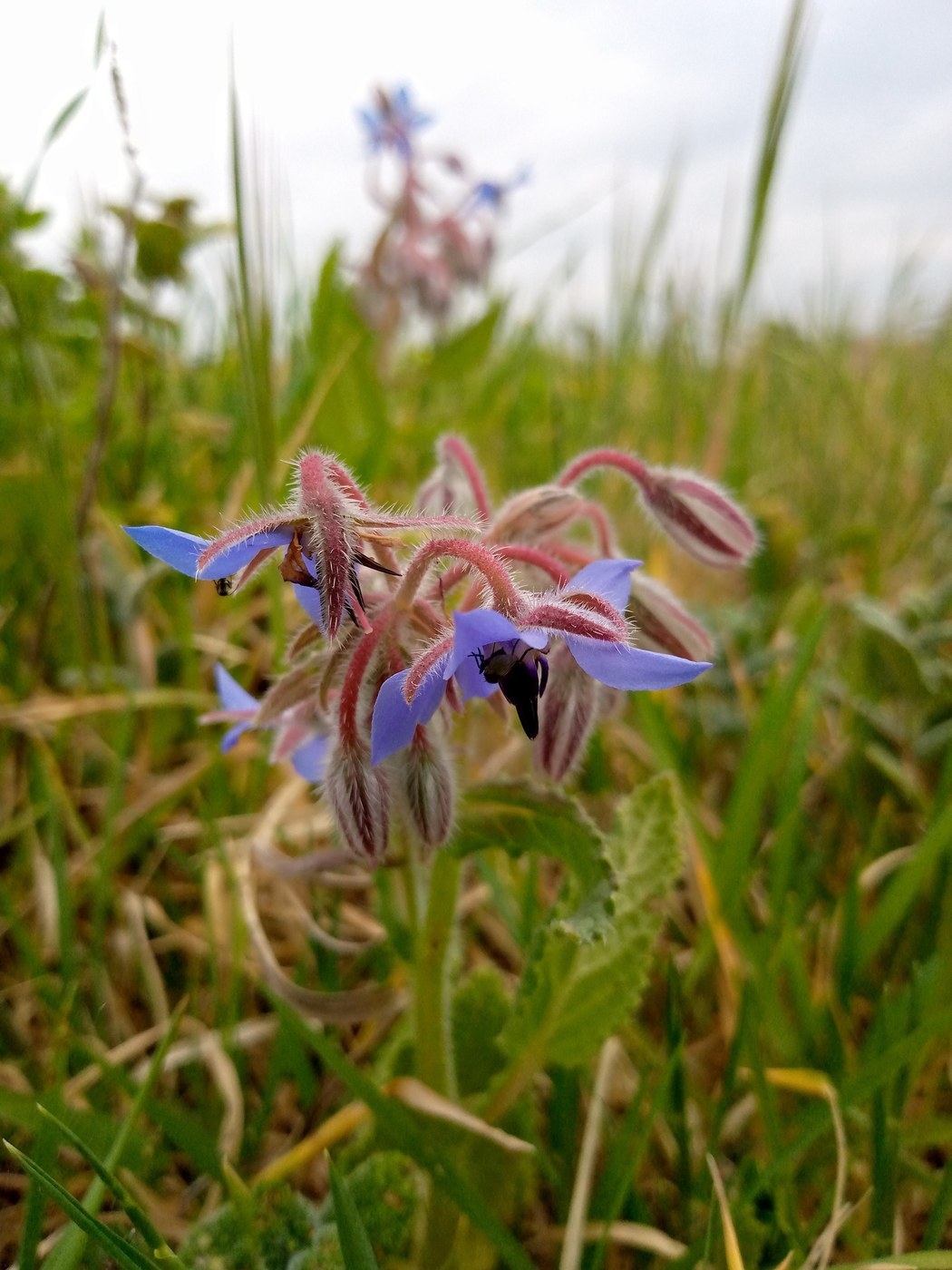
Borage (Borago officinalis) is a fast, easy-going annual with fuzzy grey-green leaves and nodding sprays of vivid, star-shaped blue flowers that pollinators adore. It thrives on neglect in a sunny spot and often self-sows for a return performance.
Light
Grow borage in full sun for the strongest, most upright plants and the heaviest flush of flowers. It will tolerate light partial shade, but plants there tend to grow floppier and bloom less freely. A bright, open position keeps the stems sturdy and the flowering long.
Water
Water moderately and let the topsoil dry between waterings. Borage has a deep taproot and is fairly drought-tolerant once established, so it dislikes constantly soggy soil. Young seedlings need more even moisture, but mature plants are content with occasional deep watering in dry weather.
Soil & Potting
Borage is not fussy and grows in most ordinary, free-draining garden soils, even fairly poor ones. It performs best in a light, well-drained loam of average fertility. Because it forms a long taproot it prefers to be sown where it will grow rather than transplanted, and resents being moved once established.
Humidity & Temperature
As a warm-season annual, borage relishes mild to warm conditions and is not frost-hardy. Sow after the danger of frost has passed. It is unbothered by ordinary outdoor humidity and appreciates good air movement, which helps keep the foliage dry and healthy.
Feeding
Borage needs little feeding and generally grows lushly in average soil without supplementary fertilizer. Overfeeding, especially with high-nitrogen products, produces soft, floppy growth and fewer flowers. A thin scattering of compost at planting is more than enough for a strong plant.
Propagation
Propagate borage from seed, sown directly into the ground where the plants are to grow. Seeds germinate quickly in warm soil. Because it is an enthusiastic self-seeder, once you grow it a season you will often find volunteer seedlings appearing the following year, which are easily thinned or moved when very small.
Repotting / Pruning
No repotting is needed for this direct-sown annual. Pinch out the growing tips of young plants to encourage a bushier habit, and snip off spent flowering stems to tidy the plant and prolong blooming. Removing some seed heads before they scatter helps control unwanted self-sowing.
Common Problems & Pests
Borage is largely trouble-free. Aphids can gather on the soft new growth and flower stems, and are easily dislodged with a jet of water. In humid, crowded conditions powdery mildew may whiten the leaves late in the season, so space plants for airflow. Overly rich soil or too much shade leads to weak, sprawling stems that may need support.
Seasonal Care Tips
Sow in spring once frost has passed, thinning seedlings to give each plant room. Through summer, deadhead to keep the flowers coming and water in dry spells. Plants naturally decline in late summer to autumn; leave a few seed heads if you want volunteers next year, or clear the plants and lightly cultivate the soil once flowering ends.
Frequently asked questions
Does borage come back every year?
Borage is an annual, so individual plants live for a single season. However, it self-seeds so freely that it often reappears in the same area year after year from dropped seed, giving the impression of a returning plant.
Why is my borage flopping over?
Floppy, sprawling borage usually means too little light or overly rich soil. Grow it in full sun on average, free-draining soil and avoid high-nitrogen feeding. Pinching young plants encourages a sturdier, bushier habit.
Can I grow borage in a pot?
Yes, but choose a deep container because borage forms a long taproot. Use a free-draining mix, place it in full sun, sow the seed directly, and water moderately, letting the topsoil dry between waterings.
How do I stop borage from spreading everywhere?
Remove most of the flowering stems before the seed heads mature and scatter their seed. Deadheading regularly through summer both prolongs the display and greatly reduces the number of volunteer seedlings the following year.