Borage
Borago officinalis
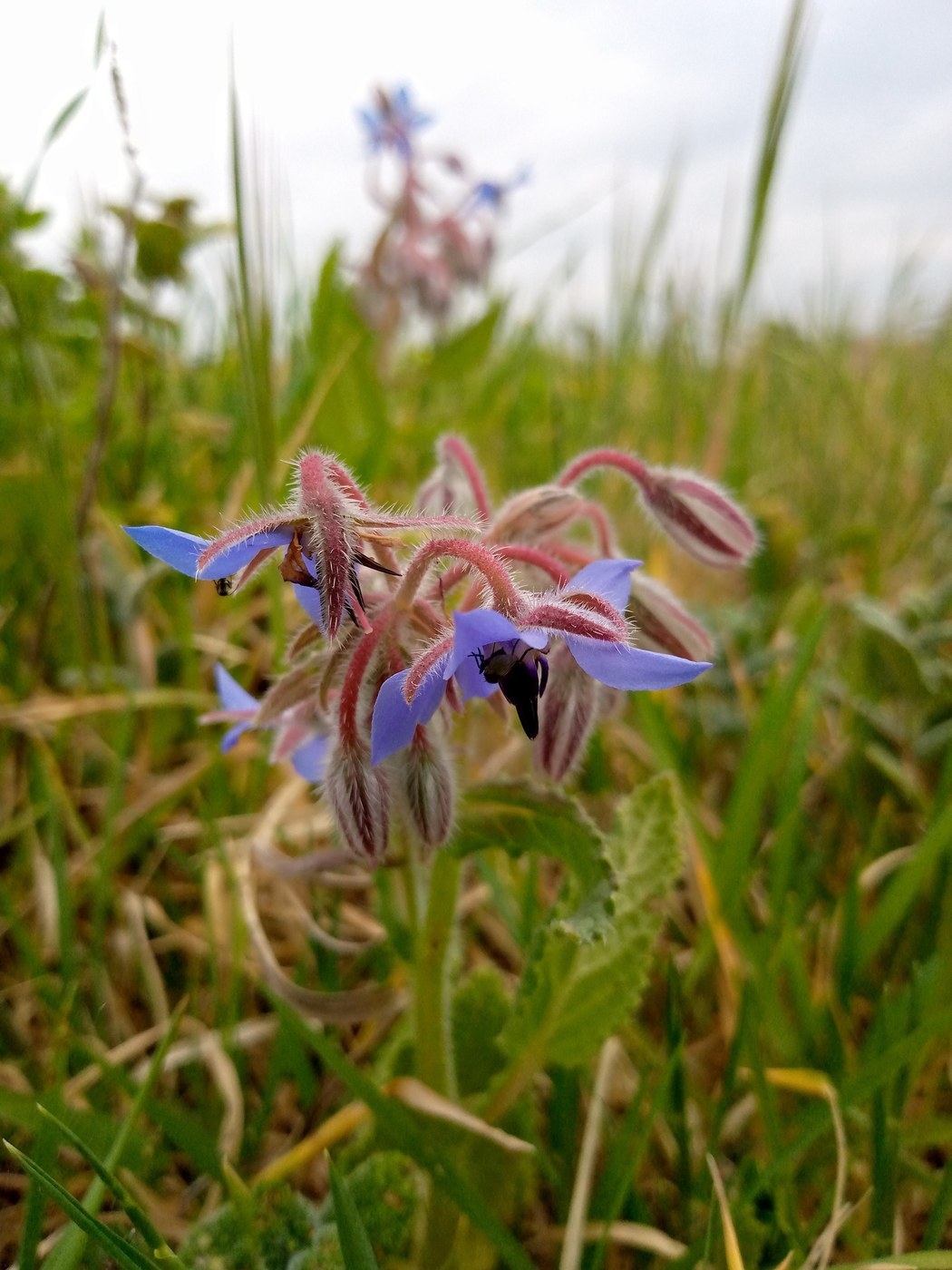
A fast-growing annual herb with brilliant blue star-shaped flowers and bristly, cucumber-scented leaves. A magnet for bees, it self-seeds freely and is a favorite of pollinator gardens.
- Light
- Full sun
- Water
- Moderate; let topsoil dry
- Difficulty
- Easy
Got a plant like this?
Identify any plant from a photo, free.
Overview
Borage is a robust annual herb famed for its vivid blue, downward-nodding star-shaped flowers and its bristly leaves that smell mildly of cucumber. It grows quickly and self-sows so readily that it often returns year after year.
A classic cottage-garden and companion plant, borage is beloved by bees and beneficial insects. Its bright blooms and easygoing nature make it a staple of informal and pollinator-friendly gardens.
How to identify it
- Vivid blue, five-petaled star-shaped flowers with a cone of black stamens, nodding on hairy stalks
- Large, oval, wrinkled leaves covered in coarse bristly hairs
- Sturdy, hollow, hairy stems reaching 60-100 cm (2-3 ft)
- Leaves and young stems smell of cucumber when crushed
- Self-seeds prolifically
Care & growing
Borage practically grows itself.
- Light: Full sun (tolerates light shade)
- Water: Moderate; let the topsoil dry between waterings
- Soil: Tolerates poor soils but prefers well-drained ground
- Temperature: Warm-season annual; killed by frost but self-sows for the next year
- Feeding: Minimal; thrives without much fertilizer
- Propagation: Direct-sow seed; it readily self-seeds and may pop up around the garden
Habitat & origin
Native to the Mediterranean region, borage has naturalized across Europe, North America, and other temperate areas.
It grows in sunny, disturbed ground, gardens, field margins, and waste places, thriving in a wide range of soils and self-seeding wherever it grows.
Frequently asked questions
How do I identify borage?
Look for vivid blue, five-petaled star-shaped flowers with a central cone of black stamens, nodding on hairy stalks above large, wrinkled, bristly leaves.
Why is borage good for the garden?
It is a powerful bee and pollinator magnet and a useful companion plant, especially near tomatoes, squash, and strawberries.
Does borage come back every year?
It is an annual, but it self-seeds so freely that new plants reliably appear each year, making it behave like a perennial in the garden.
Borage guides
In-depth guides for identifying, growing, and caring for Borage.
How to Care for Borage
Borage is an easy sun-loving annual with vivid star-shaped blue flowers; give it full sun, moderate water, and light soil.
Borage Identification Guide
How to identify borage (Borago officinalis) by its bristly hairy leaves, drooping star-shaped blue flowers with black anther cones, and cucumber scent.