
How to Care for Bottlebrush
Grow the vivid red Bottlebrush (Callistemon citrinus) with full sun, well-drained soil, and light pruning for a drought-tolerant flowering shrub.
Read the full Bottlebrush encyclopedia entry →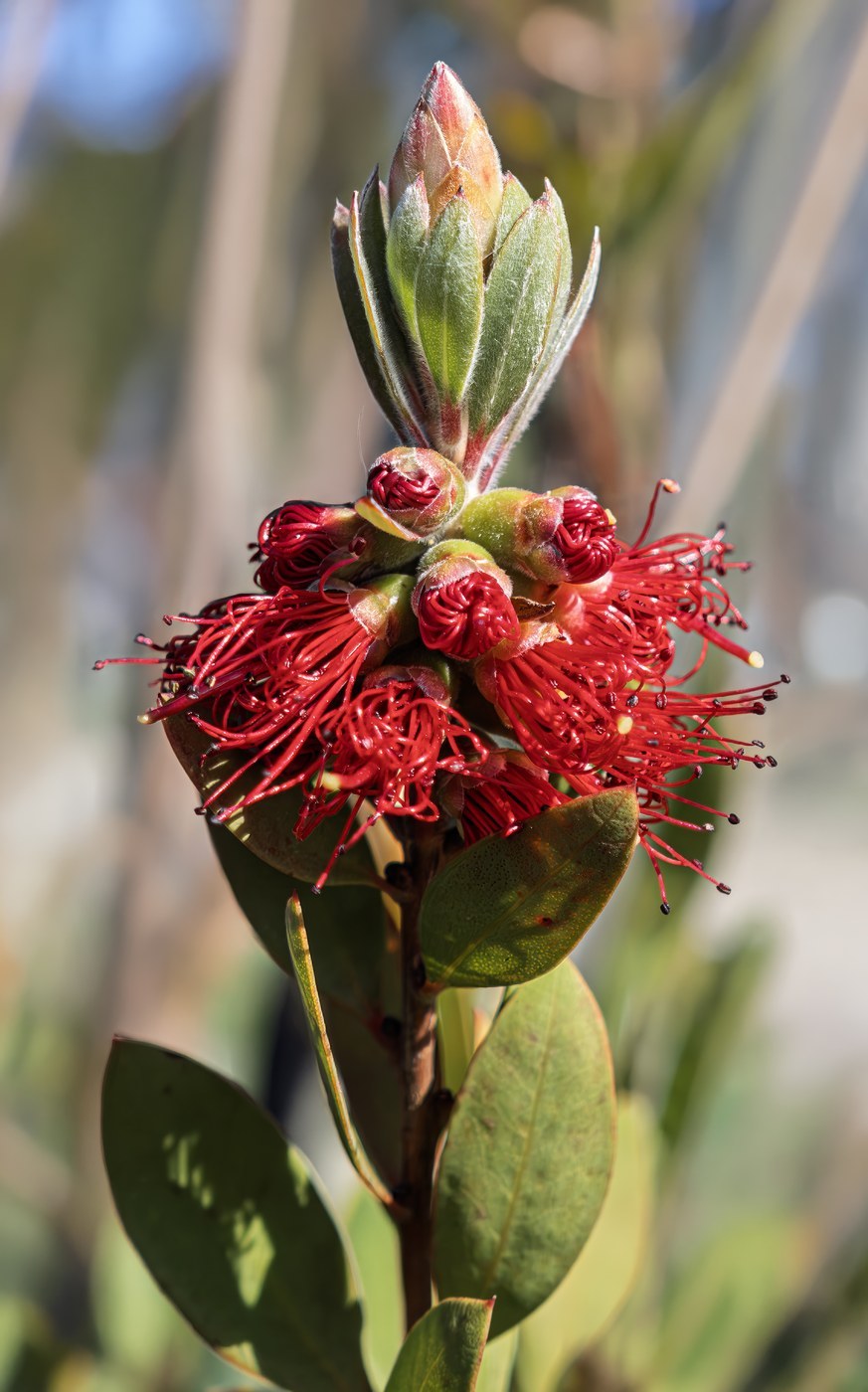
Bottlebrush (Callistemon citrinus) is a sun-loving evergreen shrub famous for its brilliant red, cylindrical flower spikes that resemble a bottle brush. It is an easy, drought-tolerant plant once established, thriving in warm climates and coastal gardens and readily attracting pollinators.
Light
Bottlebrush demands full sun for the best flowering and dense, compact growth. Give it at least six hours of direct sun per day. In too much shade it becomes leggy and produces few of its signature spikes. Position it in the brightest, most open part of the garden or, if container-grown, on a sunny patio.
Water
Water moderately and regularly during the first growing season to establish a strong root system. Once established, bottlebrush is notably drought-tolerant and needs only occasional deep watering during prolonged dry spells. It prefers to dry somewhat between waterings and dislikes constantly soggy soil, though it can also tolerate periodically damp ground.
Soil & Potting
Bottlebrush adapts to a wide range of soils but performs best in well-drained, slightly acidic to neutral soil. Heavy clay should be amended with grit or compost to improve drainage. For containers, use a free-draining potting mix and ensure the pot has ample drainage holes. It tolerates poor and sandy soils better than most flowering shrubs.
Humidity & Temperature
This is a warm-climate shrub that thrives in heat and tolerates coastal conditions and salt spray. It handles average to low humidity well. Mature plants tolerate light frost, but young plants and tender new growth can be damaged by hard freezes, so protect them or grow them in containers that can be moved under cover in cold regions.
Feeding
Feed lightly in spring with a low-phosphorus fertilizer, as bottlebrush (like many Australian natives) is sensitive to high phosphorus levels, which can damage the roots. A slow-release fertilizer formulated for native plants is ideal. Avoid over-fertilizing, which promotes leafy growth at the expense of flowers.
Propagation
Propagate bottlebrush from semi-hardwood cuttings taken in summer, dipped in rooting hormone and set in a free-draining, moist propagation mix under warm conditions. It can also be grown from seed collected from the woody capsules, which often need the heat of drying to release the fine seeds, though seedlings are slower and more variable than cuttings.
Repotting / Pruning
Prune lightly just after flowering to maintain shape and encourage bushy new growth and more flower spikes the following season; tip-prune the stems back just behind the spent flower spikes. Avoid cutting into old, bare wood, which is slow to regenerate. Container plants should be repotted every couple of years into a slightly larger pot with fresh mix.
Common Problems & Pests
Bottlebrush is generally trouble-free but can suffer from scale insects, mealybugs, and sooty mold that grows on their honeydew; treat with horticultural oil and improve airflow. Iron chlorosis (yellowing leaves with green veins) can occur in alkaline soils. Root rot develops in poorly drained, waterlogged ground, so drainage is key.
Seasonal Care Tips
Most flowering occurs in late spring and summer, with sporadic reblooming possible. Do the main prune right after the flush of flowers to set up next year's display. Water more attentively during the plant's first year and through severe droughts, then reduce watering as it matures. In marginal climates, protect young plants from frost and mulch the root zone in autumn.
Frequently asked questions
Why isn't my bottlebrush flowering?
Too little sun is the usual cause, since bottlebrush needs at least six hours of direct sunlight to bloom well. Over-fertilizing with high-nitrogen or high-phosphorus feed and pruning at the wrong time can also reduce flowering.
How much water does an established bottlebrush need?
Established plants are drought-tolerant and need only occasional deep watering during extended dry periods. Water regularly only during the first growing season while the roots establish.
When should I prune bottlebrush?
Prune right after the flowering flush fades. Tip-prune just behind the spent spikes to encourage bushy growth and more flowers, and avoid cutting into old bare wood, which regrows slowly.
Can bottlebrush grow in a pot?
Yes. Use a free-draining potting mix in a container with good drainage holes, place it in full sun, and repot every couple of years. Container growing also lets you move the plant under cover in frost-prone climates.