Bottlebrush
Callistemon citrinus
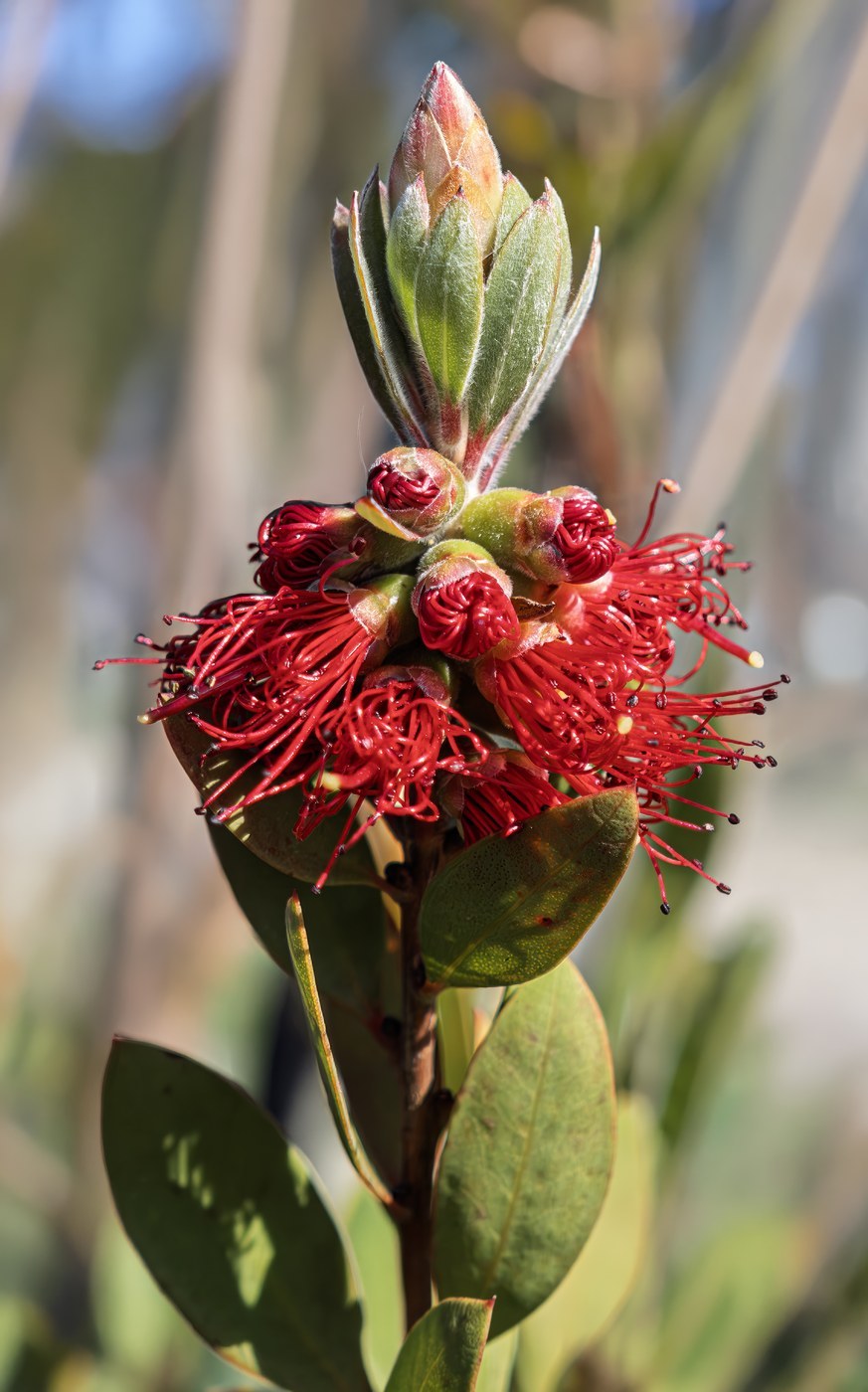
Bottlebrush is an Australian evergreen shrub famous for its cylindrical brushes of bright red flowers that draw hummingbirds and bees. It is heat- and drought-tolerant and blooms for much of the year.
- Light
- Full sun
- Water
- Moderate; drought-tolerant once established
- Difficulty
- Easy
Got a plant like this?
Identify any plant from a photo, free.
Overview
Bottlebrush (Callistemon, now often classified within Melaleuca) is an evergreen Australian shrub or small tree named for its unmistakable flower spikes—dense cylinders of long, colorful stamens that look exactly like a brush for cleaning bottles. Crimson bottlebrush (C. citrinus) is the most widely grown, with vivid red blooms.
The flowers, rich in nectar, attract hummingbirds, bees, and butterflies, and appear in heavy flushes in spring with repeat bloom through the warm season. Aromatic, lemon-scented foliage adds to its appeal.
Tough, fast-growing, and tolerant of heat, drought, and poor soil, bottlebrush is a popular shrub, screen, or small specimen tree in warm climates.
How to identify it
An evergreen shrub or small tree with a distinctive bloom.
- Flowers: cylindrical 'bottlebrush' spikes of bright red (sometimes pink, white, or yellow) stamens
- Leaves: narrow, lance-shaped, leathery, often lemon-scented when crushed; new growth pinkish or coppery
- Habit: arching to upright, 6–15 ft; some forms weeping or tree-like
- Fruit: clusters of woody, button-like seed capsules hugging the stems, persisting for years
- Bloom time: heavy spring flush with intermittent repeat bloom
Care & growing
Easy and vigorous in warm climates.
- Light: full sun for maximum flowering
- Water: moderate; drought-tolerant once established, though it tolerates damp soil too
- Soil: adaptable; prefers slightly acidic, well-drained soil; sensitive to high phosphorus
- Temperature: hardy in USDA zones 8–11; tender to hard frost
- Feeding: use low-phosphorus fertilizer; native/Australian-plant blends are ideal
- Pruning: trim lightly just after flowering to keep dense; can be shaped into hedges or standards
- Propagation: semi-hardwood cuttings or seed
Habitat & origin
Callistemon species are native to Australia, where they typically grow along watercourses, in damp gullies, and on hillsides—so they tolerate both periodic wet feet and drought.
Widely planted in California, the southern U.S., the Mediterranean, and other warm regions, bottlebrush is used as a flowering shrub, screen, street tree, and pollinator plant in low-water landscapes.
Frequently asked questions
Why is it called bottlebrush?
The cylindrical flower spikes are packed with long stamens that radiate outward, resembling a brush used to clean bottles.
Does bottlebrush attract hummingbirds?
Yes, the nectar-rich red flowers are a strong magnet for hummingbirds, as well as bees and butterflies.
Why are my bottlebrush leaves yellowing?
Chlorosis often comes from high-phosphorus fertilizer or alkaline soil. Use a low-phosphorus, acid-friendly feed and ensure good drainage.
How do I keep bottlebrush bushy?
Tip-prune lightly right after each bloom flush. This encourages dense branching and more flower spikes without removing developing buds.
Bottlebrush guides
In-depth guides for identifying, growing, and caring for Bottlebrush.
How to Care for Bottlebrush
Grow the vivid red Bottlebrush (Callistemon citrinus) with full sun, well-drained soil, and light pruning for a drought-tolerant flowering shrub.
Bottlebrush Identification Guide
Identify Bottlebrush (Callistemon) by its unmistakable cylindrical brush-like flower spikes of colorful stamens, narrow aromatic evergreen leaves, and woody seed capsules along the stems.