
Bottlebrush Identification Guide
Identify Bottlebrush (Callistemon) by its unmistakable cylindrical brush-like flower spikes of colorful stamens, narrow aromatic evergreen leaves, and woody seed capsules along the stems.
Read the full Bottlebrush encyclopedia entry →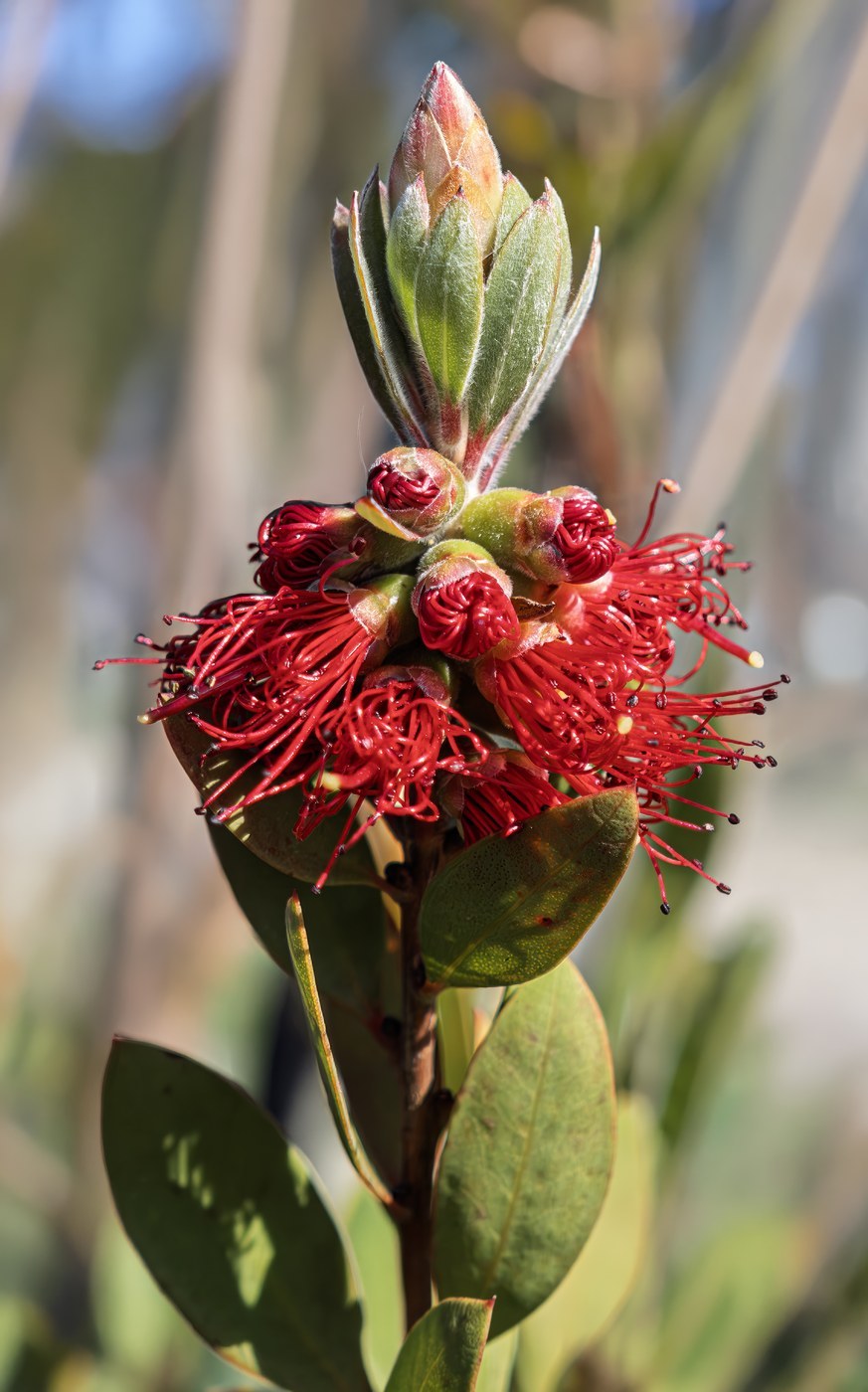
Key Identifying Features
Bottlebrush (Callistemon, now often classified within Melaleuca) is an evergreen shrub or small tree in the myrtle family (Myrtaceae), native to Australia. It is instantly recognized by its cylindrical, brush-like flower spikes that look exactly like a bottle-cleaning brush, made of dozens of long colorful stamens (usually bright red). Other clues are narrow, leathery, aromatic leaves and clusters of woody seed capsules clinging to the older stems.
- Evergreen shrub or small tree, from 3 ft shrubs to 15–25 ft trees
- Cylindrical 'bottlebrush' flower spikes, most often bright red
- Narrow, stiff, aromatic leaves; often pinkish-red new growth
- Persistent woody seed capsules in clusters along the branches
Leaves & Stems
Leaves are alternate, narrow, lance-shaped to linear, 1–4 in long, stiff, leathery, and dotted with aromatic oil glands (releasing a eucalyptus-like scent when crushed). New growth often emerges soft, silky, and pink to coppery-red before hardening to green. A faint sharp tip is common. Stems are woody, and the flower spikes grow at the branch tips, after which the branch continues to grow on past the flowers — leaving the woody fruits behind on older wood.
Flowers & Fruit
The flower spike is cylindrical, 2–6 in long, encircling the stem. The showy 'bristles' are long stamens (the petals are tiny and inconspicuous), typically brilliant red, but cultivars/species offer pink, mauve, white, yellow, or green. Flowers are rich in nectar and draw bees and birds. The fruit is a hard, woody, cup-shaped capsule that forms in tight clusters encircling the stem and can persist for years, often opening only after fire or branch death.
How to Tell It Apart from Look-Alikes
- Fothergilla: Has white bottlebrush spikes but is a deciduous, toothed-leaf shrub; Bottlebrush is evergreen with narrow leaves and (usually) red spikes.
- Melaleuca (paperbark): Closely related with similar spikes but typically papery, peeling bark and softer, smaller flower clusters.
- Grevillea/Hakea: Australian relatives with spider-like or different flower forms, not the dense cylindrical brush.
The cylindrical brush spike of colorful stamens + narrow aromatic evergreen leaves + woody capsule clusters on old stems combination is unmistakable.
Where You'll Find It
Native to Australia; widely planted in warm-climate gardens worldwide (USDA zones 8–11) as specimen shrubs, screens, street trees, and hedges, and along streamsides where many species naturally grow. It tolerates heat, some drought, and periodic wet soil, and prefers full sun.
Quick ID Checklist
- Evergreen shrub/tree with cylindrical brush-like flower spikes
- Showy parts are long stamens, usually bright red
- Narrow, stiff, aromatic leaves; pinkish-red new growth
- Branch grows on past the flower spike
- Woody, cup-shaped seed capsules clustered on older stems
- Attracts birds and bees; loves full sun and warmth
Frequently asked questions
What makes the bottlebrush flower look like a brush?
The showy bristles are long stamens packed densely in a cylinder around the stem; the actual petals are tiny, so the cluster of colorful stamens creates the bottle-brush look.
What are the woody bumps along the stems?
Those are persistent woody seed capsules that form in clusters encircling the older wood after flowering and can remain on the plant for years.
Do bottlebrush leaves have a scent?
Yes, the narrow leaves contain oil glands and release a eucalyptus-like aroma when crushed, consistent with the myrtle family.
Are all bottlebrush flowers red?
Red is the most common, but species and cultivars also bloom pink, mauve, white, yellow, or green.