
How to Care for Bouncing Bet
Grow Saponaria officinalis for its fragrant pink summer blooms and tough, spreading habit in full sun with minimal fuss.
Read the full Bouncing Bet encyclopedia entry →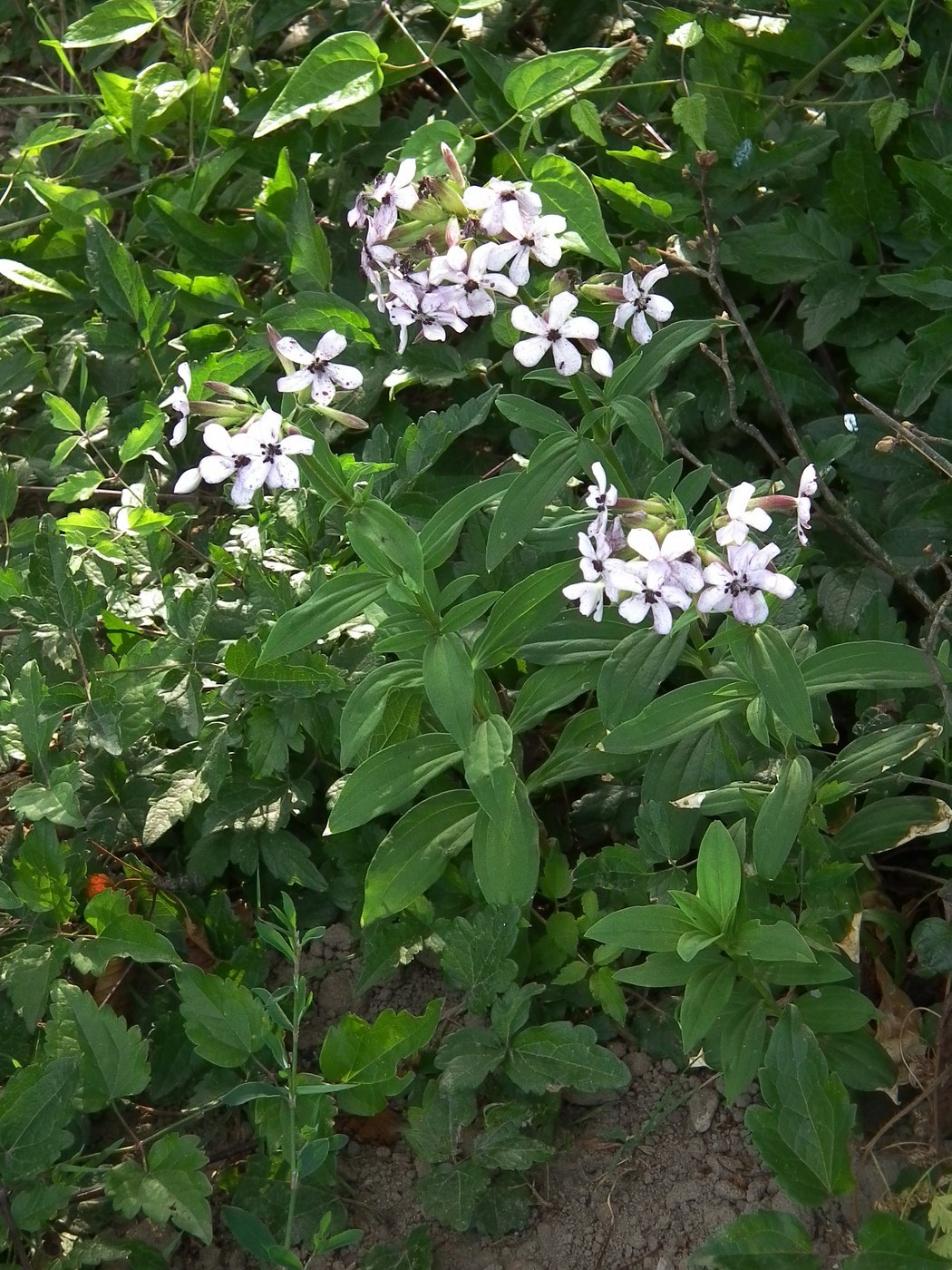
Bouncing Bet (Saponaria officinalis), also called soapwort, is a hardy, spreading perennial grown ornamentally for its clusters of fragrant, pale pink to white flowers that open on long summer evenings. Easy to grow and quite drought-tolerant once established, it forms vigorous colonies by rhizomes and self-seeding, making it a rugged choice for informal borders and cottage gardens.
Light
Bouncing Bet grows best in full sun to part shade. Full sun produces the sturdiest, most floriferous plants, while a little afternoon shade is tolerated and can prolong bloom in hot climates. In deep shade the stems stretch, flop, and flower sparingly, so choose an open, bright position for the strongest display.
Water
This is a low-maintenance, drought-tolerant plant that needs only low to moderate watering once established. Water young plants regularly until their roots take hold, then let the soil dry between waterings. Established clumps generally get by on rainfall, needing supplemental water only during prolonged dry spells. Avoid overwatering, which encourages weak, floppy growth.
Soil & Potting
Soapwort is unfussy about soil and thrives in average to poor, well-draining ground, including sandy or rocky sites. It even tolerates lean soils where fussier plants struggle. Rich, heavily fertilized soil tends to produce lush but lax growth that needs staking. Sharp drainage matters most; avoid heavy, soggy ground that stays wet in winter.
Humidity & Temperature
A tough, cold-hardy perennial, Bouncing Bet withstands a wide range of temperatures and dies back to the ground in winter, resprouting in spring. It has no special humidity needs and handles both dry summer heat and cold winters well. Its resilience is a big part of its appeal in low-maintenance and naturalized plantings.
Feeding
Bouncing Bet needs little to no supplemental feeding and actually performs better in lean soil. Heavy fertilization promotes floppy, overgrown stems and can reduce flowering quality. If your soil is very poor, a single light application of balanced fertilizer or a thin layer of compost in spring is plenty for the whole season.
Propagation
Propagate easily by division in spring or autumn, lifting a clump and splitting the spreading rhizomes into pieces that each have roots and shoots. It also grows readily from seed sown in spring and self-sows freely in the garden. Stem cuttings root without much trouble in early summer. Because it spreads energetically, propagation is rarely a challenge.
Repotting / Pruning
Shear plants back after the main flush of bloom to encourage a tidier habit and sometimes a second round of flowers. Cutting spent stems also limits self-seeding if you want to control its spread. In late autumn or early spring, cut the old stems to the ground. Divide crowded clumps every few years to keep them vigorous and contained.
Common Problems & Pests
Bouncing Bet is largely trouble-free and rarely bothered by serious pests or diseases. Its main drawback is enthusiasm: it spreads aggressively by rhizomes and seed and can overtake a bed if unmanaged. Occasional aphids may appear on new growth and can be rinsed off. In damp, crowded conditions, ensure good airflow to prevent fungal leaf spots and root rot.
Seasonal Care Tips
In spring, cut back old growth and divide or thin clumps as needed. Through summer, enjoy the fragrant evening blooms and shear after flowering to neaten the plant and curb seeding. In autumn, cut stems down as they fade. To keep this vigorous grower in check, deadhead before seed sets and remove wandering rhizomes at the colony's edges each year.
Frequently asked questions
Is Bouncing Bet easy to grow?
Yes, it is one of the easiest perennials. It is drought-tolerant, thrives in poor soil, and needs little care once established.
Does Bouncing Bet spread aggressively?
It does. Soapwort spreads by rhizomes and self-seeding and can overtake a bed, so deadhead before seed sets and divide or edge it to keep it contained.
Should I fertilize Bouncing Bet?
Rarely. It performs best in lean soil, and heavy feeding causes floppy growth. A light spring compost topping is enough in very poor soils.
How do I keep Bouncing Bet from flopping?
Grow it in full sun and lean, well-draining soil, avoid overwatering and over-fertilizing, and shear the plant back after its first flush of bloom.