Boxwood Identification Guide
Identify Boxwood (Buxus) by its small, opposite, glossy oval leaves, dense fine twiggy growth, and the distinctive musky scent of its foliage.
Read the full Boxwood encyclopedia entry →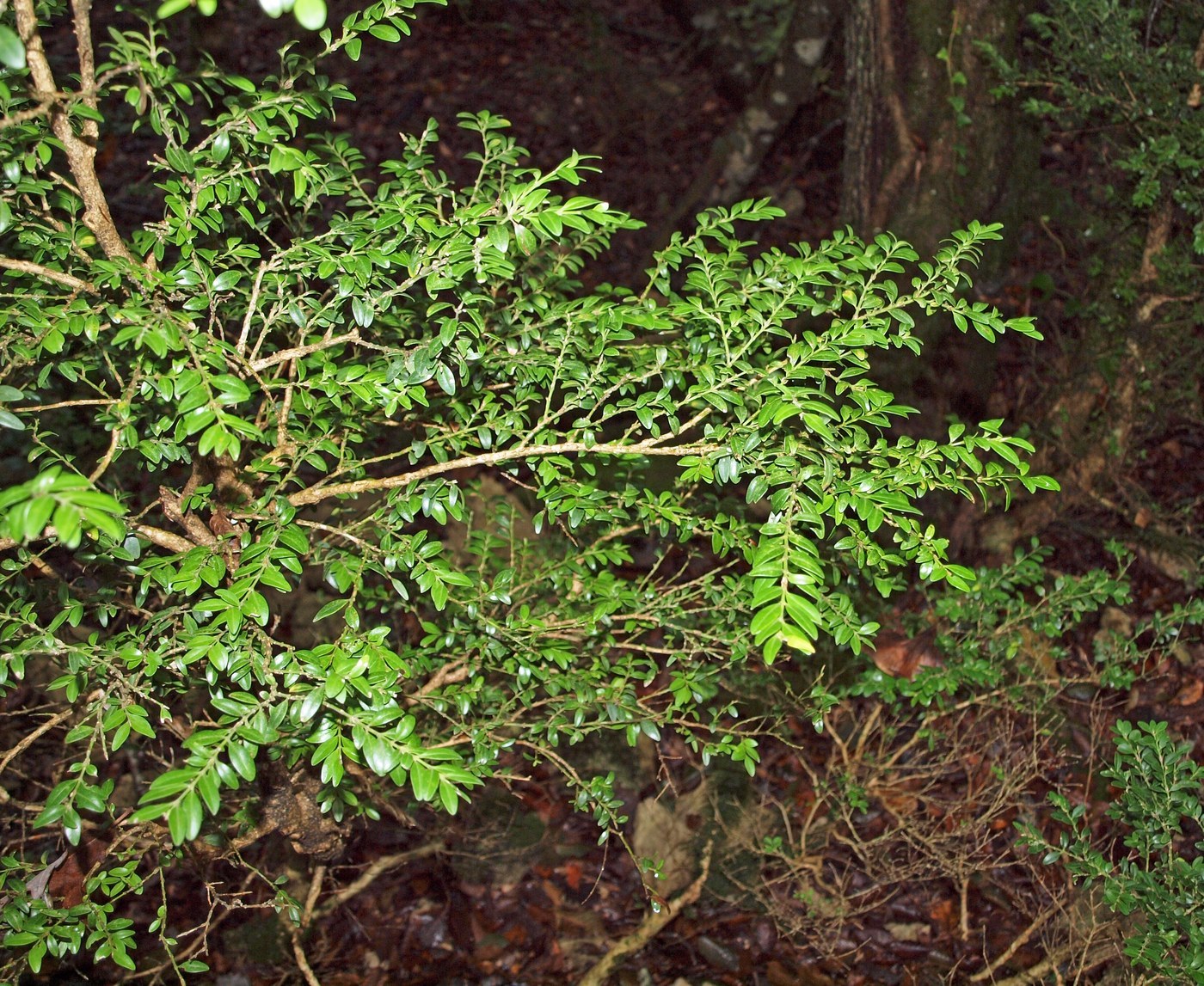
Key Identifying Features
Boxwood (Buxus sempervirens and related species) is a classic evergreen shrub for hedges and topiary. It is recognized by its small, paired, glossy leaves, extremely dense twiggy growth, and a characteristic musky to cat-like odor when foliage is brushed or crushed.
- Small (0.5–1.5 in) opposite, oval to oblong leaves, leathery and glossy
- Very dense, fine branching that shears into tight hedges
- Square, slightly winged young green stems
- Distinctive musky/pungent scent from leaves
Leaves & Stems
Leaves are opposite (paired across the stem), small, rounded to elliptic, leathery, with smooth (untoothed) margins and often a slight notch at the tip. They are glossy dark green above and paler beneath, sometimes bronzing in winter cold. Young twigs are green and squarish with thin corky wings. The growth is famously dense and fine-textured, which is why boxwood is the go-to plant for formal hedges and topiary.
Flowers & Fruit
Flowers are tiny, pale green to cream, without petals, clustered in the leaf axils in spring; they are inconspicuous but fragrant and attractive to bees. The fruit is a small, three-horned woody capsule that splits to eject black seeds. Flowers and fruit are easy to overlook against the dense foliage.
How to Tell It Apart from Look-Alikes
- Japanese Holly (Ilex crenata) is a frequent boxwood mimic but has alternate leaves with tiny teeth and black berry-like fruit; boxwood leaves are opposite and smooth-edged.
- Privet has larger, opposite leaves and lacks the dense, fine boxwood texture and scent.
- The combination of small opposite smooth oval leaves + musky scent + square green twigs + dense shearable habit confirms boxwood.
Where You'll Find It
Boxwood is one of the most widely planted ornamental shrubs in temperate gardens worldwide, used for hedges, edging, foundation plantings, and topiary. It tolerates shade and pruning well. Common boxwood is native to Europe, North Africa, and western Asia; littleleaf and Korean types come from East Asia.
Quick ID Checklist
- Small opposite oval leaves, smooth-edged, glossy
- Dense fine twiggy evergreen growth
- Square green young stems
- Musky scent when crushed
- Tiny petalless greenish flowers; horned capsule fruit
Frequently asked questions
How do I tell boxwood from Japanese holly?
Boxwood has opposite, smooth-edged leaves and a musky scent, while Japanese holly has alternate leaves with tiny teeth and produces small black berries.
Why does my boxwood smell strange?
Boxwood foliage naturally releases a musky, sometimes cat-like odor when brushed or warmed in sun — this scent is actually a useful identification clue.
Are boxwood flowers showy?
No. The flowers are tiny, greenish-cream, and lack petals, but they are fragrant and draw bees in spring; the plant is grown for foliage, not bloom.
Is boxwood evergreen?
Yes, boxwood holds its small glossy leaves year-round, though foliage may bronze or yellow somewhat in harsh winter cold.
Boxwood identified by the community
Recent Boxwood specimens identified with Plant Identifier.