
How to Care for Boysenberry
Grow Boysenberry (Rubus ursinus x idaeus), a vigorous trailing bramble with arching canes and deep reddish-purple berries.
Read the full Boysenberry encyclopedia entry →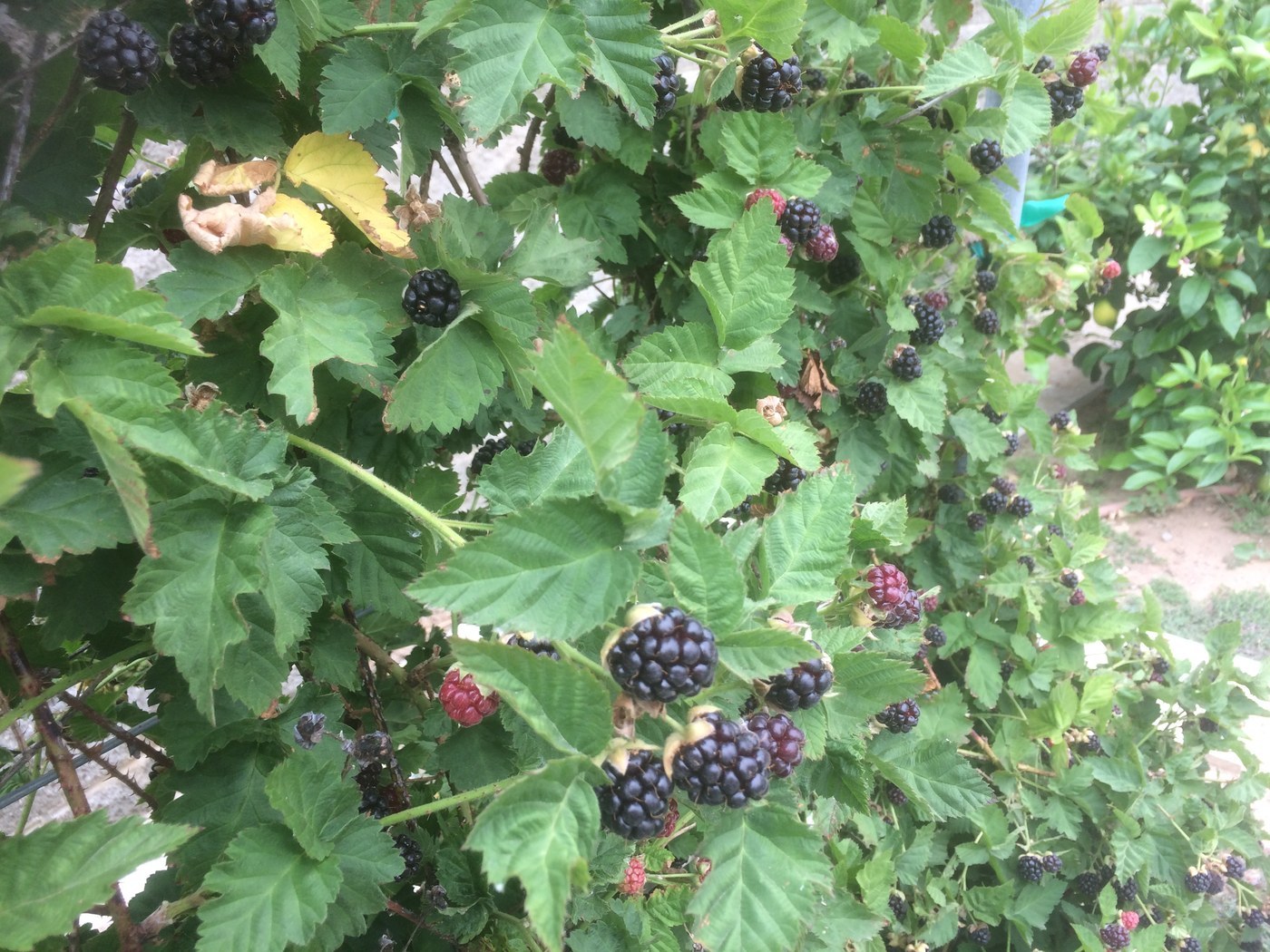
Boysenberry (Rubus ursinus x idaeus) is a vigorous trailing bramble, a cross among blackberry, raspberry, and dewberry lineages, grown for its long arching canes and ornamental clusters of deep reddish-purple berries. It rewards a bit of structure and training with an abundant, sprawling habit.
Light
Boysenberry requires full sun for strong cane growth and heavy berry set. Give it at least six to eight hours of direct sun daily. In too much shade the canes grow weak and berry production drops sharply. Choose an open, sunny site with good air movement.
Water
Provide regular, deep weekly watering, especially as canes grow and berries develop. Boysenberry has shallow roots and needs consistently moist soil, but not waterlogged conditions. Deep soaking encourages a robust root system; drip irrigation or a soaker hose at the base keeps foliage dry and reduces disease. Mulch heavily to conserve moisture and moderate soil temperature.
Soil & Potting
Plant in rich, well-drained soil high in organic matter with a slightly acidic pH around 6.0-6.8. Work in plenty of compost before planting. Avoid heavy, poorly draining soils, which invite root rot; if drainage is poor, plant on raised mounds or in raised beds.
Humidity & Temperature
Boysenberry grows best in mild temperate climates (roughly USDA zones 6-9). It prefers moderate summer warmth and can suffer in extreme heat, where afternoon shade or extra water helps. Canes are moderately cold-hardy but benefit from mulch or protection in colder zones. It tolerates a range of humidity but appreciates good air circulation to reduce fungal issues.
Feeding
Feed in early spring as new growth begins with a balanced fertilizer or a generous top-dressing of compost and aged manure. A second light feeding in late spring supports cane and berry development. Avoid heavy late-season nitrogen, which pushes soft growth vulnerable to cold.
Propagation
Boysenberry is easily propagated by tip layering: bend an arching cane tip down to the soil in late summer and bury it lightly; it roots to form a new plant that can be separated the following season. It can also be grown from root cuttings taken in late winter. Division of established clumps works as well.
Repotting / Pruning
Berries form on second-year canes (floricanes), while first-year canes (primocanes) grow vegetatively. After a cane has fruited, cut it to the ground, and train the new season's primocanes onto a trellis or wires. Thin to the strongest few canes per plant for good airflow and productivity. A sturdy trellis keeps the long, trailing canes manageable and off the ground.
Common Problems & Pests
Watch for aphids, spider mites, and cane borers on the stems, and control them with insecticidal soap or by pruning out affected canes. Fungal diseases such as anthracnose, cane blight, and gray mold thrive in wet, crowded plantings; improve airflow, keep foliage dry, and remove old canes to reduce them. Root rot occurs in poorly drained soils.
Seasonal Care Tips
- Spring: Feed as growth resumes, train new canes, and water regularly as berries begin to form.
- Summer: Keep soil evenly moist during berry development; tip-layer canes to propagate.
- Fall: Cut out spent fruited canes and tidy the trellis; reduce watering.
- Winter: Apply mulch for cold protection; take root cuttings; the plant is dormant.
Frequently asked questions
Why is my Boysenberry not producing berries?
Berries form only on second-year canes. If you cut back all canes or the plant is too young, you lose the fruiting wood. Also check that it gets full sun and enough water, since shade and drought reduce yields.
How should I prune Boysenberry?
After a cane has fruited, cut it to the ground. Keep and train the new first-year canes on a trellis, since those will bear the following season. Thin to the strongest few canes for good airflow.
How often should I water Boysenberry?
Water deeply about once a week, more during hot, dry weather and while berries are developing. The shallow roots need consistently moist but not waterlogged soil, so mulch heavily.
How do I propagate Boysenberry?
The easiest way is tip layering: bury the tip of an arching cane in soil in late summer, and it will root into a new plant you can separate the next season. Root cuttings in late winter also work.