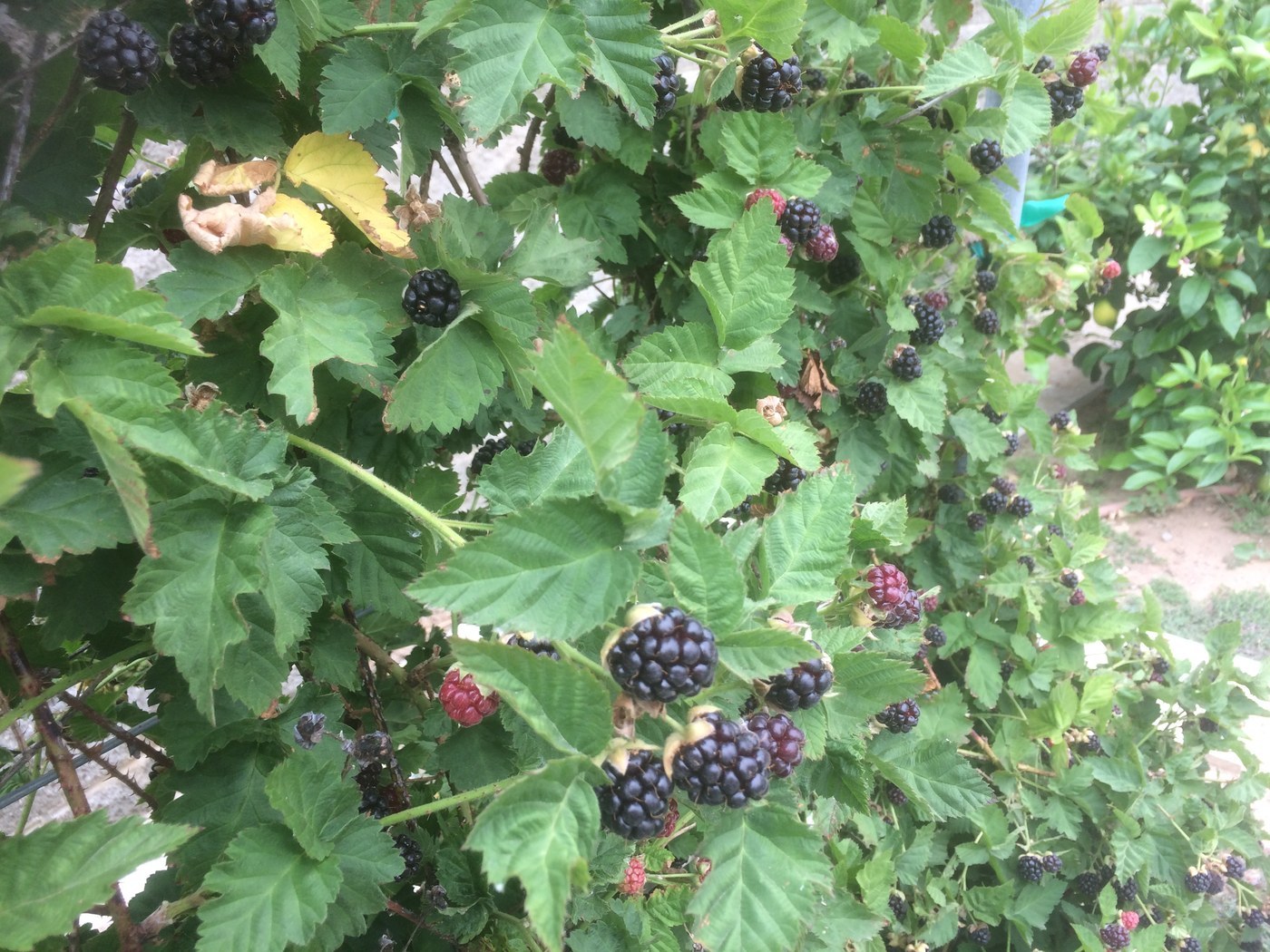
Boysenberry
Rubus ursinus x idaeus
A trailing bramble hybrid created by crossing blackberry, raspberry, dewberry and loganberry. It produces large, deep maroon aggregate berries and is famously associated with Knott's Berry Farm.
- Light
- Full sun
- Water
- Regular; deep weekly watering
- Difficulty
- Moderate
Got a plant like this?
Identify any plant from a photo, free.
Overview
The boysenberry is a complex Rubus hybrid combining blackberry, raspberry, dewberry and loganberry parentage. It was developed in early-20th-century California and popularized by Walter Knott of Knott's Berry Farm.
The plant is a vigorous, trailing cane bramble that produces unusually large, soft, dark reddish-purple aggregate berries.
Because the fruit is fragile, boysenberries are more often grown in home gardens than found in stores.
How to identify it
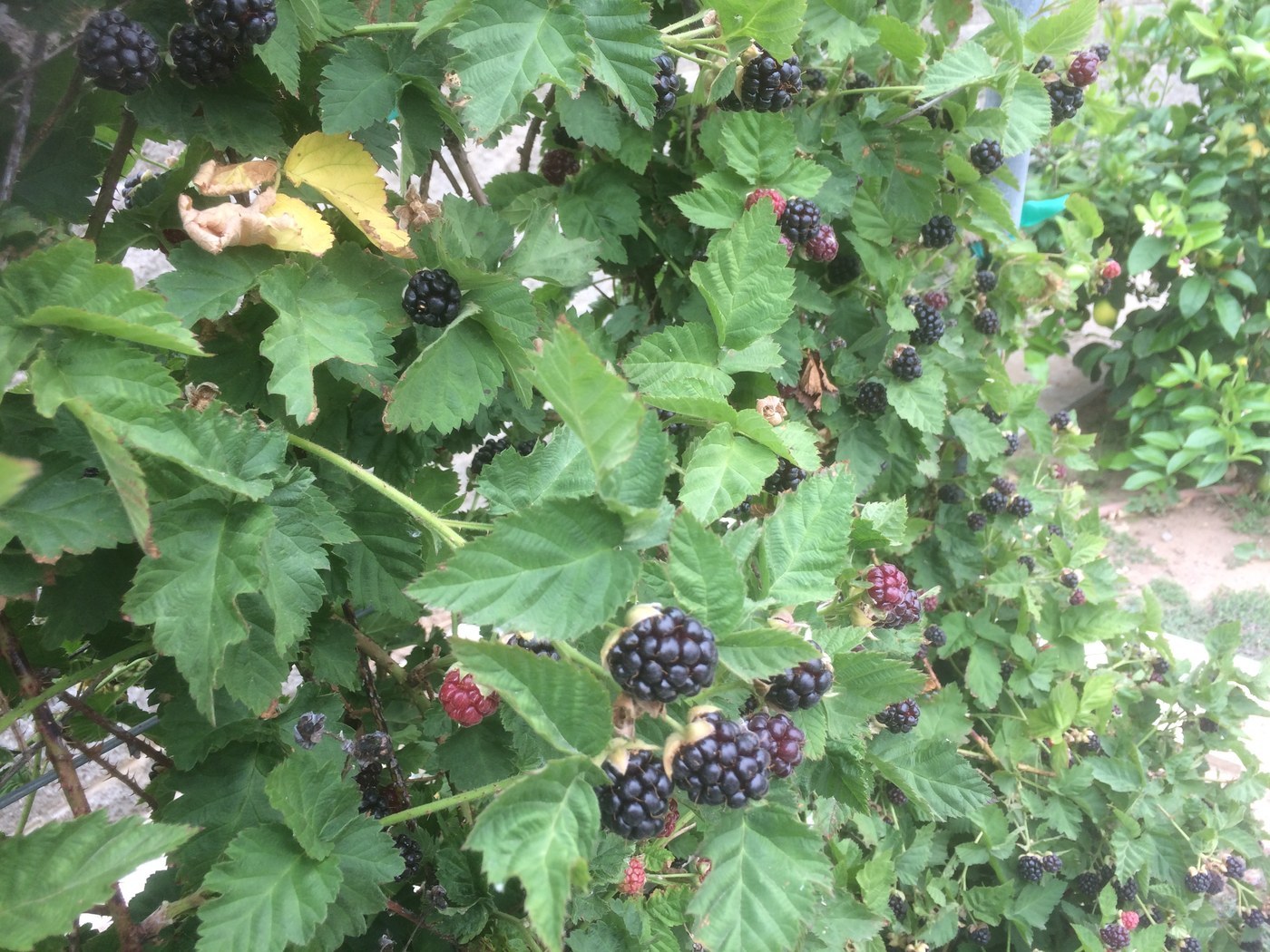
A sprawling, semi-trailing bramble with large compound berries.
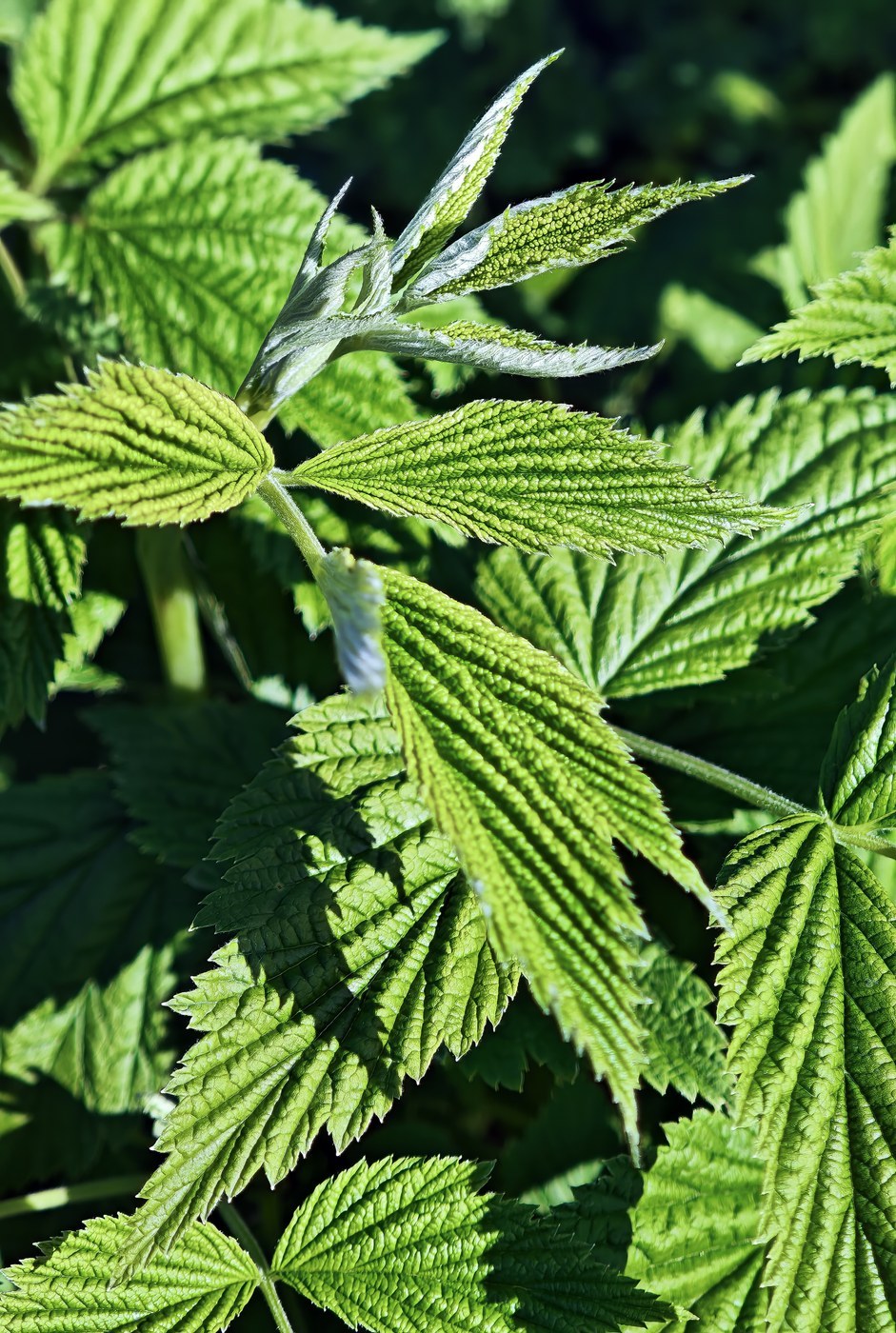
- Leaves: Compound with 3-5 toothed, pointed leaflets, mid-green
- Canes: Long, trailing to semi-erect, often with soft thorns (thornless types exist)
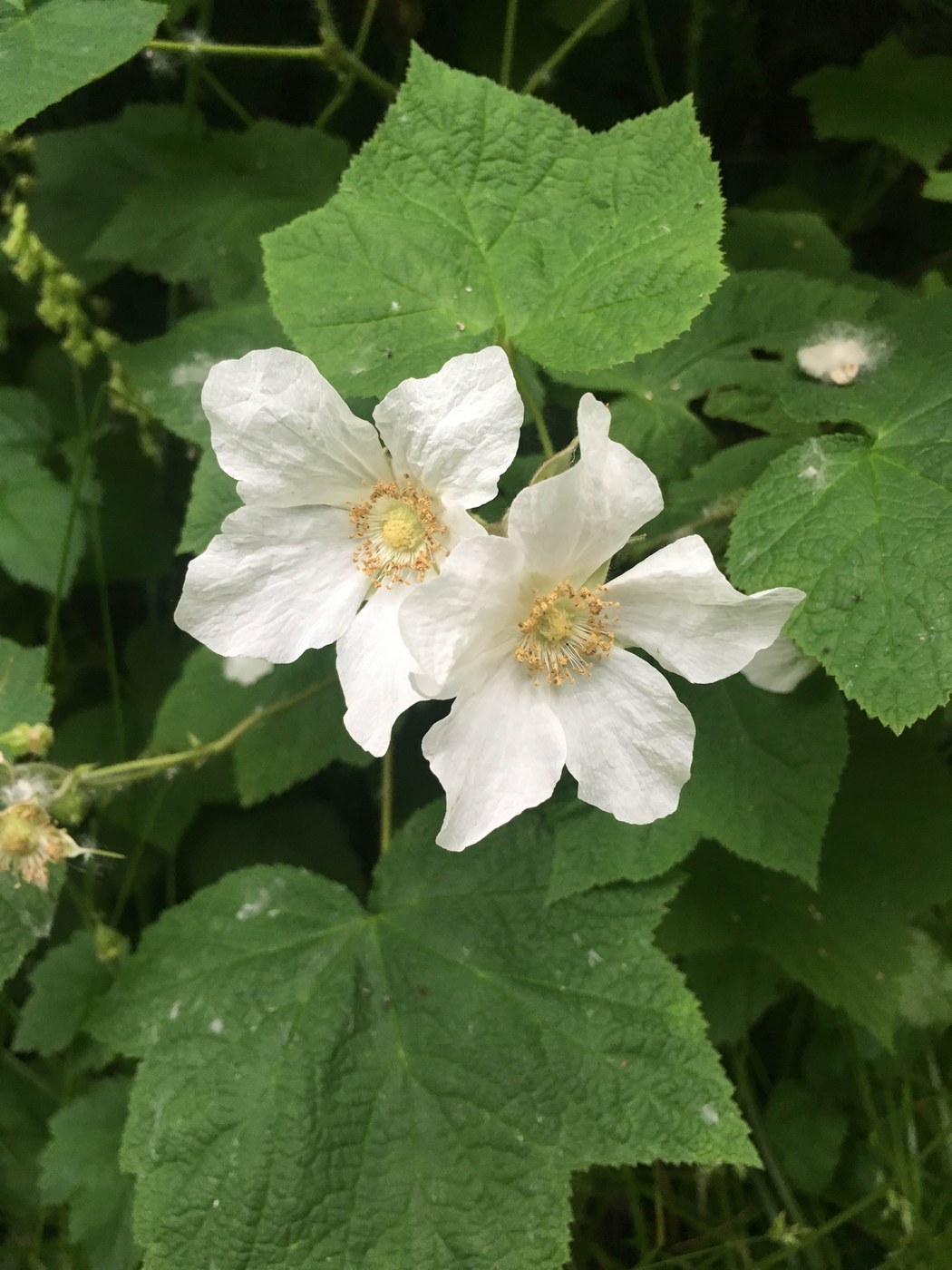
- Flowers: White to pale pink, five-petaled, in late spring
- Fruit: Large aggregate berries up to 2.5-3.5 cm, deep maroon to purple-black, soft
- Size: Canes can trail 2-3 m and need support
Care & growing
Rewarding but needs space and trellising.
- Light: Full sun for the heaviest cropping
- Water: Deep, regular watering, especially during fruiting; mulch to keep roots cool and moist
- Soil: Rich, well-drained, slightly acidic soil with plenty of organic matter
- Temperature: Hardy to about -7 to -12C; better suited to mild-winter regions than the coldest zones
- Feeding: Balanced fertilizer in spring; mulch with compost
- Propagation: Tip layering, where cane tips root where they touch soil; train canes on a trellis and remove old fruited canes after they finish
Habitat & origin
The boysenberry is a cultivated hybrid with no truly wild range; its Rubus parents are native to western North America and Eurasia.
It was developed in California in the 1920s and is grown today especially in California, Oregon and New Zealand, which is now a leading producer. It thrives in mild, temperate climates with cool, moist growing conditions.
Frequently asked questions
What plants make up a boysenberry?
It is a hybrid of blackberry, raspberry, dewberry and loganberry, giving it a large, soft aggregate berry.
Do boysenberries have thorns?
Traditional boysenberries have soft thorns, but thornless cultivars are widely available.
How should I support the canes?
Train the long trailing canes on a wire trellis or fence, and remove canes that have already fruited each year.
How can I tell a boysenberry plant apart?
Look for long trailing canes, compound leaves with 3-5 toothed leaflets, pale five-petaled spring flowers, and large deep-maroon aggregate berries up to about 3.5 cm.
Boysenberry guides
In-depth guides for identifying, growing, and caring for Boysenberry.
How to Care for Boysenberry
Grow Boysenberry (Rubus ursinus x idaeus), a vigorous trailing bramble with arching canes and deep reddish-purple berries.
Boysenberry Identification Guide
Identify boysenberry, a large dark-purple bramble hybrid, by its trailing thorny canes, compound leaves, and big elongated aggregate berries that come away with the core.