
Boysenberry Identification Guide
Identify boysenberry, a large dark-purple bramble hybrid, by its trailing thorny canes, compound leaves, and big elongated aggregate berries that come away with the core.
Read the full Boysenberry encyclopedia entry →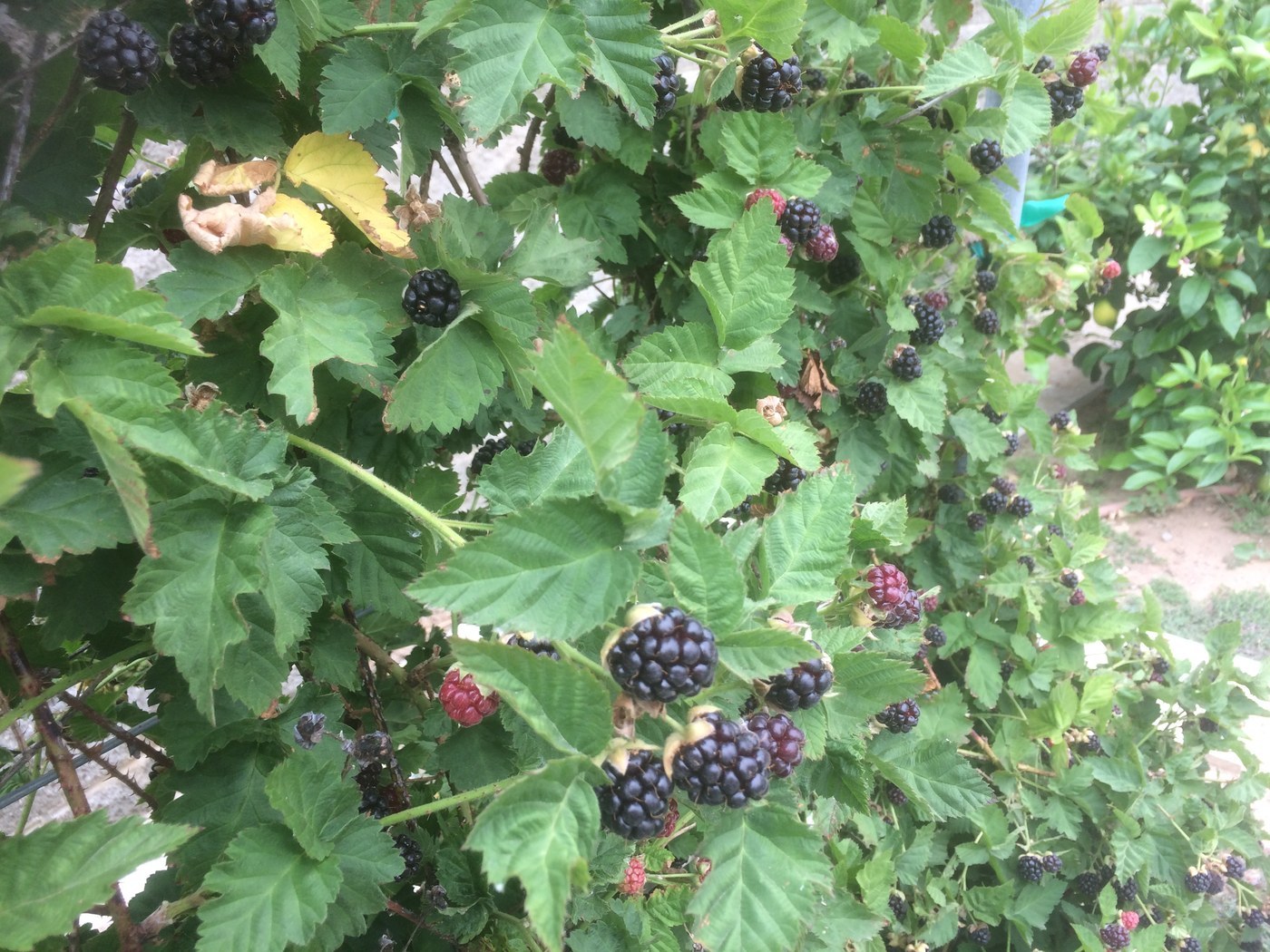
Key Identifying Features
Boysenberry is a trailing bramble (Rubus) hybrid — a cross involving blackberry, raspberry, dewberry, and loganberry. It forms long, sprawling, vigorous canes rather than an upright bush, usually trained on a trellis. The fruit is the giveaway: large, elongated, deep maroon-to-purple-black aggregate berries that are softer and juicier than a blackberry and retain their white core (torus) when picked.
- Trailing canes up to 6-10 ft, often thorny
- Large (up to 1 in.) reddish-purple to blackish aggregate berries
- Berries keep the central core when picked, like a blackberry
- Compound leaves with toothed leaflets
Leaves & Stems
Leaves are compound (palmate or pinnate) with 3-5 toothed leaflets, medium green, paler and softly hairy beneath — the classic bramble leaf. Canes are long, biennial, and trailing to semi-erect, green to reddish, and typically armed with curved thorns (thornless cultivars exist). First-year canes (primocanes) grow vegetatively; second-year canes (floricanes) flower and fruit, then die. New canes often root where their tips touch soil.
Flowers & Fruit
Flowers are white to pale pink, five-petaled, about 1 in. across, in small clusters in spring. The fruit ripens in early summer through several stages — green, red, then deep wine-purple to nearly black. A ripe boysenberry is large, elongated-conical, soft, and very juicy, with a rich sweet-tart flavor. Like a blackberry (and unlike a raspberry), it does not slip off its core — the torus stays inside the picked fruit.
How to Tell It Apart from Look-Alikes
- Blackberry: Smaller, glossier, and firmer; boysenberry is larger, duller maroon-purple, softer and juicier.
- Raspberry: Fruit pulls free of the core leaving a hollow cup; boysenberry keeps its core.
- Loganberry: Red and more elongated; boysenberry is darker purple and rounder-shouldered.
- Marionberry: A glossy black blackberry cultivar — boysenberry is more reddish-purple and softer.
Because these are all Rubus hybrids, identify boysenberry chiefly by its large size, dark reddish-purple color, soft juicy texture, and retained core.
Where You'll Find It
Boysenberry is a cultivated plant, most associated with California and New Zealand, grown on trellises in home gardens and farms in mild-temperate climates. It is not a wild plant, so expect it in cultivated rows, allotments, and along garden fences, often escaping into nearby hedges where canes root.
Quick ID Checklist
- Long trailing bramble canes, often thorny
- Compound leaves, 3-5 toothed leaflets, hairy beneath
- White to pale-pink 5-petal flowers in spring
- Large, elongated, deep maroon-purple soft berries
- Berry keeps its white core when picked
- Cultivated trellis or garden setting
Frequently asked questions
How do I tell a boysenberry from a blackberry?
Boysenberries are larger, softer, juicier, and more reddish-purple than the glossy black, firmer blackberry, though both keep their central core when picked.
Is it a raspberry or a blackberry type?
It is a blackberry-type bramble: the fruit retains its core (torus) when picked, whereas raspberries leave a hollow cup.
Do boysenberries have thorns?
Traditional boysenberries have curved thorns on trailing canes, but thornless cultivars are widely grown in gardens.
Is boysenberry a wild plant?
No, it is a cultivated hybrid. You will find it on trellises in gardens and farms rather than growing wild, though canes can escape into hedgerows.