
How to Care for Brain Cactus
Grow the crested Brain Cactus (Mammillaria elongata 'Cristata') with bright light, sharp drainage, and careful, sparing watering.
Read the full Brain Cactus encyclopedia entry →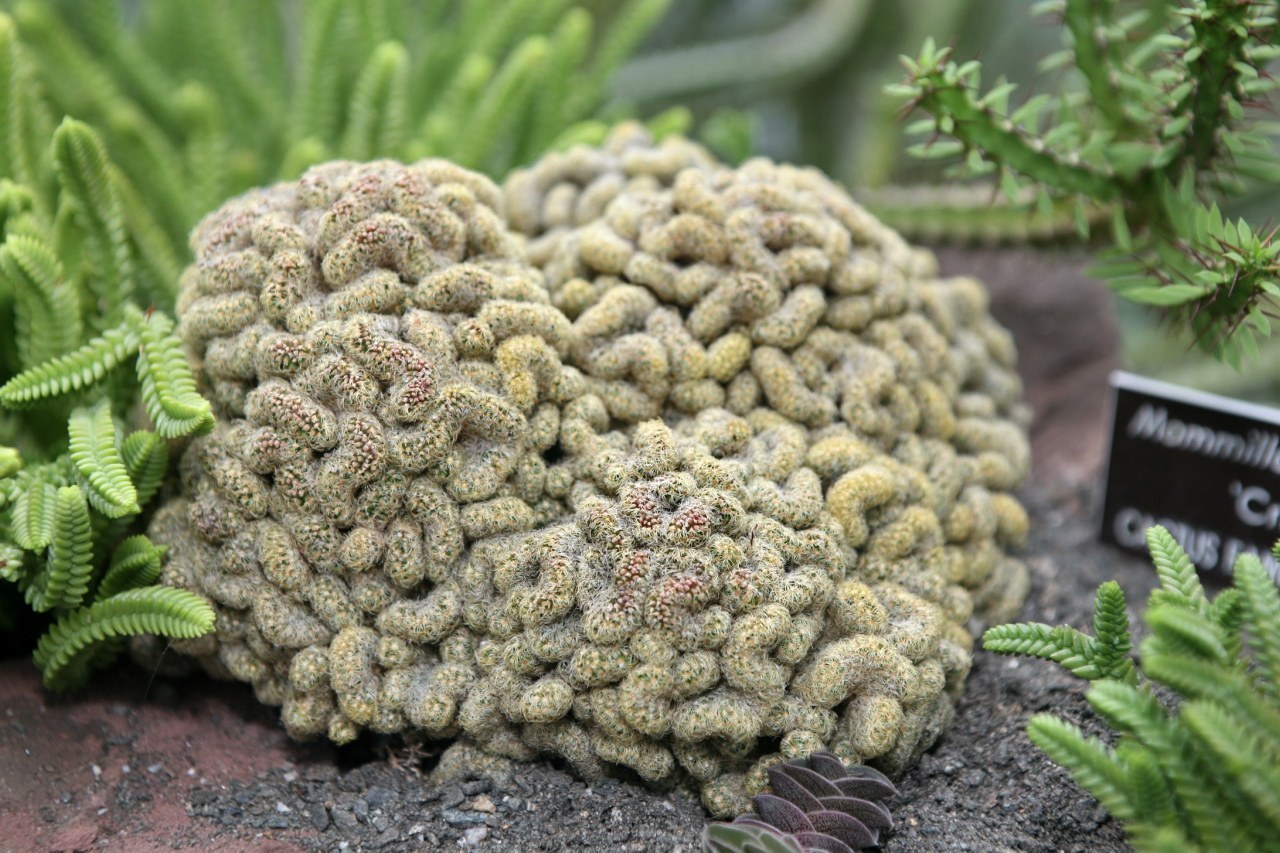
The Brain Cactus is a crested (fasciated) form of the ladyfinger cactus, prized for the undulating, brain-like ridges that replace its normal columnar stems. It stays compact and slow-growing, making it a striking ornamental for sunny windowsills and dish gardens.
Light
Give Brain Cactus bright light with some direct sun. A south- or east-facing window indoors is ideal, and it appreciates a few hours of gentle morning sun. Insufficient light makes the crest stretch, thin, and lose its tight brainy texture. If moving it into strong sun after a shady spell, acclimate gradually over a couple of weeks to avoid scorching the tender ridges.
Water
Water sparingly and always let the soil dry out completely between waterings. During active growth in spring and summer, a thorough soak every 10 to 14 days is usually enough; in winter, cut back to roughly monthly or less. The crested growth traps moisture in its folds, so water at the soil line rather than over the top of the plant, and never let it sit in a saucer of water.
Soil & Potting
Use a fast-draining cactus and succulent mix, ideally amended with extra pumice, perlite, or coarse sand so water runs straight through. A shallow pot with a drainage hole suits its low, spreading habit. Terracotta is excellent because it wicks moisture from the soil and helps prevent rot.
Humidity & Temperature
Brain Cactus thrives in ordinary, dry household air and dislikes humidity. Normal room temperatures from 65 to 85 F (18 to 29 C) are ideal. Protect it from frost; keep it above about 40 F (4 C). A cool, dry winter rest around 50 to 55 F (10 to 13 C) encourages a healthier, more compact plant.
Feeding
Feed lightly during the growing season only. A diluted, low-nitrogen cactus fertilizer applied once a month from spring through summer is plenty. Avoid feeding in fall and winter when the plant is resting, and never overfeed, which forces soft, weak growth.
Propagation
Propagate by division or by removing offsets that form at the base. Cut a section cleanly with a sterile blade, let the cut callus over for several days in a dry, shaded spot, then set it on barely moist cactus mix. Cresting is unstable, so some divisions may revert to normal columnar growth; keeping the most heavily crested pieces preserves the brain form.
Repotting / Pruning
Repot only every two to three years, or when the crest overflows its container. Handle carefully with folded newspaper or thick gloves to avoid crushing the ridges and to protect against the fine spines. Prune only to remove any reverted, normal-shaped stems if you want to maintain the crested look, cutting them off at the base.
Common Problems & Pests
Overwatering and poor drainage are the main killers, causing soft, brown, or mushy rot at the base or within the folds. Watch for mealybugs nestled in the crevices and for spider mites in hot, dry conditions; treat with a cotton swab dipped in isopropyl alcohol or an insecticidal soap. Corky brown patches usually indicate scarring or too much cold, wet exposure.
Seasonal Care Tips
Grow actively and water more freely in spring and summer. Taper watering in fall and give a cool, dry, bright winter rest to keep the crest tight and encourage the small pink flowers that can ring the ridges in spring. Resume normal care as new growth appears.
Frequently asked questions
Why is my Brain Cactus losing its brain-like shape?
Reverted, normal columnar stems often appear because cresting is genetically unstable, and low light encourages it. Grow it in bright light with some direct sun and cut off any normal-shaped stems at the base to keep the crested form dominant.
How often should I water a Brain Cactus?
Water only when the soil is completely dry, roughly every 10 to 14 days in spring and summer and about monthly in winter. Water at the soil line, not over the ridges, and never leave it standing in water.
Why is the crest turning soft and brown?
Soft, brown, mushy tissue signals rot from overwatering or water trapped in the folds. Move it to a fast-draining mix, water more sparingly, improve airflow, and cut away any rotted sections back to firm, healthy tissue.
Does Brain Cactus need high humidity?
No. It prefers dry air and normal room conditions. High humidity and moisture sitting in the crevices encourage rot, so keep it in a well-ventilated, bright spot.