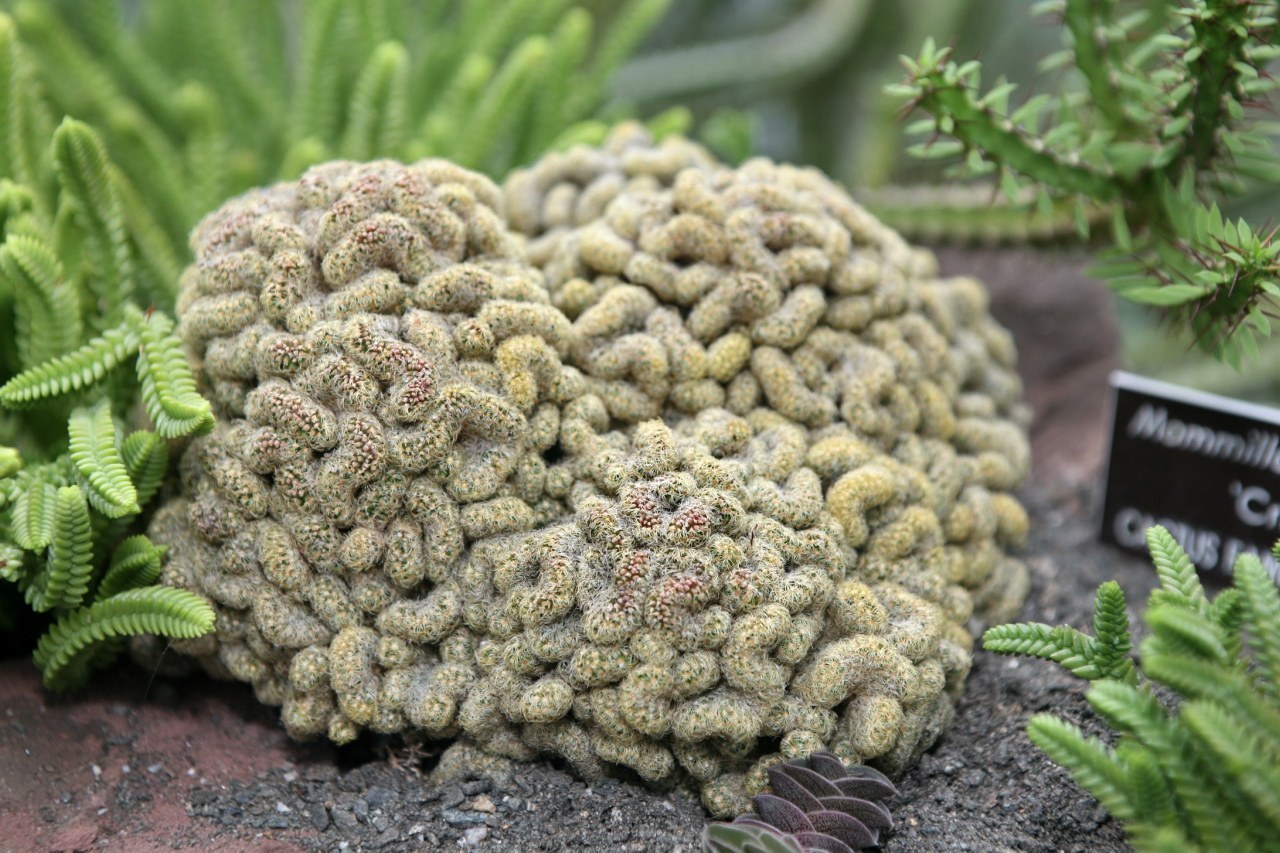
Brain Cactus
Mammillaria elongata 'Cristata'
A crested form of the ladyfinger cactus whose fused, fan-like growth folds into convoluted ridges resembling a brain. A novelty succulent prized for its sculptural, undulating surface.
- Light
- Bright light, some direct sun
- Water
- Sparingly; dry between waterings
- Difficulty
- Moderate
Got a plant like this?
Identify any plant from a photo, free.
Overview
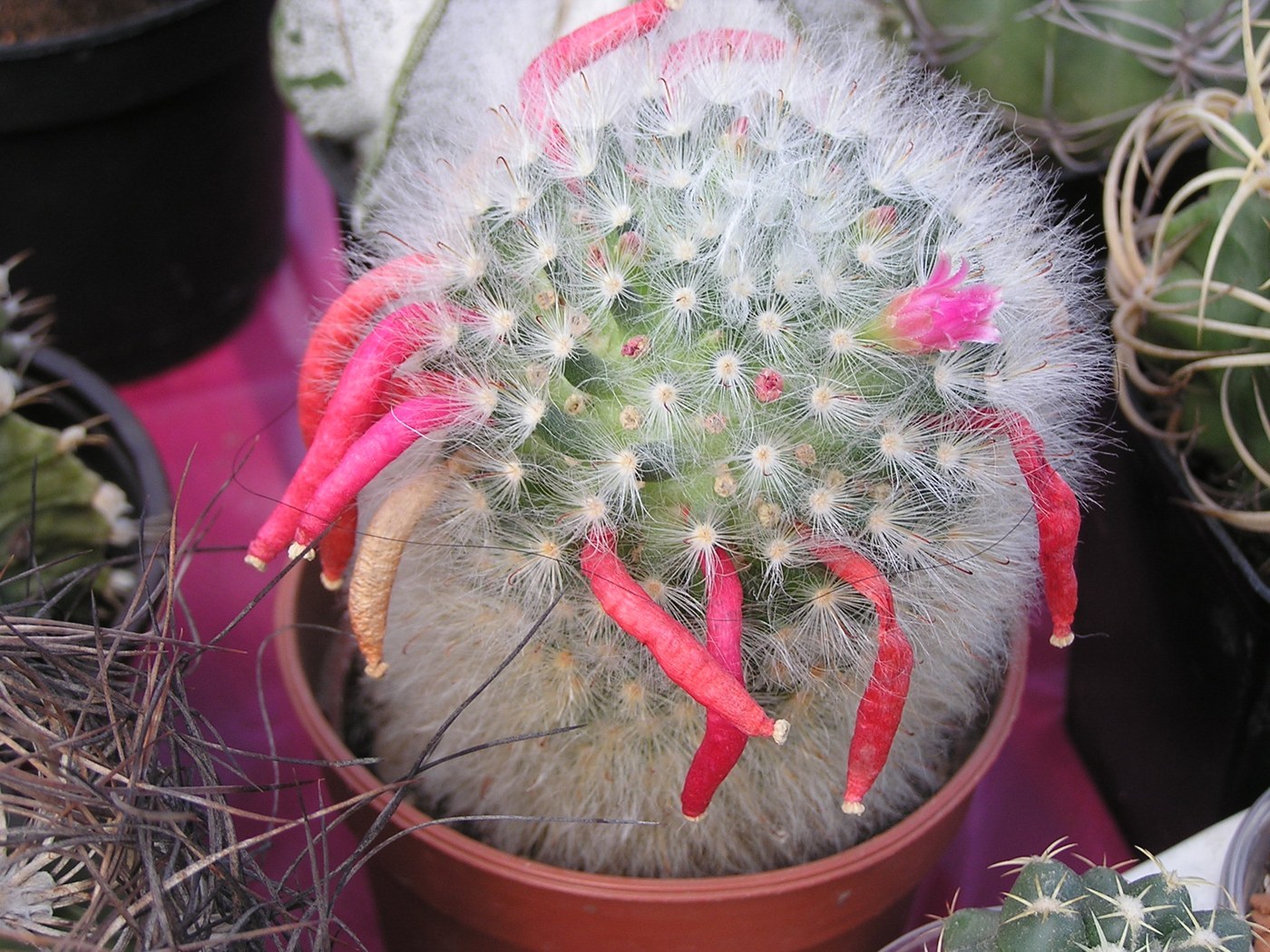
Brain Cactus is a crested (cristate) mutation of Mammillaria elongata, in which the normal cylindrical stems fuse and grow along a line rather than a point, producing wavy, folded ridges that look uncannily like the surface of a brain.
The crest is densely covered in fine, interlocking spines that trace the contours of each fold. With age the plant builds up into a mounded, undulating mass that is a centerpiece of many cactus collections.
It is grown for novelty and form rather than flowers, though small cream to yellow blooms can appear along the ridges.
How to identify it
- Form: Fan-shaped, fused crests that fold and wave into a brain-like, convoluted mound
- Spines: Fine, short, often yellow to brown, densely lining the ridges
- Color: Green body, sometimes tinged with stress color in strong light
- Flowers: Small, cream to yellow, appearing along the crest edges
- Size: Spreads into a low mound, slowly enlarging over years
Care & growing
Light: Bright light with some direct sun maintains tight growth; insufficient light weakens the crest.
Water: Water sparingly, allowing the soil to dry completely between waterings. The convoluted folds trap moisture, so avoid water sitting in the crevices.
Soil: Very gritty, fast-draining cactus mix.
Temperature: Warm growing season; keep cool and nearly dry in winter.
Feeding: Light, low-nitrogen cactus fertilizer in summer.
Propagation: By careful division of the crest or from non-crested offsets, though offsets may revert to normal growth.
Habitat & origin
The parent species Mammillaria elongata is native to central Mexico, growing on rocky outcrops and slopes in arid, sun-exposed habitats.
The crested form is a cultivated curiosity propagated by growers and is not found wild; it is kept as a potted specimen in cactus collections worldwide.
Frequently asked questions
Why is it called brain cactus?
Its crested growth fuses into folded, convoluted ridges that strongly resemble the surface of a human brain.
Will it always stay crested?
Crests can occasionally throw off normal cylindrical growth; remove these reverted shoots if you want to preserve the brain form.
How do I water without rotting it?
Water at the soil level and let the medium dry fully between waterings; avoid letting water pool in the folds.
Does it flower?
Yes, it can produce small cream to yellow flowers along the ridges, though it is grown mainly for form.
Brain Cactus guides
In-depth guides for identifying, growing, and caring for Brain Cactus.
How to Care for Brain Cactus
Grow the crested Brain Cactus (Mammillaria elongata 'Cristata') with bright light, sharp drainage, and careful, sparing watering.
Brain Cactus Identification Guide
Identify the Brain Cactus (crested Mammillaria elongata 'Cristata') by its wavy, undulating, brain-like ridges of fused stems covered in fine spines.