
Bristlecone Pine Identification Guide
Identify Bristlecone Pine (Pinus longaeva/aristata) by its dense bottlebrush five-needle foliage, bristle-tipped cones, and gnarled high-elevation form.
Read the full Bristlecone Pine encyclopedia entry →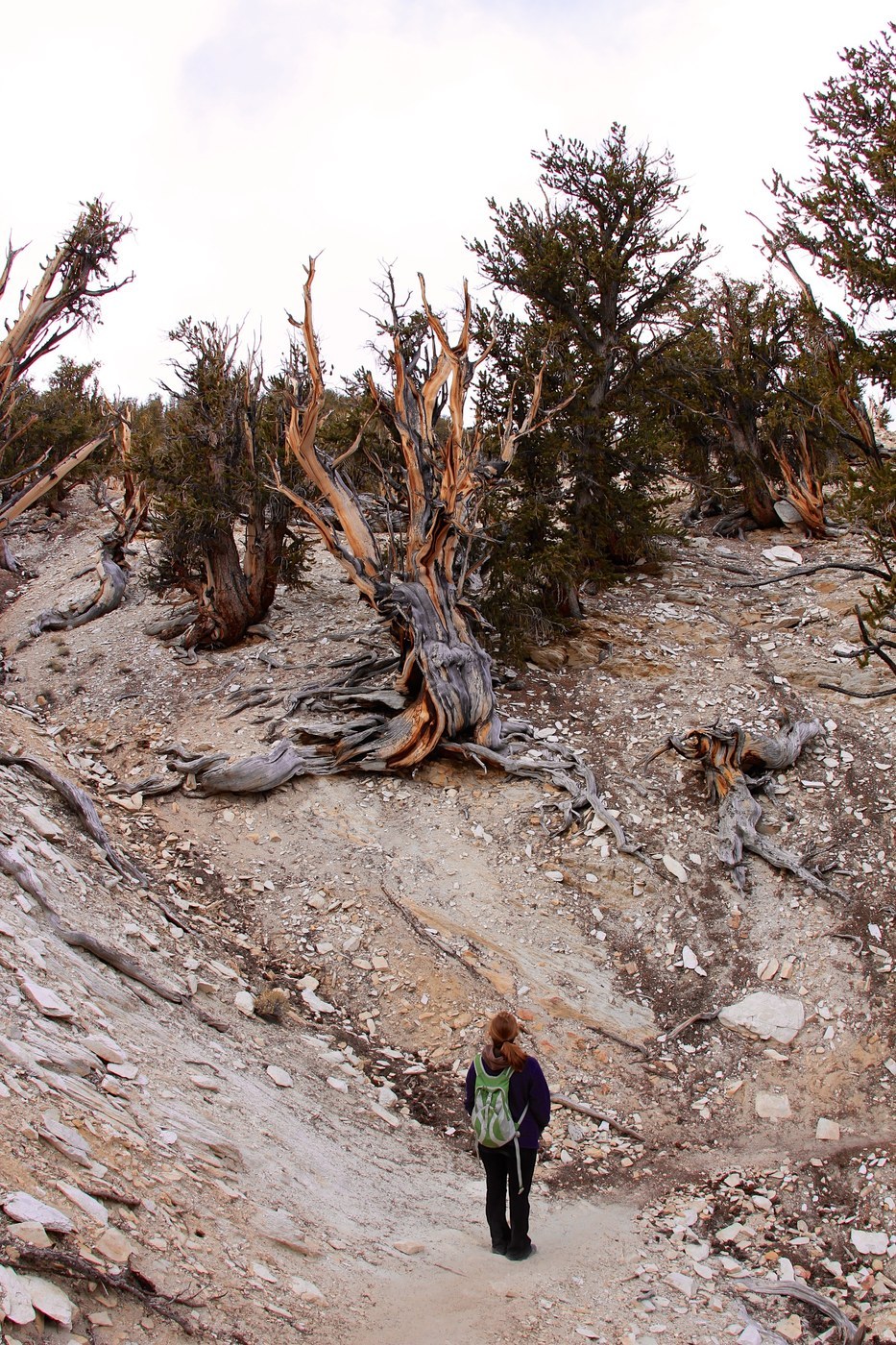
Key Identifying Features
Bristlecone Pine (Pinus longaeva and P. aristata) includes the oldest known non-clonal trees on Earth, some over 4,000 years old. Identify it by short needles in bundles of five packed densely along the twigs in a foxtail/bottlebrush pattern, cones bearing slender incurved bristles, and an ancient, twisted, weathered growth form at timberline.
- Five needles per bundle, crowded along the shoot
- Dense "foxtail" branch tips
- Purplish-brown cones with a bristle (prickle) on each scale
- Gnarled, partly dead, sculptural trunks on high rocky sites
Leaves & Stems
Needles are short, about 1-1.5 inches long, stiff, deep green, and held five per fascicle. They persist on the branch for many years (often 20-40), so they crowd densely and give the branch ends a bottlebrush or foxtail appearance. In the Rocky Mountain species (P. aristata), needles are flecked with tiny white resin dots, a useful field mark; the Great Basin species (P. longaeva) usually lacks them. Twigs are pale and flexible.
Flowers & Fruit
Male pollen cones are reddish. The seed cones are 2-4 inches long, cylindrical to egg-shaped, purplish when young, ripening brown. The defining trait is on the cone scales: each tips with a slender, fragile incurved bristle or prickle, giving the tree its name. Cones open to release winged seeds, often dispersed by wind and birds.
How to Tell It Apart from Look-Alikes
- Limber Pine (Pinus flexilis): also five needles, but needles are longer and less densely crowded, and cones lack the bristle prickles.
- Foxtail Pine (Pinus balfouriana): very similar foxtail foliage but cone prickles are tiny/blunt, not long bristles.
- Whitebark Pine: five needles, but cones disintegrate and don't open normally; no bristles.
Five short crowded needles plus cones with long fragile bristles, on a gnarled subalpine tree, confirm Bristlecone Pine.
Where You'll Find It
Found on dry, exposed, high-elevation slopes (roughly 9,000-11,000+ ft) in the Great Basin (Nevada, Utah, eastern California's White Mountains) for P. longaeva, and in the southern Rockies (Colorado, New Mexico, Arizona) for P. aristata. It grows on harsh dolomite and limestone soils where few other trees survive — the very stress that produces its extreme longevity.
Quick ID Checklist
- Short needles in bundles of five, densely crowded (foxtail look)
- Cone scales each tipped with a slender bristle
- Often white resin flecks on needles (Rocky Mountain species)
- Ancient gnarled, weathered trunks
- High, dry, rocky western mountains
Dense five-needle foxtail foliage and bristle-tipped cones on an ancient high-mountain pine mean Bristlecone Pine.
Frequently asked questions
Why is it called Bristlecone Pine?
Each cone scale ends in a slender, claw-like bristle (prickle). These bristles are the most reliable feature for confirming the tree.
How can these trees be thousands of years old?
Growing slowly in harsh, dry, high-elevation soils produces extremely dense, resinous wood resistant to rot, insects, and fire, allowing some individuals to live over 4,000 years.
How do I tell Bristlecone from Limber Pine?
Both have five needles, but Bristlecone needles are short and densely crowded in a foxtail pattern and its cones carry long bristles, while Limber Pine cones are smooth without bristles.
What are the white spots on the needles?
In the Rocky Mountain bristlecone (Pinus aristata), needles often show tiny white flecks of dried resin, a helpful field mark. The Great Basin species usually lacks them.