
How to Care for Broadleaf Plantain
Broadleaf plantain (Plantago major) is a tough, adaptable rosette perennial that grows almost anywhere, from dry lawns to compacted paths.
Read the full Broadleaf Plantain encyclopedia entry →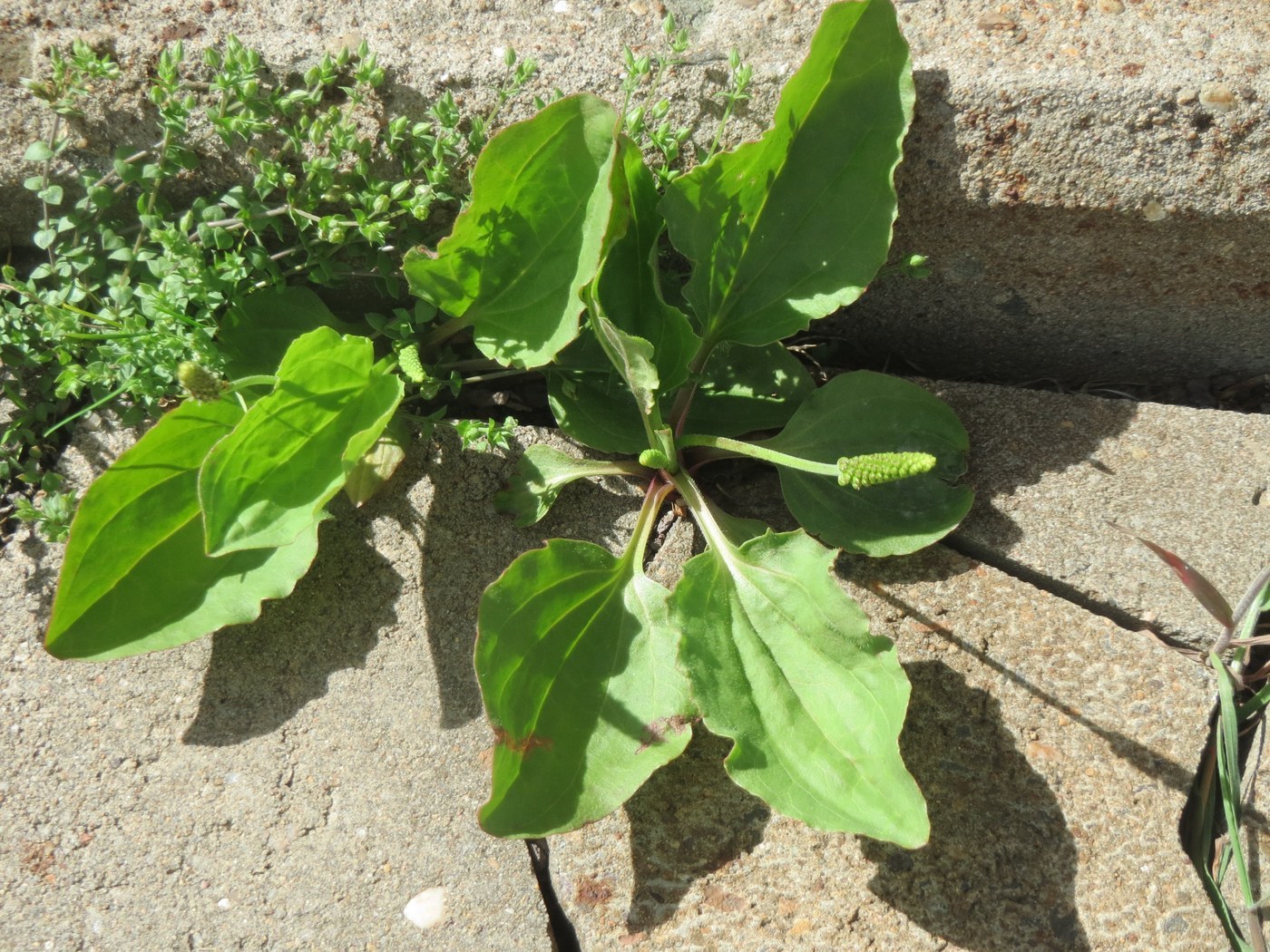
Broadleaf plantain (Plantago major) is a hardy, low-growing perennial that forms a flat rosette of broad, ribbed leaves and slender upright seed spikes. Extraordinarily adaptable, it is one of the easiest plants to grow, thriving on compacted, poor, and disturbed ground where little else will.
Light
Grows in full sun to part shade. It is happiest and most compact in open sun but tolerates dappled shade well. More light produces a tighter rosette and stronger seed spikes.
Water
Drought-tolerant once established, yet equally happy in periodically moist soil. Its deep taproot lets it ride out dry spells, while it also colonizes damp lawn edges and trodden paths. This wide moisture tolerance is a big part of why it succeeds nearly everywhere; occasional watering keeps leaves greener during drought.
Soil & Potting
Plantain is famously unfussy about soil, thriving in compacted, clay, sandy, or poor ground alike. It actually favors disturbed and heavily trodden soil that stifles competitors. No special amendments are needed; almost any soil with basic drainage works.
Humidity & Temperature
A cold-hardy perennial, it withstands frost and returns from its crown each spring across a wide temperature range. It is indifferent to humidity and shrugs off both summer heat and cold winters, dying back in hard freezes and resprouting when the ground warms.
Feeding
No feeding is required. Broadleaf plantain grows vigorously on lean, unimproved soil and needs no fertilizer. Excess nutrients simply encourage lusher leaves without benefiting this tough survivor.
Propagation
It spreads readily by seed from its upright spikes, which shed abundant tiny seeds that germinate on open ground. To grow it deliberately, sow seed on the soil surface in spring or autumn and keep lightly moist until seedlings establish. Mature rosettes can also be divided.
Repotting / Pruning
Little pruning is needed. Remove the seed spikes before they ripen if you want to limit self-sowing, and tidy old outer leaves as they fade. If grown in a container, divide or refresh crowded rosettes every couple of years.
Common Problems & Pests
Broadleaf plantain is highly resistant to pests and disease. Occasional leaf spot or downy mildew may mark the foliage in damp, crowded conditions, and slugs may nibble tender leaves, but the plant almost always shrugs these off. Its main drawback in a tidy garden is prolific self-seeding.
Seasonal Care Tips
In spring, seedlings and overwintered crowns push new rosettes; sow seed now if desired. Through summer it needs almost no care, tolerating heat and drought. In autumn remove seed spikes to control spread. In winter the plant dies back in cold regions and reliably returns from the crown.
Frequently asked questions
Is broadleaf plantain hard to grow?
No, it is one of the easiest plants there is. It tolerates poor, compacted soil, sun or part shade, drought or moisture, and needs essentially no feeding or fussing.
How do I stop it from spreading everywhere?
Remove the upright seed spikes before they ripen. It self-sows prolifically, so cutting the spikes early is the simplest way to keep it in bounds.
Will it survive drought?
Yes. A deep taproot makes it drought-tolerant once established, though occasional watering keeps the leaves greener and fuller during long dry spells.
Does it come back every year?
Yes, it is a cold-hardy perennial that dies back in hard winters and resprouts from its crown each spring, while also self-seeding freely.