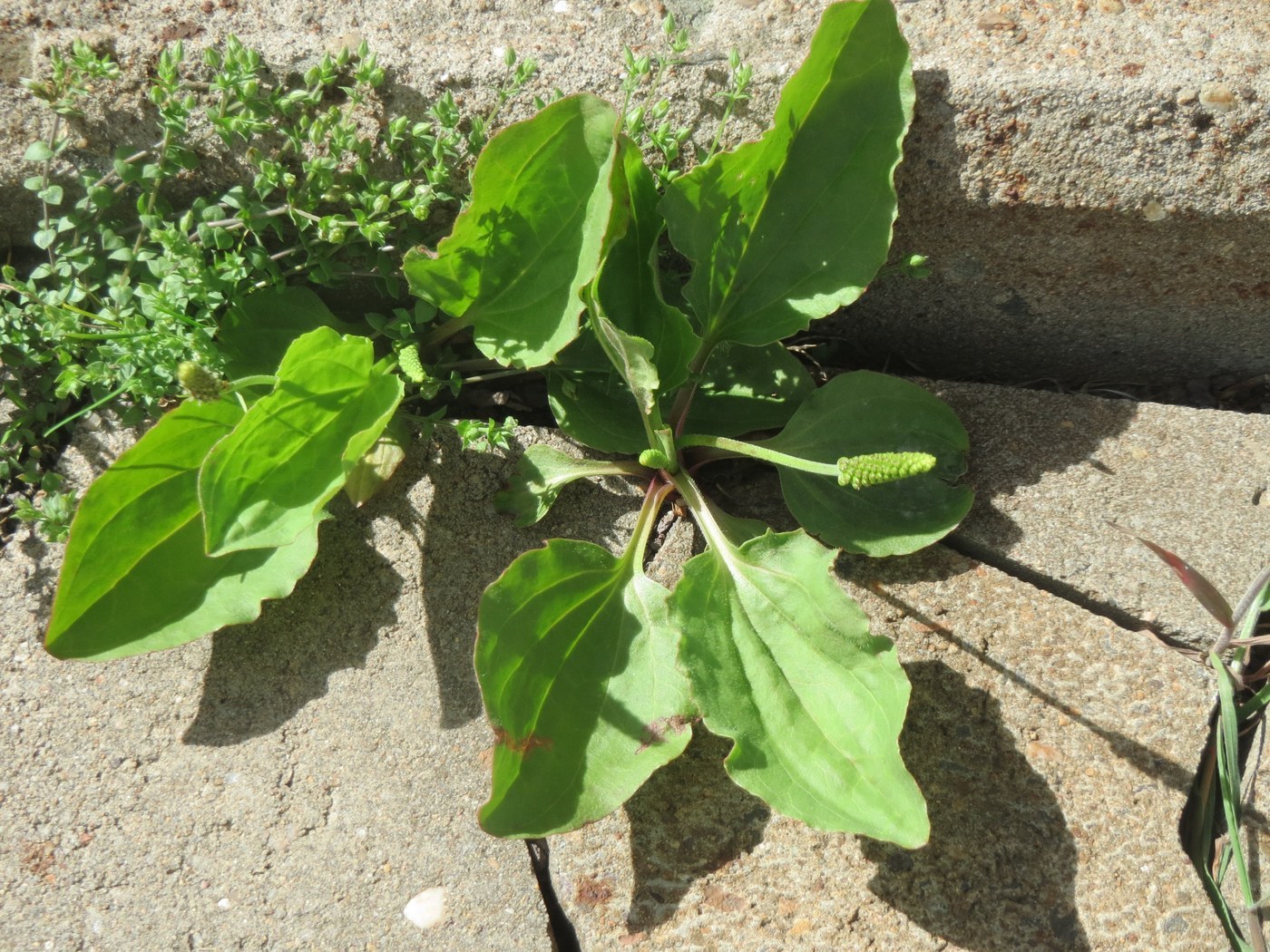
Broadleaf Plantain
Plantago major
Broadleaf plantain is a tough, low-growing perennial weed with a rosette of broad, ribbed leaves and slender flower spikes, found in lawns, paths and compacted ground worldwide. It is unrelated to the banana-like plantain fruit despite the shared name.
- Light
- Full sun to part shade
- Water
- Drought tolerant; tolerates moist soil
- Difficulty
- Easy
Got a plant like this?
Identify any plant from a photo, free.
Overview
Broadleaf plantain (Plantago major) is a hardy perennial herb native to Europe and Asia that has spread to nearly every part of the world as a weed of lawns, sidewalks and disturbed soil. It forms a flat rosette of broad leaves hugging the ground, which lets it survive mowing and foot traffic.
It is unrelated to the starchy banana-like 'plantain' fruit; the shared name is a coincidence. This plantain is a low herb famous for its tolerance of compacted, trampled ground, which earned it the Native American name 'white man's footprint' for the way it followed European settlers.
It is one of the most familiar lawn and pathway weeds in the world.
How to identify it
A ground-hugging perennial forming a basal rosette, with flower spikes to 6-15 in.
- Leaves: broad, oval to egg-shaped, 2-8 in long, with 3-7 prominent parallel veins (ribs) running lengthwise; smooth edges; tough leaf stalks
- Habit: flat rosette pressed to the ground, tolerant of trampling
- Flowers: tiny, greenish, densely packed along a long, slender, leafless spike
- Seeds: numerous, small, in capsules along the spike; sticky when wet
- Roots: short, fibrous root system
Care & growing
Treated as a weed in lawns but easy to grow as a tough groundcover.
- Light: Full sun to part shade
- Water: Very drought tolerant; also tolerates periodically wet, compacted soil
- Soil: Thrives in poor, compacted, disturbed ground where other plants fail
- Control: Hand-pull or dig (remove the whole crown), improve lawn density, or use a broadleaf herbicide; relieving soil compaction discourages it
- Maintenance: Needs essentially no care once established
Habitat & origin
Native to Europe and northern and central Asia, broadleaf plantain now grows on every continent except Antarctica, carried worldwide alongside human settlement.
It is a classic indicator of compacted, disturbed soil: lawns, footpaths, driveways, sidewalk cracks, roadsides, pastures and waste ground. It tolerates trampling better than almost any other broadleaf plant.
Frequently asked questions
Is broadleaf plantain the same as the banana-like plantain?
No. They are completely unrelated plants that happen to share a name. This plantain is a low-growing leafy herb, not a fruit.
Why does plantain grow in my lawn?
It thrives in compacted, trampled, poor soil. Its presence often signals heavy foot traffic or soil that needs aerating.
How do I get rid of it?
Dig out the whole rosette including the crown, improve soil compaction and lawn density, or treat with a broadleaf herbicide for large infestations.
How do I identify broadleaf plantain?
Look for a flat ground-hugging rosette of broad, oval leaves with 3-7 prominent lengthwise ribs, plus tall, slender, greenish flower spikes rising from the center.
Broadleaf Plantain guides
In-depth guides for identifying, growing, and caring for Broadleaf Plantain.
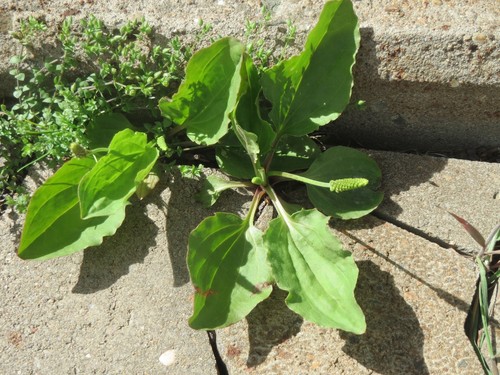
How to Care for Broadleaf Plantain
Broadleaf plantain (Plantago major) is a tough, adaptable rosette perennial that grows almost anywhere, from dry lawns to compacted paths.
Broadleaf Plantain Identification Guide
How to identify broadleaf plantain (Plantago major), a rosette-forming lawn weed with ribbed oval leaves and slender seed spikes.