
Broadleaf Plantain Identification Guide
How to identify broadleaf plantain (Plantago major), a rosette-forming lawn weed with ribbed oval leaves and slender seed spikes.
Read the full Broadleaf Plantain encyclopedia entry →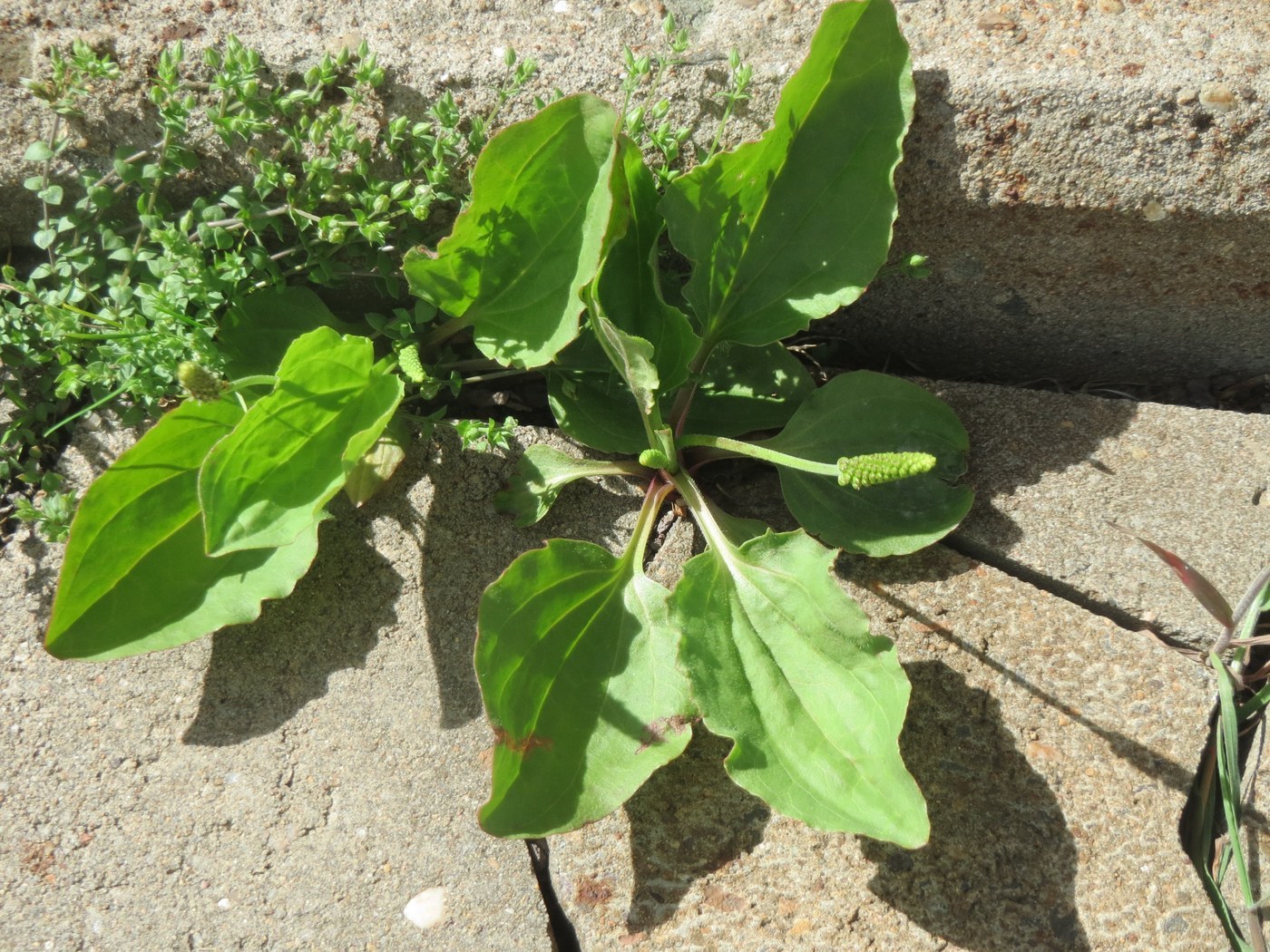
Key Identifying Features
Broadleaf plantain (Plantago major), also called common or greater plantain, is a low perennial weed of lawns, paths, and compacted soils. It is recognized by a flat rosette of broad, oval leaves with strongly parallel veins (ribs) and tall, slender seed spikes rising from the center. It is not related to the banana-like cooking plantain.
- Ground-hugging basal rosette of leaves
- Leaves with prominent parallel ribs
- Narrow, rat-tail seed spikes in summer
Leaves & Stems
Leaves grow directly from the base in a rosette, each broadly oval to egg-shaped, 2-7 inches long, with smooth or slightly wavy margins. The defining trait is 3-7 prominent parallel veins running lengthwise; when you tear a leaf, these veins pull out as tough, stringy fibers. The leaf narrows into a broad, channeled stalk (petiole). There is no upright leafy stem; only the flower stalks rise above the rosette. The thick, ribbed, ground-pressed leaves let it survive foot traffic and mowing.
Flowers & Fruit
From early summer into fall, leafless flower stalks rise 4-12 inches bearing dense, narrow cylindrical spikes of tiny greenish-white flowers, looking like a slender rat's tail or wand. As they mature they turn brown and produce abundant tiny seeds, each plant making thousands. The persistent brown seed spikes are a reliable winter ID feature.
How to Tell It Apart from Look-Alikes
- Narrowleaf (English) plantain (Plantago lanceolata): has long, lance-shaped narrow leaves and a short, compact seed head on a long grooved stalk; broadleaf plantain has wide oval leaves and long thin spikes.
- Dock (Rumex) seedlings / young rosettes: dock leaves are more elongated and lack the pull-apart parallel string veins.
- Hosta seedlings: ribbed leaves but garden-grown, not a flat rosette weed.
Where You'll Find It
Broadleaf plantain thrives in compacted, disturbed soils: lawns, footpaths, driveways, playgrounds, garden edges, and roadsides. It tolerates heavy traffic, mowing, and poor soil, earning the old name "white man's footstep." It grows in sun or part shade across temperate regions worldwide.
Quick ID Checklist
- Flat basal rosette of broad oval leaves
- Parallel ribs that pull out as strings when torn
- No upright leafy stem, only flower stalks
- Long, slender rat-tail seed spikes
- Growing in compacted lawns, paths, and waste ground
Frequently asked questions
What is the difference between broadleaf and narrowleaf plantain?
Broadleaf plantain (Plantago major) has wide oval leaves and long, thin cylindrical seed spikes. Narrowleaf or English plantain (Plantago lanceolata) has long lance-shaped leaves and a short, bullet-like seed head on a tall grooved stalk.
Is broadleaf plantain related to the banana-like plantain?
No. Despite the shared name, this lawn weed is completely unrelated to the starchy cooking plantain banana. It is a small herbaceous rosette plant in the genus Plantago.
How can I confirm a leaf is plantain?
Tear a leaf gently and look for tough, stringy parallel veins that pull out like little strings. Combined with the flat rosette and rat-tail seed spike, this confirms broadleaf plantain.
Why does it grow in my lawn paths?
Broadleaf plantain thrives in compacted, trampled soil where turf struggles, so it is common on footpaths, driveway edges, and high-traffic lawn areas.