
How to Care for Bromeliad
Easy-care guide for Guzmania lingulata: bright indirect light, a filled central cup, and warm, humid conditions.
Read the full Bromeliad encyclopedia entry →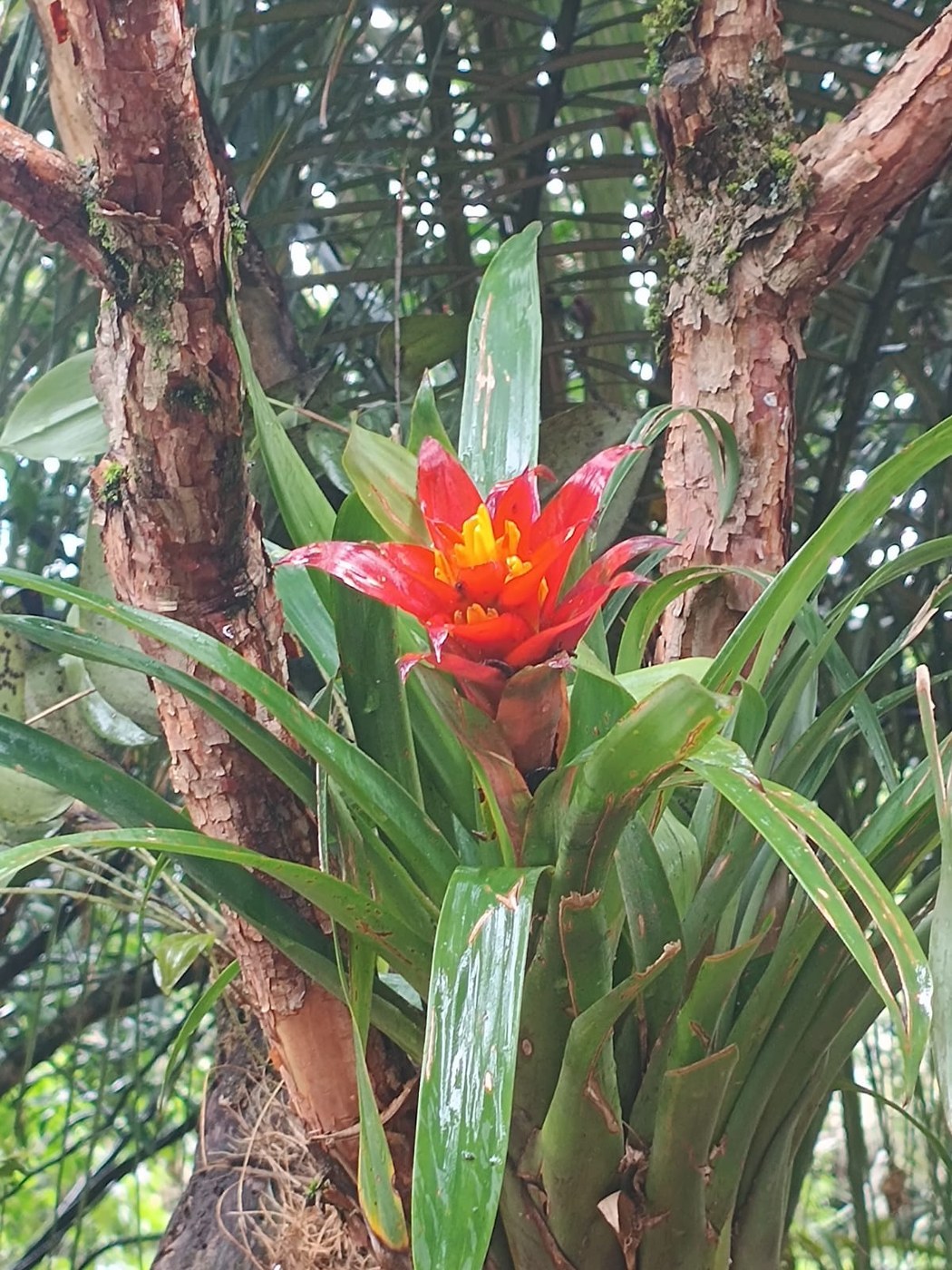
The Guzmania Bromeliad (Guzmania lingulata) is a beginner-friendly tropical rosette prized for its long-lasting, brilliantly coloured flower bract. As an epiphyte it draws much of its water through the central "cup" formed by its rosette of strappy leaves, which makes it forgiving and a little unusual to water.
Light
Grow in bright indirect light. An east or north window, or a filtered spot back from a brighter window, keeps the foliage lush and the bract richly coloured. Direct midday sun scorches the soft leaves, while deep shade dulls colour and weakens the plant. If leaves turn pale or bleached, move it out of direct sun; if they stretch and darken, give more light.
Water
Keep the central cup filled with a shallow reserve of water and let the potting mix stay only lightly moist. Flush and refresh the cup every week or two to prevent stagnation, tipping the plant to empty old water. Use rainwater or distilled water where possible, since Guzmania is sensitive to salts and minerals in hard tap water. Do not overwater the soil, as soggy roots rot easily.
Soil & Potting
Use a fast-draining, airy epiphyte mix, such as orchid bark blended with perlite and a little peat or coir. Bromeliads have small, shallow root systems used mainly for anchorage, so a snug pot with excellent drainage is better than a large, water-holding one. Never let the pot stand in water.
Humidity & Temperature
Bromeliads love warmth and humidity: 40-60% or higher and 18-27 C (65-80 F). They dislike cold and should stay above about 12-13 C (55 F). Boost humidity with a pebble tray, grouping, or a humidifier, especially in dry heated rooms. Keep them away from cold drafts and heating vents.
Feeding
Feed sparingly. During the growing season apply a very dilute, balanced fertiliser (roughly quarter to half strength) to the soil or diluted into the cup occasionally. Bromeliads are light feeders and are easily damaged by excess fertiliser and salt buildup, so under-feeding is far safer than over-feeding.
Propagation
After the central plant flowers it slowly declines, but it produces offsets known as "pups" around its base. When a pup is about one-third to one-half the size of the parent and has begun forming its own roots, cut it away with a clean blade and pot it into fresh epiphyte mix. Keep pups warm, humid, and lightly moist while they establish.
Repotting / Pruning
Bromeliads rarely need repotting because of their small root systems; move a pup up only when it clearly outgrows its pot. Pruning is minimal: trim off browned leaf tips and, once the colourful bract fully fades and browns, cut back the spent flower stalk to redirect energy into the pups.
Common Problems & Pests
The most common problem is rot from a waterlogged pot or stagnant cup water, shown by soft, browning bases. Browned leaf tips indicate low humidity, dry air, or salt/mineral buildup from hard water. Bleached leaves signal too much sun. Watch for scale, mealybugs, and occasionally spider mites; wipe them off or treat with insecticidal soap.
Seasonal Care Tips
In spring and summer keep the cup topped up, humidity high, and feed lightly as the plant grows and colours up. In autumn and winter reduce watering and feeding, keep it warm and away from cold windows, and expect the parent to fade after flowering as pups take over. Nurture the pups through winter for next season's display.
Frequently asked questions
Should I water the soil or the central cup?
Both, but the cup is primary. Keep a shallow reserve of water in the central rosette and refresh it every week or two, while keeping the soil only lightly moist. Never let the soil stay soggy or the roots will rot.
My bromeliad's flower is fading and the plant looks tired. Is it dying?
This is normal. Each rosette flowers once, then slowly declines while sending up offsets called pups at its base. Let the pups grow, then separate and pot them to continue the plant.
Why are the leaf tips turning brown?
Brown tips usually come from low humidity, dry indoor air, or mineral and salt buildup from hard tap water. Raise humidity and switch to rainwater or distilled water for both the cup and the soil.
How much light does a Guzmania need?
Bright indirect light is ideal. Keep it out of harsh direct sun, which scorches the soft leaves, but give it enough brightness to keep the foliage lush and the bract vividly coloured.