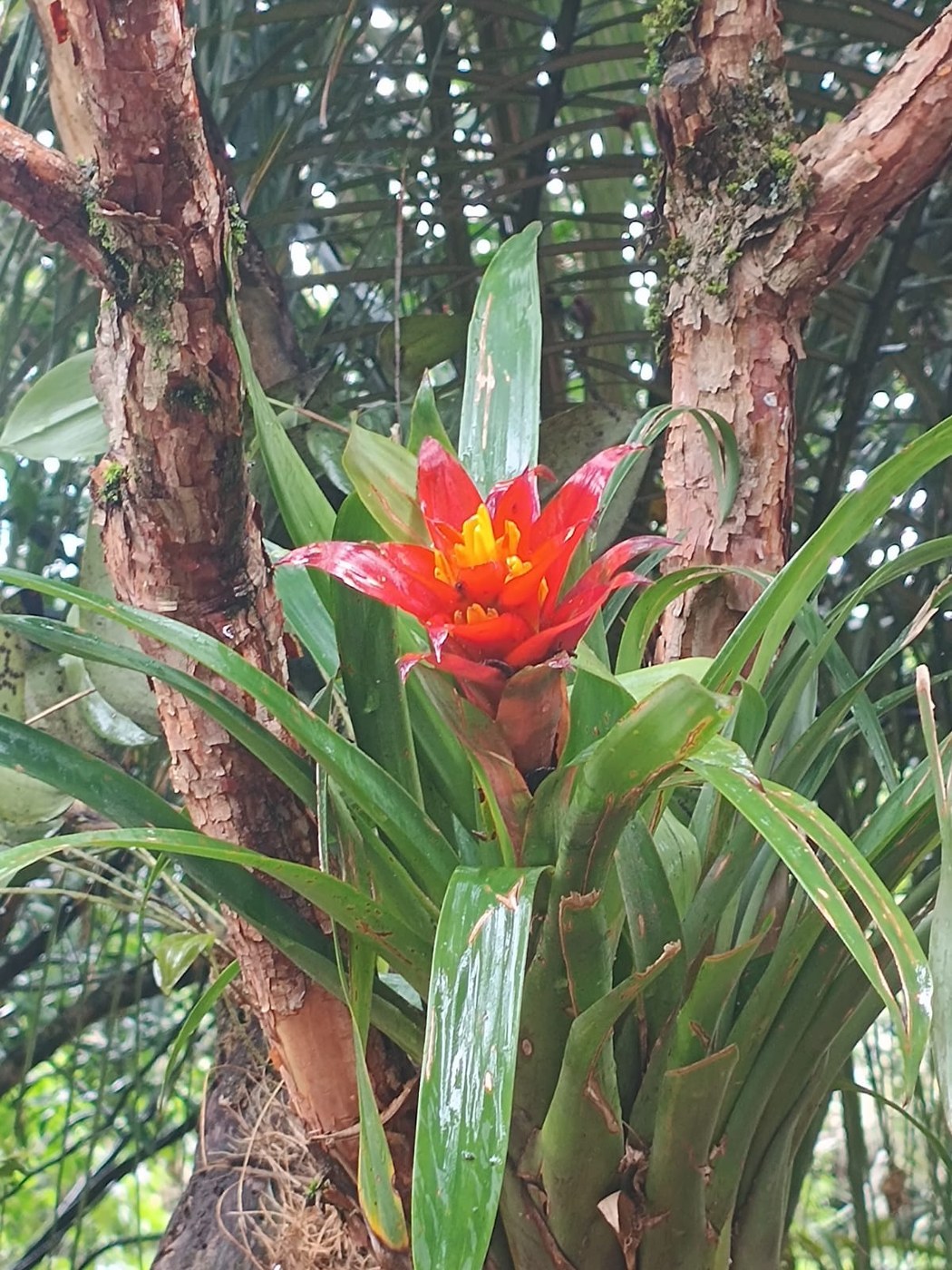
Bromeliad
Guzmania lingulata
Bromeliads are tropical rosette plants grown for their long-lasting, brilliantly colored flower bracts. Many hold water in a central cup formed by their overlapping leaves.
- Light
- Bright indirect light
- Water
- Keep central cup filled; soil lightly moist
- Difficulty
- Easy
Got a plant like this?
Identify any plant from a photo, free.
Overview
Bromeliads are a diverse family of plants from the Americas that includes pineapples, Spanish moss, and many popular houseplants. The showy types grown indoors, such as Guzmania and Aechmea, form a rosette of strappy leaves around a central reservoir, or tank, that holds water.
From the center rises a vivid, long-lasting bloom spike whose color comes mostly from bracts rather than the small true flowers. A single bract display can stay colorful for months.
After blooming the parent rosette slowly dies, but it leaves behind offsets (pups) that grow into the next generation.
How to identify it
Recognize a tank bromeliad by:
- Rosette: stiff, strap-like leaves arranged in a circle
- Central cup: a watertight reservoir formed where the leaf bases overlap
- Bloom spike: a bright, long-lasting structure of colorful bracts (red, orange, pink, yellow)
- True flowers: small and short-lived, tucked among the bracts
- Pups: offsets that form at the base after flowering
Care & growing
- Light: bright, indirect light; many tolerate medium light
- Water: keep the central cup filled with fresh water and the soil lightly moist; flush the cup periodically to prevent stagnation
- Humidity: moderate to high
- Soil: very fast-draining, airy mix (orchid or bromeliad mix)
- Temperature: 60-80 degrees F
- Feeding: light feeding; dilute fertilizer in the cup or on soil sparingly
- Propagation: separate and pot up pups once they reach about a third of the parent's size
Habitat & origin
Bromeliads are native to the tropical and subtropical Americas, from the southern United States through Central and South America. Many grow as epiphytes on tree branches in humid rainforests, while others are terrestrial or grow on rocks.
Guzmania lingulata hails from the rainforests of Central and northern South America. Bromeliads are grown worldwide as colorful, long-blooming houseplants.
Frequently asked questions
How do I water a bromeliad?
Keep the central cup filled with fresh water and the soil only lightly moist. Empty and refill the cup every week or two to keep the water from going stagnant.
My bromeliad's flower is dying, is the plant dead?
No. Each rosette blooms only once and then slowly declines, but it produces pups at the base. Pot up those offsets to grow the next generation.
Why won't my bromeliad bloom?
Pups take a year or more to mature. To prompt a reluctant adult, you can enclose it with a ripe apple for a few days; the ethylene gas can trigger flowering.
Bromeliad guides
In-depth guides for identifying, growing, and caring for Bromeliad.
How to Care for Bromeliad
Easy-care guide for Guzmania lingulata: bright indirect light, a filled central cup, and warm, humid conditions.
Bromeliad Identification Guide
Identify Bromeliads by their rosette of stiff strap leaves forming a central water-holding tank and a long-lasting, brightly colored flower spike.