
How to Care for Buffalo Berry
Growing guide for Shepherdia argentea, a tough silver-leaved shrub for full sun, dry soils, and exposed, low-maintenance landscapes.
Read the full Buffalo Berry encyclopedia entry →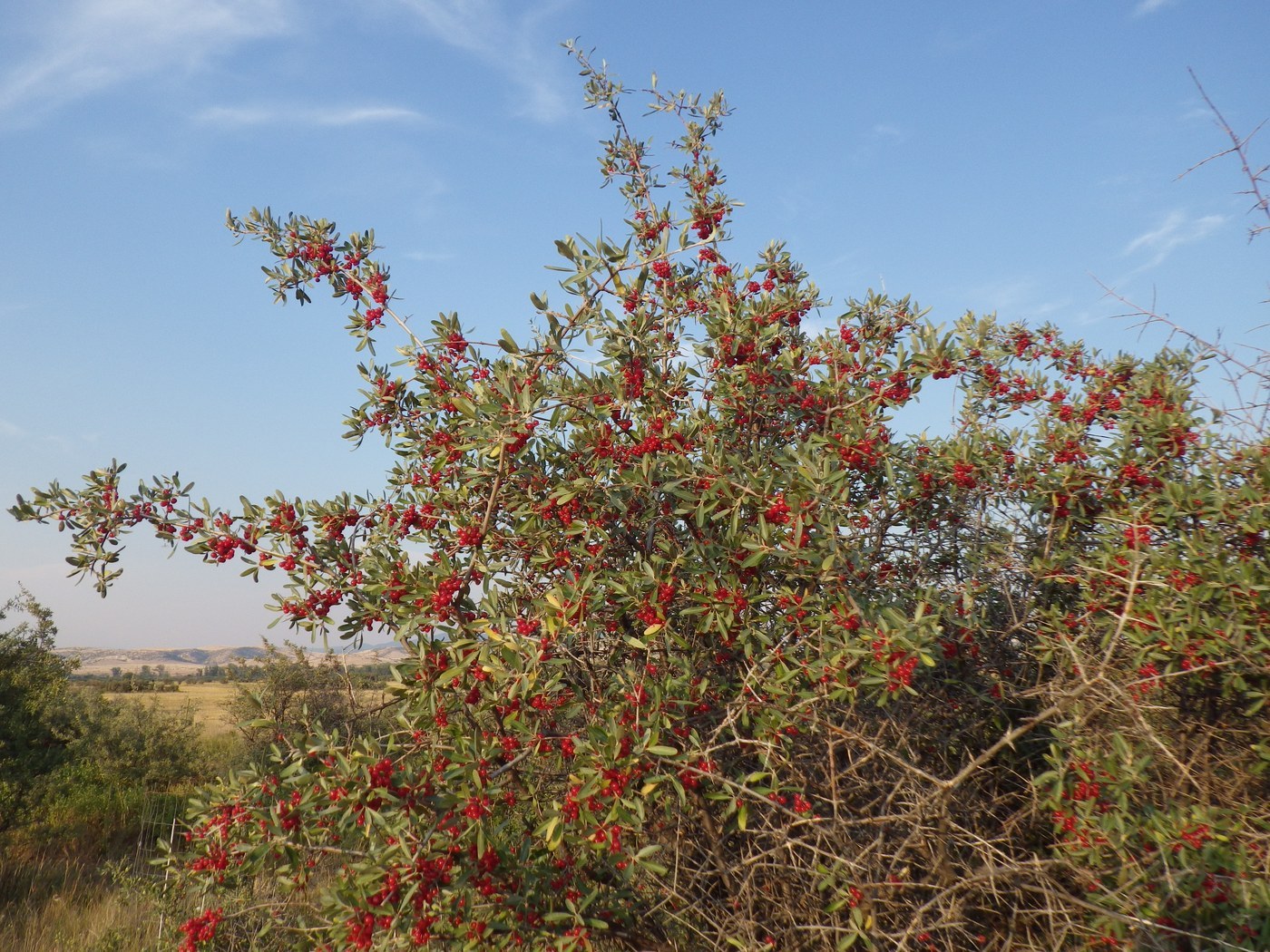
Buffalo berry (Shepherdia argentea) is a hardy, silvery-leaved deciduous shrub with a thorny, upright habit and striking gray foliage that shimmers in the wind. It is an easy, resilient plant ideal for tough sites, thriving on neglect once established in full sun and lean, dry soil.
Light
Buffalo berry demands full sun for its best silvery color, dense form, and strong flowering. It is a plant of open plains and exposed slopes, so give it the brightest, most open position you have. In shade it grows thin and loses its characteristic bright foliage.
Water
Water needs are low. This shrub is exceptionally drought-tolerant thanks to deep roots and its ability to fix nitrogen in poor soil. Water new plants occasionally through their first season to establish them, then rely largely on natural rainfall. It withstands dry, exposed conditions far better than soggy ground.
Soil & Potting
It is famously unfussy about soil and tolerates poor, sandy, gravelly, and even alkaline or saline ground. Sharp drainage is the one real requirement; it will not thrive in heavy, waterlogged soil. Because it fixes its own nitrogen, it actually prefers lean soils and needs no rich amendment at planting.
Humidity & Temperature
Extremely cold-hardy and wind-tolerant, buffalo berry shrugs off harsh winters, drying winds, and temperature extremes. It is well suited to continental climates with cold winters and hot, dry summers, and it tolerates low humidity with ease. This toughness makes it a reliable choice for shelterbelts and exposed borders.
Feeding
Feeding is rarely necessary. Its nitrogen-fixing root nodules supply much of what it needs, and rich feeding tends to produce soft, floppy growth. On very poor sites a light topdressing of compost in spring is all that is warranted.
Propagation
Propagate from seed, which usually benefits from a period of cold stratification to break dormancy, or from softwood or semi-hardwood cuttings taken in summer. It also produces suckers and can be divided from rooted offsets. Note that plants are typically either male or female, so grow both if flowering display and berry set matter.
Repotting / Pruning
Little pruning is needed. Remove dead, damaged, or crossing branches in late winter, and thin congested growth to maintain an open shape. It tolerates hard renovation pruning if a plant becomes overgrown. Be mindful of the sharp thorns and wear gloves when working around it.
Common Problems & Pests
Buffalo berry is remarkably trouble-free and largely pest- and disease-resistant. The main causes of failure are wet, poorly drained soil leading to root rot, or too much shade producing weak, sparse growth. Give it sun and drainage and it will need almost no intervention.
Seasonal Care Tips
In spring, top-dress lean soil lightly if needed and enjoy the small early flowers. Through summer it needs little attention beyond occasional watering for young plants. In autumn the silvery foliage and, on female plants, bright berries provide interest. In winter it is fully dormant and needs no protection even in harsh climates.
Frequently asked questions
Do I need more than one buffalo berry plant?
Plants are usually male or female, so to get a good display of berries you need at least one male to pollinate female plants. For foliage alone, a single shrub is fine.
How much water does buffalo berry need?
Very little once established. Water occasionally through the first season, then it is highly drought-tolerant and generally thrives on natural rainfall alone.
Will it grow in poor soil?
Yes, it actually prefers lean soils. As a nitrogen fixer it tolerates sandy, gravelly, alkaline, and even somewhat saline ground, as long as drainage is sharp.
Why is my buffalo berry sparse and floppy?
Usually too little sun or overly rich, moist conditions. Move it to full sun and lean, well-drained soil, and avoid feeding heavily.