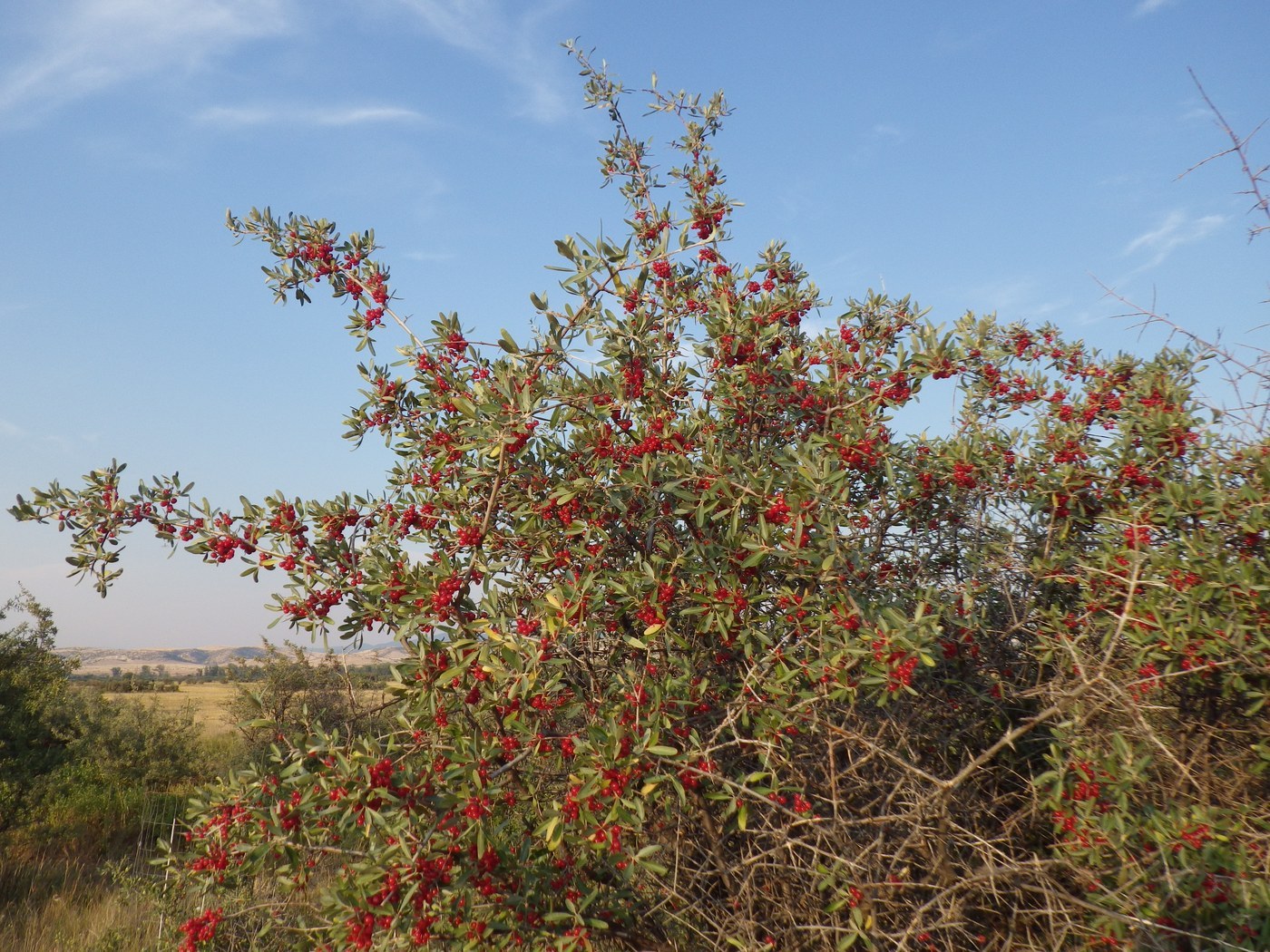
Buffalo Berry
Shepherdia argentea
A tough, thorny North American shrub with silvery leaves and small red berries. Nitrogen-fixing and extremely drought- and cold-hardy, it forms dense thickets on poor soils.
- Light
- Full sun
- Water
- Low; very drought-tolerant
- Difficulty
- Easy
Got a plant like this?
Identify any plant from a photo, free.
Overview
Silver buffalo berry is a hardy, thicket-forming shrub native to the prairies and river valleys of western and central North America. It is named for its long association with bison.
The plant is exceptionally tough, thriving in cold, dry, and poor soils. Like its relatives, it fixes nitrogen through root symbiosis, helping it colonize disturbed and infertile ground.
How to identify it
- Dense, often thorny deciduous shrub or small tree, 6 to 18 ft (2 to 6 m)
- Narrow, silvery-gray leaves with star-shaped scales, arranged oppositely
- Inconspicuous yellowish flowers; plants are usually dioecious (separate male and female plants), so both are needed for fruit
- Small, oval, bright red (sometimes yellow) berries about 5 to 6 mm, borne densely along the branches
Care & growing
Light: Full sun.
Water: Very low once established; highly drought-tolerant, though some moisture improves fruiting.
Soil: Tolerates poor, dry, sandy, rocky, alkaline, and even somewhat saline soils; needs good drainage.
Temperature: Extremely cold-hardy, surviving harsh continental winters well below 0 F.
Feeding: Generally none needed; as a nitrogen-fixer it enriches its own soil.
Propagation: By seed (often needing cold stratification), suckers, or cuttings. Remember to plant both male and female plants for berries.
Habitat & origin
Native to central and western North America, from the Canadian prairie provinces south through the Great Plains and into the western United States.
It favors river valleys, stream banks, prairie draws, and dry, open slopes, often forming dense thickets. It is valued for windbreaks, erosion control, and wildlife plantings on tough, exposed sites.
Frequently asked questions
Why do I need two buffalo berry plants to get fruit?
The plants are dioecious, meaning male and female flowers grow on separate plants. You need at least one male near female plants for the females to set berries.
How hardy is buffalo berry?
Extremely. It tolerates severe cold, drought, poor and alkaline soils, and exposed sites, making it one of the toughest fruiting shrubs for the northern plains.
Does buffalo berry improve the soil?
Yes. Like its relatives, it forms a symbiosis with nitrogen-fixing organisms in its roots, enriching poor soils and helping it colonize disturbed ground.
Buffalo Berry guides
In-depth guides for identifying, growing, and caring for Buffalo Berry.
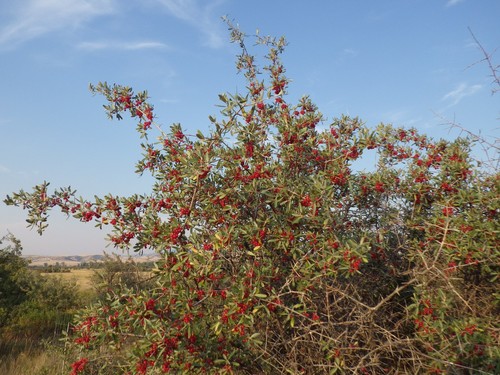
How to Care for Buffalo Berry
Growing guide for Shepherdia argentea, a tough silver-leaved shrub for full sun, dry soils, and exposed, low-maintenance landscapes.
Buffalo Berry Identification Guide
Identify buffalo berry (Shepherdia argentea) by its silvery scaly leaves and twigs, spiny branch tips, opposite leaf arrangement, and clusters of small red berries on a thorny shrub.