
How to Care for Bull Thistle
A tough, sun-loving biennial thistle with spiny foliage and purple blooms; give it sun and lean soil and manage its vigorous self-seeding.
Read the full Bull Thistle encyclopedia entry →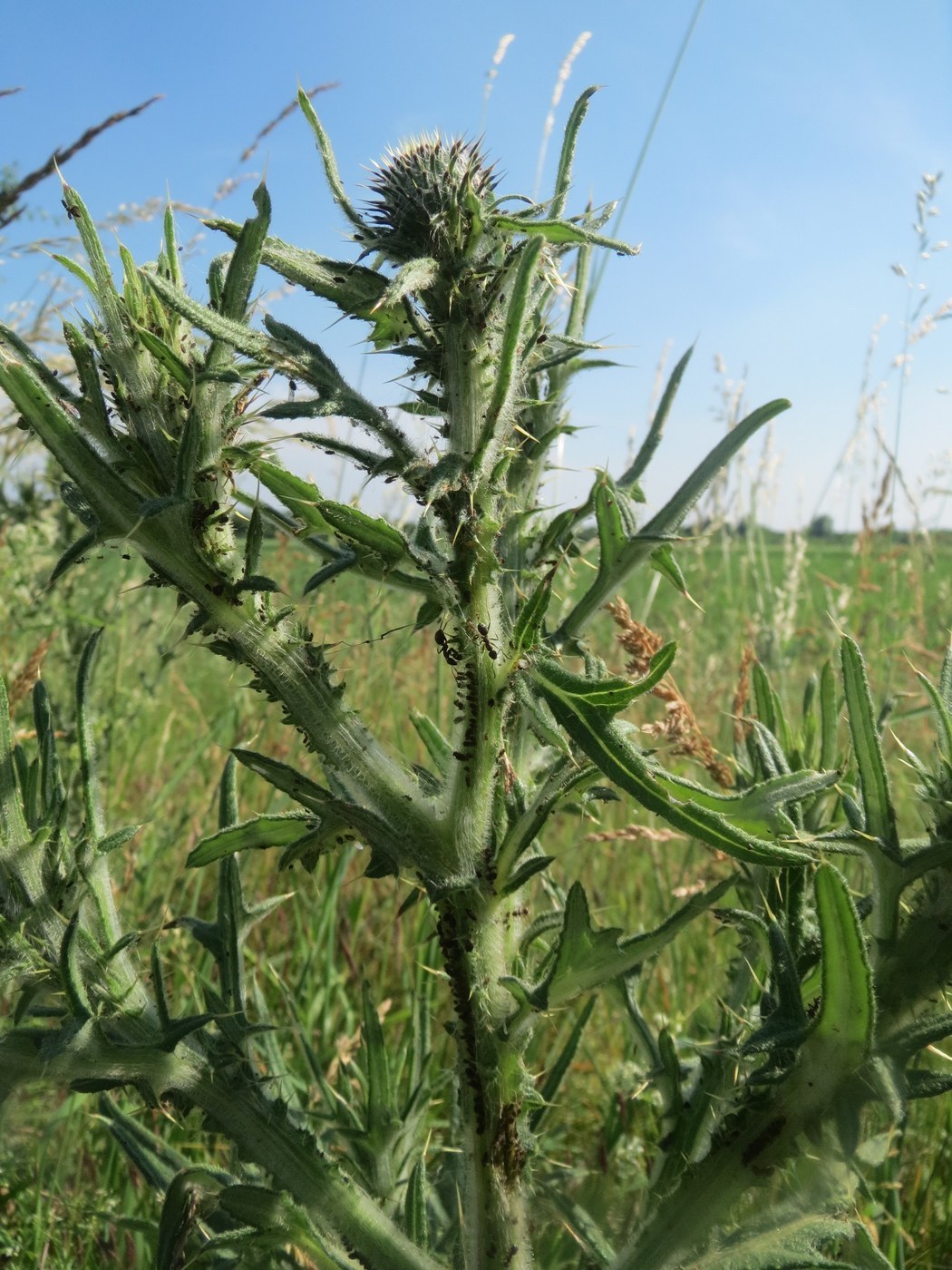
Bull thistle (Cirsium vulgare) is a spiny, robust biennial recognized for its deeply spined leaves and large rosy-purple flower heads that draw pollinators. It is extremely undemanding, thriving in poor, disturbed ground, and its main challenge is controlling how freely it spreads by seed.
Light
Bull thistle wants full sun, at least 6 hours a day, which produces the sturdiest rosettes and most abundant blooms. It performs poorly in shade, growing thin and weak. An open, sunny position mimics the disturbed meadows and roadsides where it naturally flourishes.
Water
Water needs are low to moderate. Bull thistle is notably drought-tolerant thanks to a deep taproot and rarely needs supplemental water once established. Give occasional deep watering only during extended dry periods or while first-year rosettes are establishing. It dislikes soggy soil and tolerates dry, lean conditions with ease.
Soil & Potting
This is a plant of poor, disturbed soils; it grows in almost anything with reasonable drainage, from gravelly to clay-loam ground, across a wide pH range. Rich soil simply makes it larger and more aggressive. Because it forms a long taproot, it is best grown in open ground rather than containers. No special potting is needed.
Humidity & Temperature
Bull thistle is hardy across a broad temperate range, tolerating cold winters as a ground-hugging rosette and hot summers when it bolts and flowers. It is indifferent to humidity. The first-year rosette overwinters, then the plant shoots up and blooms in its second year before setting seed.
Feeding
Feeding is essentially unnecessary and generally discouraged, since fertile conditions only increase this vigorous plant's size and seed output. On the poorest soils a very light compost topdressing is more than enough. In most gardens no fertilizer is required at all.
Propagation
Bull thistle reproduces entirely by seed. Its fluffy, wind-borne seeds germinate readily on bare soil, forming a rosette the first year and flowering the second. If growing it deliberately for its pollinator value, scatter seed on cleared ground in fall or spring. Be aware it self-sows prolifically and can spread well beyond where you plant it, so many gardeners cut off the seed heads before they ripen to keep it in check.
Repotting / Pruning
As a biennial grown in the ground, it is not repotted. The key maintenance task is deadheading: cut off flower heads as they fade and before the fluffy seed disperses to prevent unwanted spread. To remove a plant, dig out the entire taproot, as pieces left behind or a cut crown can resprout. Wear thick gloves and long sleeves when handling the very spiny foliage.
Common Problems & Pests
Bull thistle is exceptionally tough and suffers few pests or diseases. Aphids may gather on stems and buds, and occasional rust or powdery mildew can spot the leaves in damp seasons, but these rarely trouble the plant. Its biggest "problem" from a gardener's view is its aggressive self-seeding and the sharp spines that make handling difficult. In many regions it is considered a weed, so containment is the priority.
Seasonal Care Tips
Seeds germinate in spring or fall to form first-year rosettes that overwinter. In the second year the plant bolts and blooms through summer, feeding bees and butterflies. The critical seasonal task is to cut spent flower heads before seed matures in late summer if you want to prevent spread. Remove unwanted plants by digging the full taproot before they set seed.
Frequently asked questions
Is bull thistle a perennial?
No, it is a biennial. It forms a leafy rosette the first year, overwinters, then sends up a flowering stalk and sets seed in the second year before dying. It persists in an area only by self-seeding.
How do I stop bull thistle from spreading?
Cut off the flower heads before the fluffy seeds ripen and disperse, since it spreads entirely by wind-blown seed. To remove plants, dig out the whole taproot, as a cut crown can resprout.
Does bull thistle need watering?
Rarely. It is deeply drought-tolerant once established and thrives in lean, dry ground. Water only young rosettes or during prolonged drought, and avoid soggy soil.
Why grow bull thistle at all?
Its large purple flower heads are magnets for bees and butterflies, so it has value in wildlife and pollinator plantings. Just site it in full sun and keep its vigorous seeding under control.