
Bunny Ear Cactus Identification Guide
Identify the Bunny Ear Cactus (Opuntia microdasys) by its flat oval pads arranged in pairs and its tufts of fine glochid bristles instead of true spines.
Read the full Bunny Ear Cactus encyclopedia entry →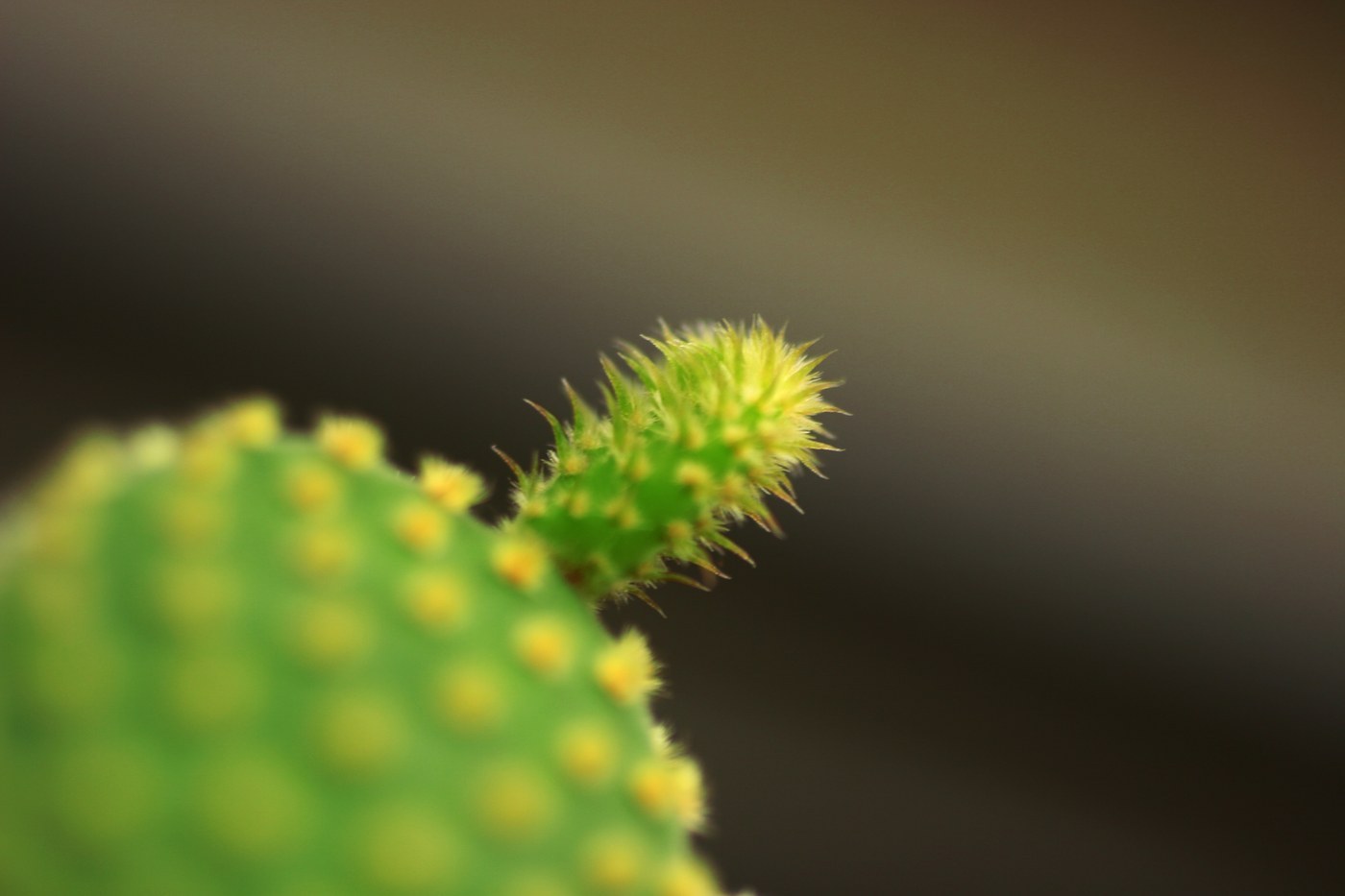
Key Identifying Features
The Bunny Ear Cactus (Opuntia microdasys) is a small prickly-pear from Mexico, named for its flat, oval pads that sprout in pairs, giving the silhouette of a rabbit's head and ears. Its defining trait is the absence of long spines — instead each pad is dotted with neat, evenly spaced tufts of tiny barbed bristles called glochids.
- Pad-shaped (cladode) segments, oval to rounded, flattened
- Paired branching that creates the bunny-ear look
- Polka-dot pattern of glochid tufts (white, yellow or reddish-brown)
- Compact, bushy habit, usually 30–60 cm tall as a houseplant
Leaves & Stems
Like all cacti, the true leaves are absent; photosynthesis happens in the flattened green pads (cladodes), which are 6–15 cm long and velvety to the eye. The pads are soft green to grey-green. Across each pad sit regularly spaced areoles, and from every areole bursts a dense tuft of glochids — hair-fine, barbed bristles 2–3 mm long. Warning for ID handlers: glochids detach at the lightest touch and lodge painfully in skin; never test a bunny ear cactus with bare fingers. Common forms include the golden O. microdasys var. aurea (yellow glochids), the white-dotted var. albispina ("angel wings"), and a cinnamon-bristled form.
Flowers & Fruit
Mature plants in strong light produce cup-shaped, pale-yellow to creamy flowers about 5 cm across along the pad edges in summer, sometimes flushed red. These ripen into small, rounded, red to purple fleshy fruits, typical of prickly pears though smaller.
How to Tell It Apart from Look-Alikes
- vs. other Opuntia (prickly pears): most prickly pears carry obvious long, sharp spines; bunny ear has only glochid tufts, no large spines
- vs. Opuntia rufida (cinnamon cactus): very similar but rufida has reddish-brown glochids and rounder pads; microdasys typically shows white or yellow tufts
- vs. Mickey Mouse cactus: a marketing name often applied to the very same plant, so the paired-pad shape is your real guide
Where You'll Find It
It is one of the most widely sold beginner cacti, found on windowsills and in mixed cactus dishes worldwide. In the wild it grows in the arid central and northern highlands of Mexico in rocky, sun-baked soils.
Quick ID Checklist
- Flat oval pads branching in pairs (rabbit-ear shape)
- Even polka-dot rows of glochid tufts
- No long spines — only fine barbed bristles
- Velvety green pads, compact bushy form
- Pale-yellow flowers along pad margins on mature plants
Frequently asked questions
Does the Bunny Ear Cactus have spines?
Not true spines. It has tufts of tiny barbed bristles called glochids. They look harmless but detach easily and are very irritating in skin, so handle with tongs.
Why does it look like bunny ears?
New pads emerge in pairs from the top of an older pad, so a young plant often resembles a rabbit's head with two upright ears.
How is it different from a regular prickly pear?
Regular prickly pears (Opuntia) usually have long sharp spines. Opuntia microdasys lacks those, showing only the polka-dot glochid tufts.
What are the white or yellow dots all over the pads?
Those are areoles packed with glochids. Color varies by variety — yellow in var. aurea, white in var. albispina, brown in related forms.