Bunny Ear Cactus
Opuntia microdasys
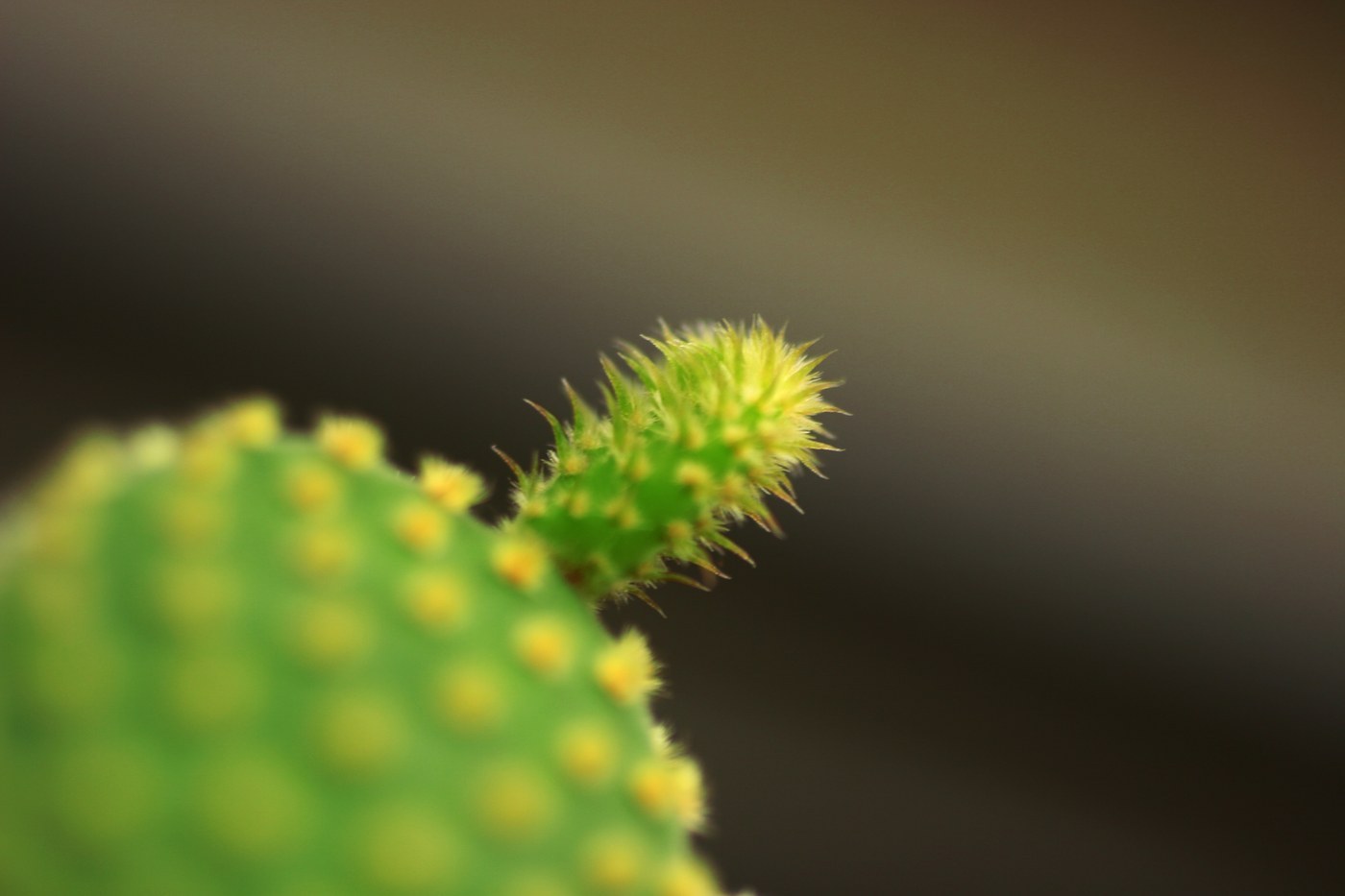
The bunny ear cactus is a charming Mexican prickly pear whose flat, paddle-shaped pads grow in pairs resembling rabbit ears, dotted with tufts of fine golden glochids instead of long spines.
- Light
- Bright direct light
- Water
- Sparingly; dry out fully between
- Difficulty
- Easy
Got a plant like this?
Identify any plant from a photo, free.
Overview
The bunny ear cactus is one of the most recognizable and beginner-friendly cacti, named for the way its oval pads branch in pairs that look like a rabbit's ears. It is a low, clumping species native to the deserts of Mexico.
Instead of large spines, its pads are covered in neat polka-dots of glochids, tiny barbed bristles that detach easily and lodge in skin, so it should be handled with care despite its cuddly appearance.
How to identify it
Key identifying features:
- Pads: flat, oval to rounded green segments (cladodes) growing in branching pairs, 2-6 in long
- Glochids: dense, evenly spaced tufts of fine golden or white bristles, no long central spines
- Habit: dense, shrubby clumps usually under 2-3 ft tall
- Flowers: yellow, cup-shaped blooms in summer on mature plants
- Fruit: small red to purple egg-shaped fruits follow flowering outdoors
Care & growing
Light: Full, bright sun; a south-facing window indoors keeps it compact and healthy.
Water: Water deeply but infrequently, letting the soil dry completely. In winter, water only rarely.
Soil: Gritty cactus mix with excellent drainage.
Temperature: Warm, 70-100F in summer; tolerates cool, dry winters down to about 50F.
Feeding: A diluted cactus fertilizer once or twice during the growing season.
Propagation: Extremely easy; remove a pad with tongs, let it callus for a few days, and set it in dry soil to root.
Habitat & origin
Opuntia microdasys is native to the arid plateaus and desert scrub of central and northern Mexico, thriving in hot, sunny, well-drained conditions.
It is grown worldwide as a potted houseplant and as a landscape succulent in dry, frost-free regions, and has naturalized in parts of Australia and South Africa.
Frequently asked questions
Do bunny ear cacti have spines?
No long spines, but the tufts are made of glochids, tiny barbed bristles that easily lodge in skin. Handle with gloves or tongs.
Why is my cactus shriveling?
Often underwatering or, paradoxically, root rot from overwatering. Check the roots and water thoroughly only when the soil is bone dry.
Will it flower indoors?
It can produce yellow flowers with enough direct sun and a cool, dry winter rest, but blooming indoors is uncommon.
How do I propagate it?
Twist off a pad with tongs, let the cut end callus for several days, then place it on dry cactus soil where it will root.
Bunny Ear Cactus guides
In-depth guides for identifying, growing, and caring for Bunny Ear Cactus.
How to Care for Bunny Ear Cactus
Bunny ear cactus (Opuntia microdasys) is an easy, sun-loving pad cactus needing bright light, sparse water, and gritty soil.
Bunny Ear Cactus Identification Guide
Identify the Bunny Ear Cactus (Opuntia microdasys) by its flat oval pads arranged in pairs and its tufts of fine glochid bristles instead of true spines.