
Bur Oak Identification Guide
Identify bur oak by its large fiddle-shaped lobed leaves, deeply ridged corky bark, and giant fringed acorn caps. Includes how to separate it from white oak and other members of the white oak group.
Read the full Bur Oak encyclopedia entry →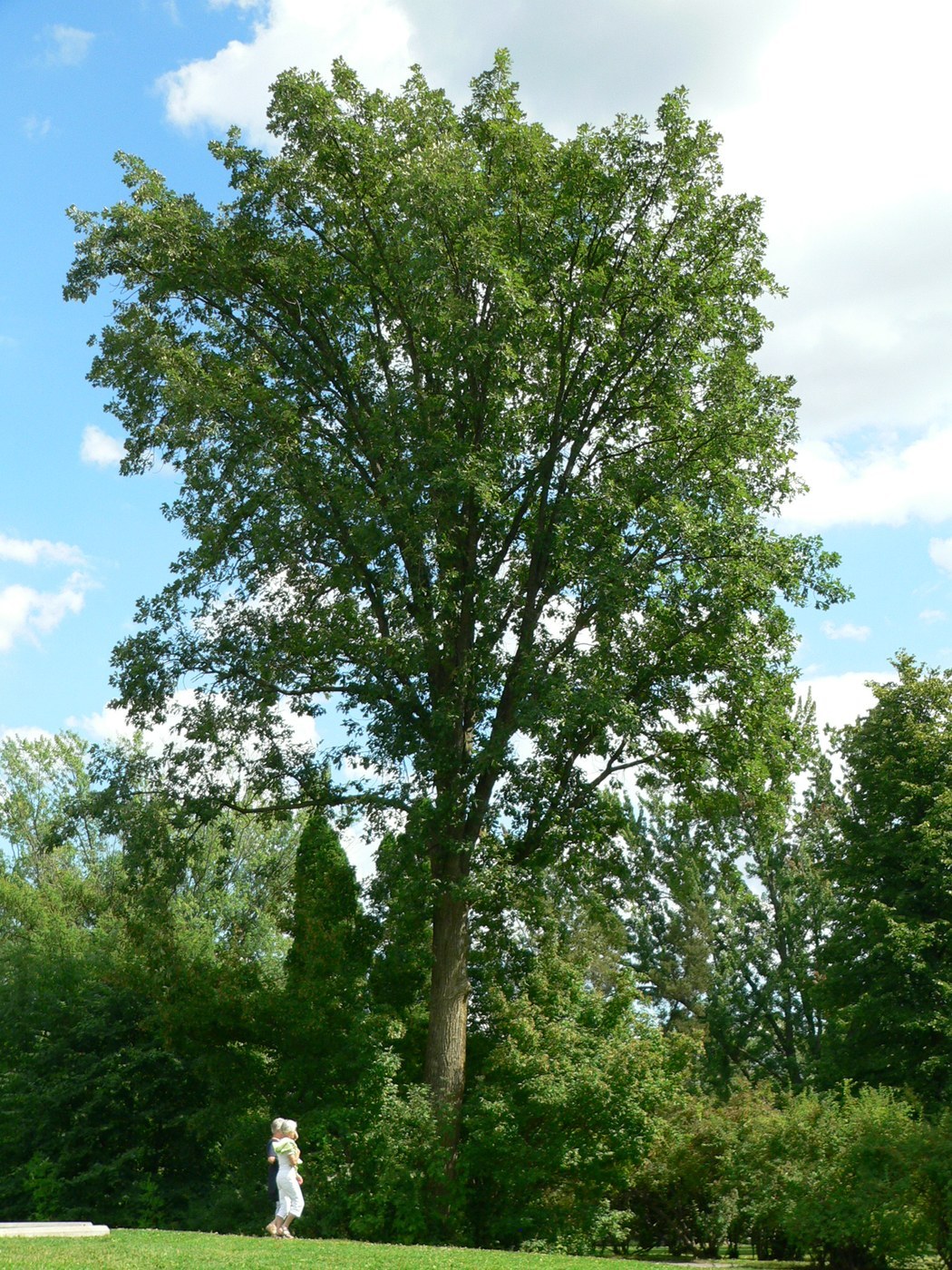
Key Identifying Features
Bur oak (Quercus macrocarpa) is a massive, slow-growing oak of central North America and a member of the white oak group. Its signature features are the enormous acorns with a deep, fringed (mossy) cap, the large fiddle- or violin-shaped leaves with rounded lobes, and the deeply furrowed, often corky bark. The huge acorn cap fringe is the single most diagnostic trait.
- Very large acorns with a deep cap fringed by a mossy whisker-like edge
- Big leaves with rounded lobes and a deep waist near the middle
- Thick, deeply ridged, corky grey-brown bark
- Stout, often corky-winged twigs
Leaves & Stems
Bur oak leaves are alternate, large (10 to 30 cm), and distinctive in shape: they widen toward the tip, have rounded lobes typical of the white oak group, and usually show a deep pair of sinuses about the middle that nearly cut the leaf in two, giving a fiddle or cross shape. The upper surface is dark green and glossy; the underside is pale and softly hairy. Twigs are stout and often develop corky ridges or wings. Bark is thick, grey-brown, deeply furrowed into rough vertical ridges, helping the tree survive prairie fires.
Flowers & Fruit
Like all oaks, bur oak flowers in spring as drooping yellow-green male catkins with inconspicuous female flowers. The fruit is its claim to fame: the largest acorn of any North American oak, up to 3 to 4 cm, with a deep cup enclosing half or more of the nut and a conspicuous fringe of soft, mossy scales around the rim (the "bur"). Acorns mature in a single season and are an important wildlife food. The fringed cap is unmistakable.
How to Tell It Apart from Look-Alikes
- White oak (Q. alba): rounded lobes too, but leaves are more evenly lobed without the deep central waist, bark is lighter and flaky, and acorn caps are shallow and not fringed.
- Swamp white oak (Q. bicolor): shallowly lobed/toothed leaves with white undersides; acorn caps are only slightly fringed and acorns are long-stalked.
- Red oak group: leaves have pointed, bristle-tipped lobes, immediately ruling out bur oak.
The giant acorn with a mossy fringed cap plus fiddle-shaped rounded-lobed leaf plus corky bark and twigs confirm bur oak.
Where You'll Find It
Bur oak ranges across the central and eastern United States and into Canada, famous as a tree of prairies, oak savannas, river bottoms, and open woodlands. Its thick fire-resistant bark lets it dominate fire-prone grasslands, where old open-grown specimens develop broad, spreading crowns. It tolerates a wide range of soils, from dry uplands to moist bottomlands.
Quick ID Checklist
- Acorn very large with a deep, mossy-fringed cap
- Leaves large, fiddle-shaped, with rounded lobes
- Deep pair of sinuses near the leaf middle
- Thick, deeply furrowed corky grey-brown bark
- Stout twigs often with corky wings
- Prairies, savannas, and bottomlands of central N. America
Frequently asked questions
What makes bur oak acorns so distinctive?
Bur oak has the largest acorns of any North American oak, and the cup is deep with a conspicuous fringe of soft, mossy scales around the rim. This fringed cap is the single most reliable identifier.
How do I tell bur oak from white oak?
Both have rounded lobes, but bur oak leaves have a deep central waist (fiddle shape), darker corky bark and twigs, and big fringed acorn caps. White oak has more evenly lobed leaves, flaky light bark, and smooth shallow acorn caps.
Is bur oak in the white oak or red oak group?
The white oak group. Its leaves have rounded, bristle-free lobes and its acorns mature in one season, both white-oak traits. Red oaks have pointed, bristle-tipped lobes.
Why does bur oak have such thick corky bark?
Bur oak evolved in fire-prone prairies and savannas, and its thick, deeply furrowed corky bark insulates the tree against grass fires, letting it survive where thinner-barked trees cannot.