
Burning Bush Identification Guide
Identify Burning Bush (Euonymus alatus) by its brilliant scarlet fall foliage, distinctive corky wings on the stems, and small purplish four-part berries.
Read the full Burning Bush encyclopedia entry →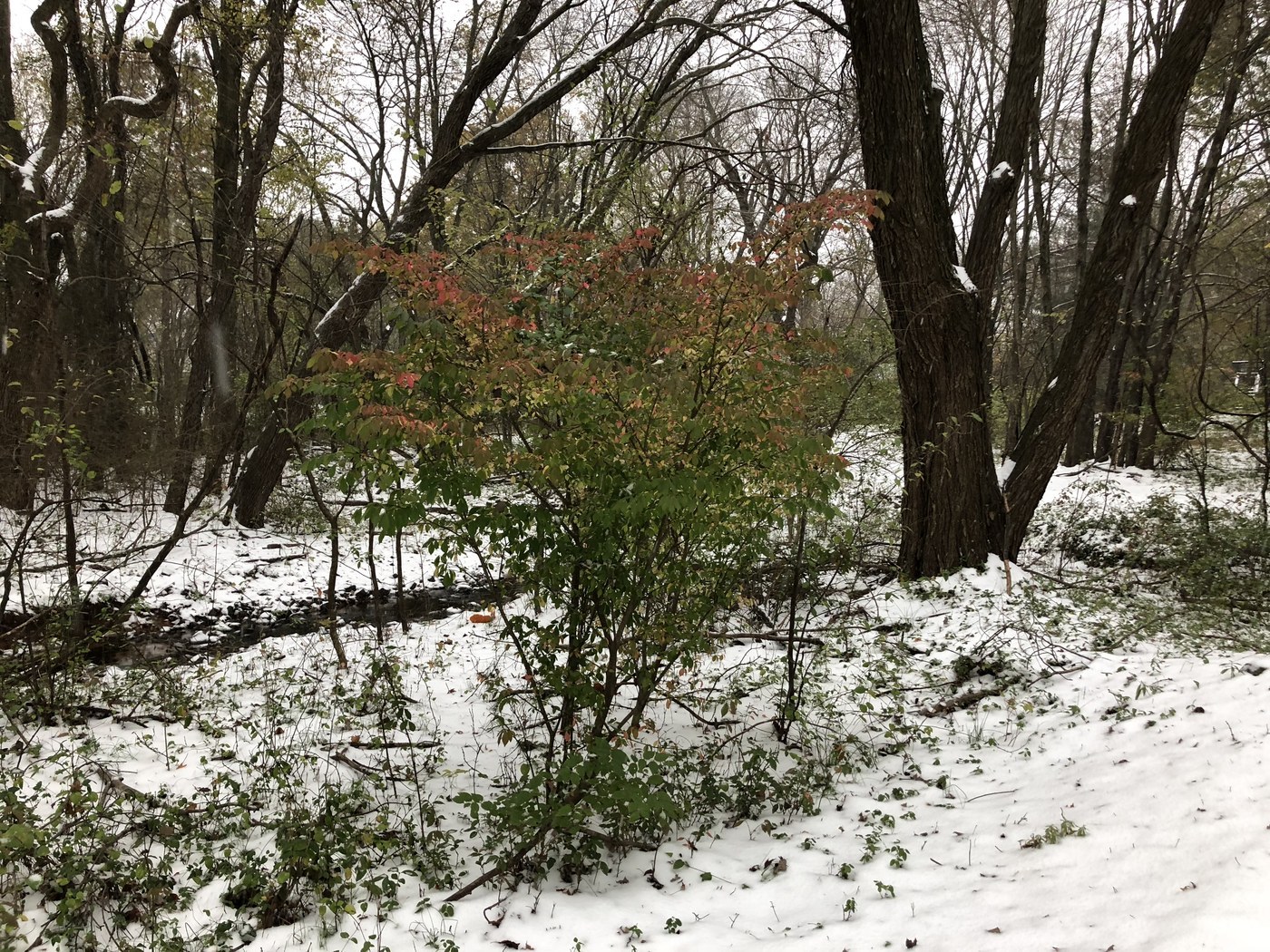
Key Identifying Features
Burning Bush (Euonymus alatus), or winged euonymus, is a deciduous shrub grown for its intense fluorescent-red autumn foliage. Two features make it easy to identify year-round: the corky 'wings' running along the twigs and, in fall, the brilliant scarlet leaves.
- Fiery crimson-pink fall foliage (the namesake "burning" look)
- Corky ridges or wings on young stems — a key year-round trait
- Opposite, finely toothed, elliptic leaves
- Small purple-red four-lobed capsules revealing orange-coated seeds
Leaves & Stems
Leaves are opposite (paired), elliptic to obovate, 1–3 inches, with finely toothed margins and a pointed tip, dark green in summer turning vivid red to rose-pink in fall. The most diagnostic feature is the stem: young green-brown twigs bear two to four thin, corky, wing-like ridges running lengthwise, giving the branch a squared, fluted look. These wings persist on bare winter stems, allowing ID even without leaves. The shrub grows dense and mounded, often 6–10 ft.
Flowers & Fruit
Flowers are small, inconspicuous, greenish-yellow, with four petals, in spring. The fruit is a small reddish-purple capsule that splits into four lobes to reveal bright orange-red arils (seed coats) in fall — a subtle but distinctive feature against the red foliage. Birds spread the seeds, which is why the plant escapes cultivation.
How to Tell It Apart from Look-Alikes
- Other euonymus species lack the prominent corky wings or are evergreen.
- Blueberry and chokeberry also redden in fall but have alternate leaves and different fruit; burning bush leaves are opposite with winged stems.
- Sweetgum/maple have lobed, larger leaves.
- The combination of corky winged twigs + opposite finely toothed leaves + fluorescent red fall color + 4-lobed orange-seeded capsules confirms Burning Bush.
Where You'll Find It
Burning Bush is widely planted in temperate landscapes for fall color, in hedges and foundation plantings. Native to East Asia, it has escaped and become invasive in much of the eastern and central U.S., forming dense thickets in forests, fields, and roadsides where birds drop the seeds.
Quick ID Checklist
- Brilliant scarlet/pink fall foliage
- Corky wings on young stems (year-round)
- Opposite, finely toothed leaves
- 4-lobed purple capsules with orange seeds
- Dense mounded shrub; invasive in eastern U.S.
Frequently asked questions
What is the best year-round clue for burning bush?
The corky, wing-like ridges running along the young stems are diagnostic even in winter when the leaves and fall color are gone.
Why is it called burning bush?
In autumn the foliage turns an intense fluorescent red to rose-pink, making the whole shrub look like it is on fire.
Is burning bush invasive?
Yes, in much of the eastern and central United States it spreads by bird-dispersed seed into woodlands and fields and is banned or discouraged in several states.
How do I tell it from other red-fall shrubs?
Check for opposite leaves combined with the corky winged stems and small four-lobed capsules with orange seeds — that combination is unique to burning bush.