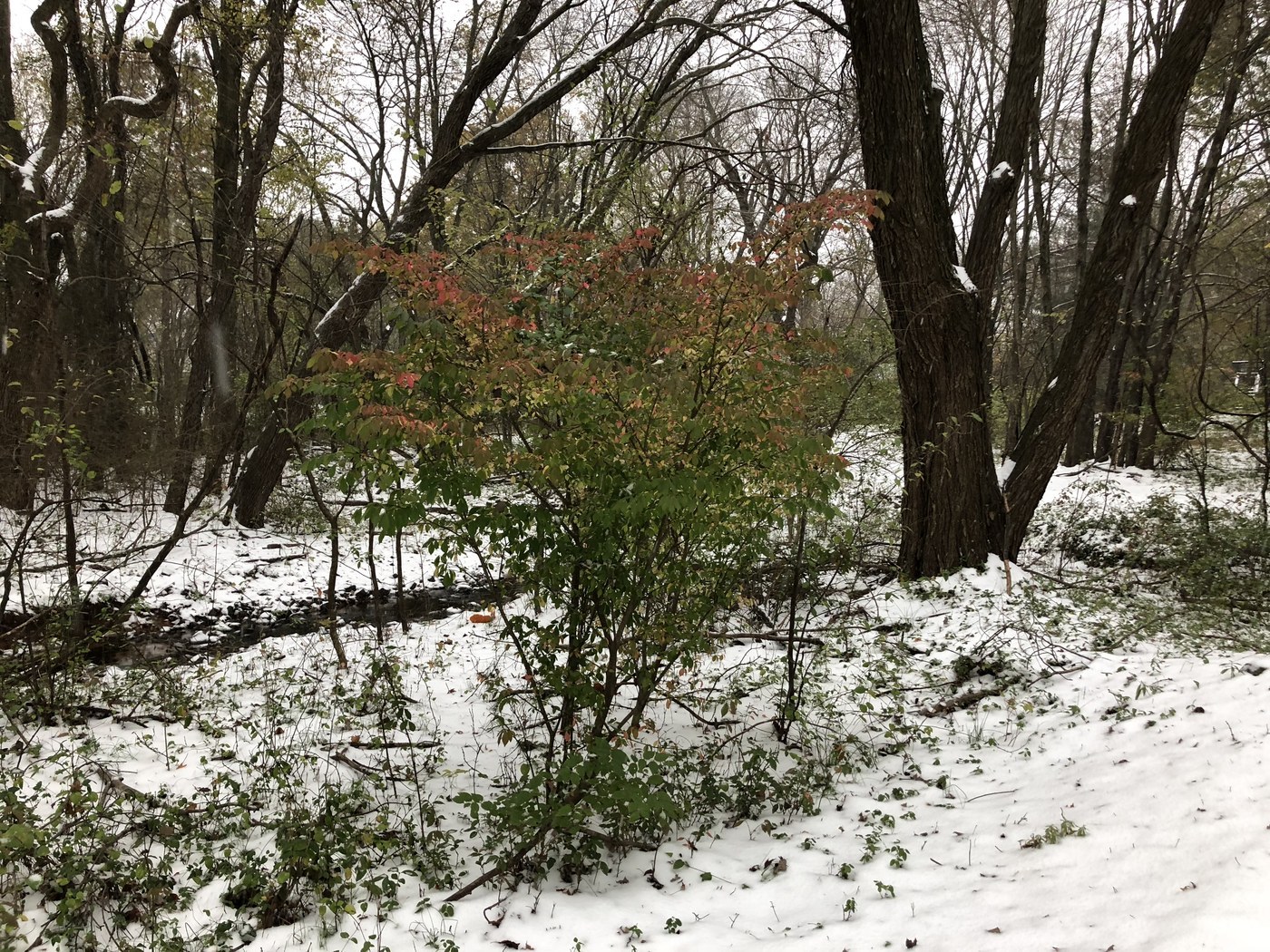
Burning Bush
Euonymus alatus
A deciduous shrub famous for its fiery crimson-red fall foliage and distinctive corky 'wings' along the stems. Tough and adaptable, it is also invasive in parts of North America.
- Light
- Full sun to part shade
- Water
- Moderate; drought-tolerant once established
- Difficulty
- Easy
Got a plant like this?
Identify any plant from a photo, free.
Overview
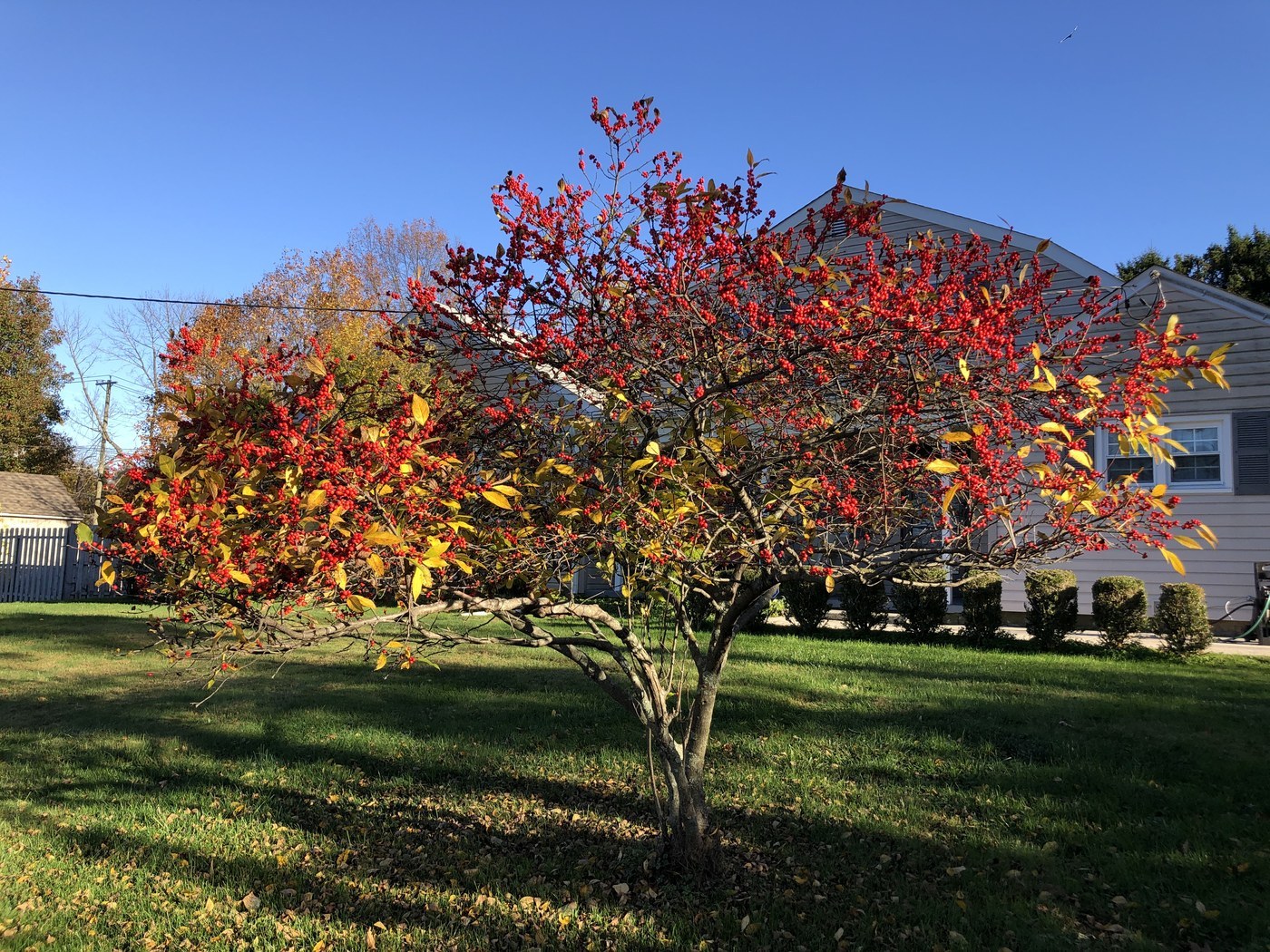
Burning bush is a deciduous shrub grown almost entirely for its spectacular autumn display, when its foliage turns a brilliant fluorescent crimson-red. The species is also recognizable in winter by the corky, wing-like ridges running along its young stems.
Native to eastern Asia, it is tough, adaptable and easy to grow, long used for hedges, screens and mass plantings. Small purplish-red fruits split to reveal orange seeds in fall.
Its very adaptability has made it invasive in parts of the eastern and midwestern United States, where it seeds into woodlands; native alternatives are increasingly recommended.
How to identify it
- Fall color: intensely brilliant crimson to pinkish-red foliage in autumn—its signature feature
- Stems: young green stems bear distinctive corky, wing-like ridges
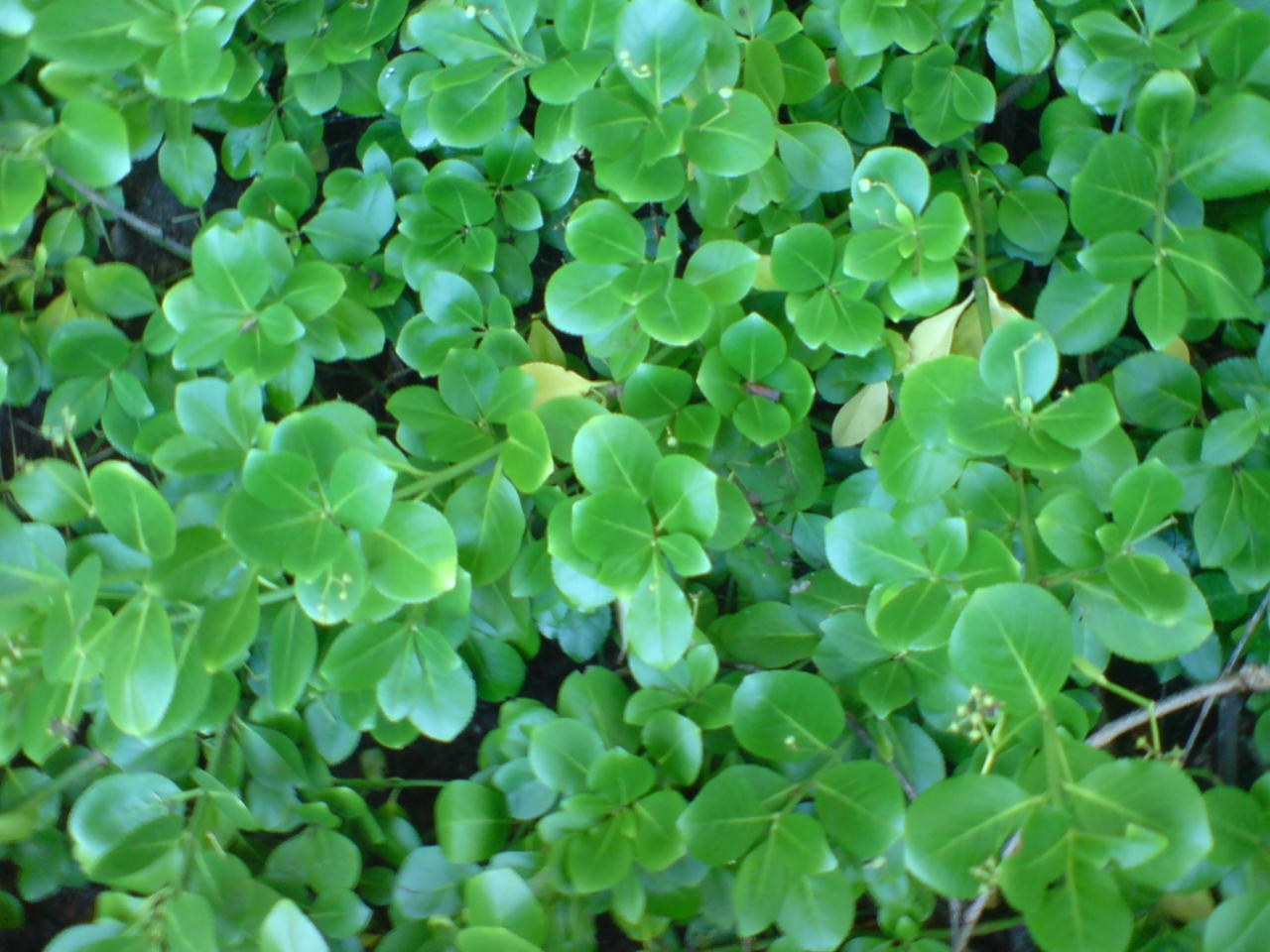
- Leaves: opposite, elliptic, finely toothed, medium green in summer
- Flowers: small, greenish, inconspicuous in late spring
- Fruit: small reddish-purple capsules splitting to show orange-coated seeds
- Size: typically 6–15 ft (1.8–4.6 m) tall, often pruned smaller
Care & growing
Grow in full sun to part shade; the brightest red fall color develops in full sun.
- Water: water during establishment; drought-tolerant once mature
- Soil: adaptable to most well-drained soils
- Temperature: hardy roughly USDA zones 4–8
- Pruning: tolerates shearing well for hedges; prune in late winter or early spring
- Feeding: minimal
- Propagation: from cuttings or seed
Be aware it self-seeds; deadheading fruit and choosing seedless cultivars or native alternatives helps limit spread.
Habitat & origin
Native to eastern Asia (China, Korea, Japan and the Russian Far East), burning bush grows naturally in woodland and scrub.
Widely planted in temperate gardens for fall color, it has escaped cultivation in the eastern and midwestern United States, where birds spread its seeds into forests and it is classified as invasive in several states.
Frequently asked questions
Why is it called burning bush?
Because its foliage turns a brilliant, almost glowing fluorescent red in autumn, looking as if the shrub is on fire.
What are the wings on the stems?
Young stems develop corky, fin-like ridges or 'wings,' which give the species its botanical name alatus (winged) and help identify it in winter.
Is burning bush invasive?
Yes, in parts of the eastern and midwestern U.S. it self-seeds into natural areas and is classified as invasive. Consider native alternatives where this is a concern.
How do I get the best fall color?
Plant it in full sun. Shaded plants turn a much duller pinkish color rather than the vivid crimson of those grown in bright light.
Burning Bush guides
In-depth guides for identifying, growing, and caring for Burning Bush.
How to Care for Burning Bush
Grow-and-glow guide to Euonymus alatus: an easy, drought-tolerant deciduous shrub prized for its blazing scarlet autumn foliage.
Burning Bush Identification Guide
Identify Burning Bush (Euonymus alatus) by its brilliant scarlet fall foliage, distinctive corky wings on the stems, and small purplish four-part berries.