
Buttercup Identification Guide
Identify buttercups by their glossy, five-petaled golden-yellow flowers, deeply lobed leaves, and the famous shiny petal reflection. Includes how to separate them from similar yellow wildflowers.
Read the full Buttercup encyclopedia entry →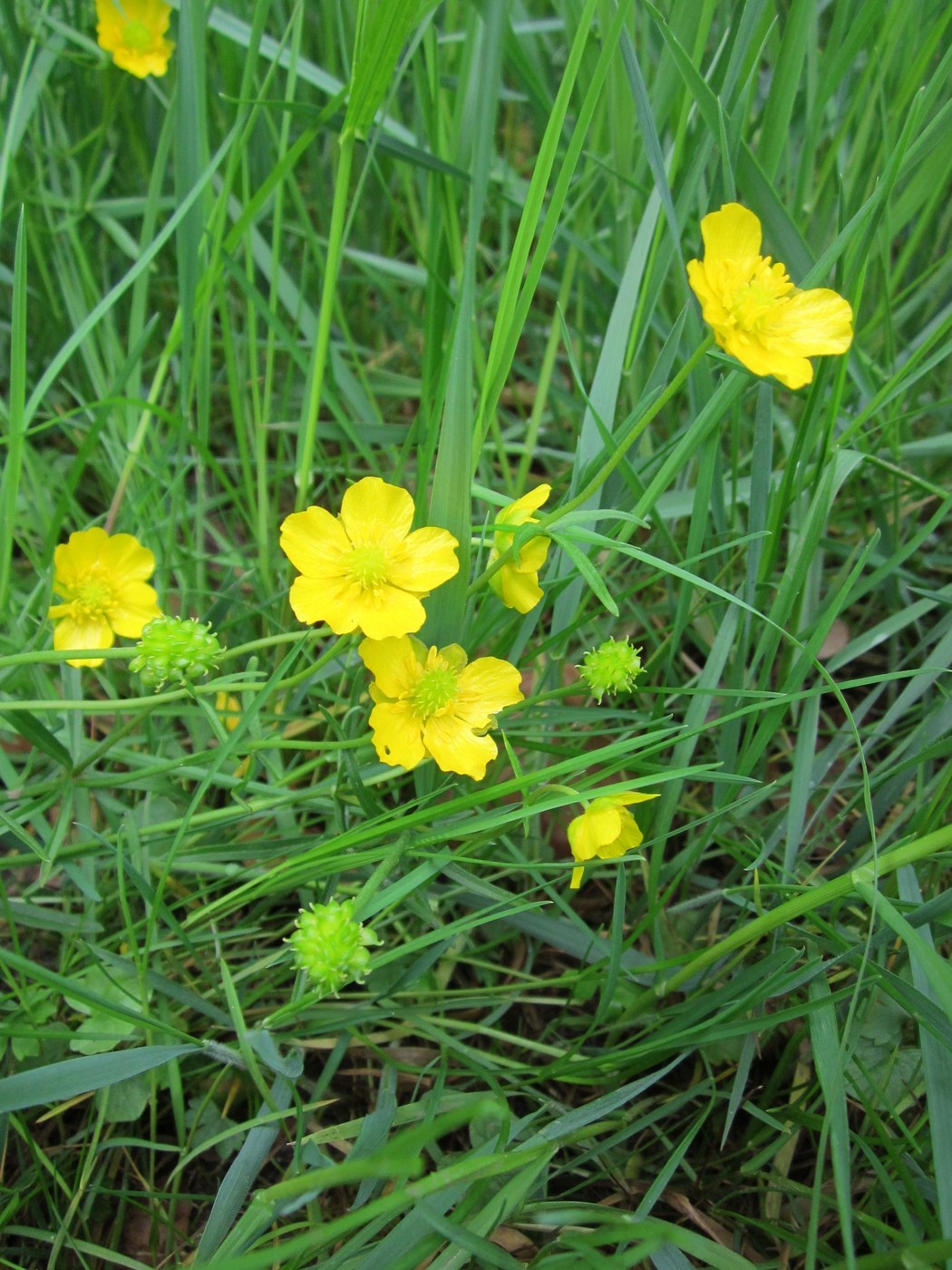
Key Identifying Features
Buttercups (genus Ranunculus) are instantly recognized by their bright, glossy yellow flowers that look almost lacquered. The shine comes from a special reflective layer in the petals—hold a buttercup under your chin and it casts a yellow glow.
- 5 (sometimes more) overlapping petals in waxy, mirror-like yellow
- A central cluster of many yellow stamens and green/yellow pistils
- Cup- or bowl-shaped bloom on slender stalks
- Green sepals beneath the petals, sometimes reflexed back
Leaves & Stems
Leaves are typically deeply divided or lobed into three or more toothed segments, often palmate (hand-shaped). Lower leaves are stalked; upper leaves are smaller and stalkless. Stems are slender, branching, and may be smooth or hairy. Many species spread by creeping runners (stolons) that root at nodes, forming dense low patches—creeping buttercup is a classic lawn and garden weed this way.
Flowers & Fruit
Flowers are usually under 1 inch wide. After blooming, the center develops into a tight head of small dry seeds called achenes, each often with a tiny hooked or curved beak. The cluster of seeds looks like a small green knob where the flower was.
How to Tell It Apart from Look-Alikes
- Cinquefoil (Potentilla): also has 5 yellow petals but its petals are dull/matte, not glossy, and its leaves often have 5 leaflets in a fan.
- Marsh marigold: larger, glossier, but has petal-like sepals (no separate true petals) and grows in wet ground.
- Lesser celandine: an early-spring buttercup relative with 8+ narrow glossy petals and heart-shaped leaves.
- The chin test: buttercups reflect a strong yellow under the chin because of their uniquely shiny petals—cinquefoils do not.
Where You'll Find It
Buttercups thrive in meadows, lawns, pastures, ditches, and damp grassy areas across temperate regions worldwide. Creeping buttercup favors moist, compacted soil.
Quick ID Checklist
- Glossy, mirror-shine yellow petals (chin test glows)
- Usually 5 overlapping cup-shaped petals
- Many yellow stamens in the center
- Deeply lobed/divided palmate leaves
- Slender branching or creeping stems
- Knob of small beaked seeds after bloom
That unmistakable lacquered yellow shine, paired with cut palmate leaves, is the surest sign you have found a buttercup.
Frequently asked questions
Why do buttercup petals shine so much?
Their petals have a smooth reflective epidermal layer over a starch layer that acts like a mirror, producing the glossy glow seen in the classic chin test.
How do I distinguish a buttercup from cinquefoil?
Both have five yellow petals, but buttercup petals are glossy and its leaves are lobed, while cinquefoil petals are dull and its leaves usually have five fanned leaflets.
Why is buttercup hard to remove from lawns?
Creeping buttercup spreads by stolons that root at nodes, forming dense interconnected patches that regrow from any rooted fragment left behind.