
Butterfly Weed Identification Guide
How to identify Butterfly Weed (Asclepias tuberosa), the orange-flowered milkweed with clear (not milky) sap, alternate leaves, and flat-topped clusters that draw butterflies.
Read the full Butterfly Weed encyclopedia entry →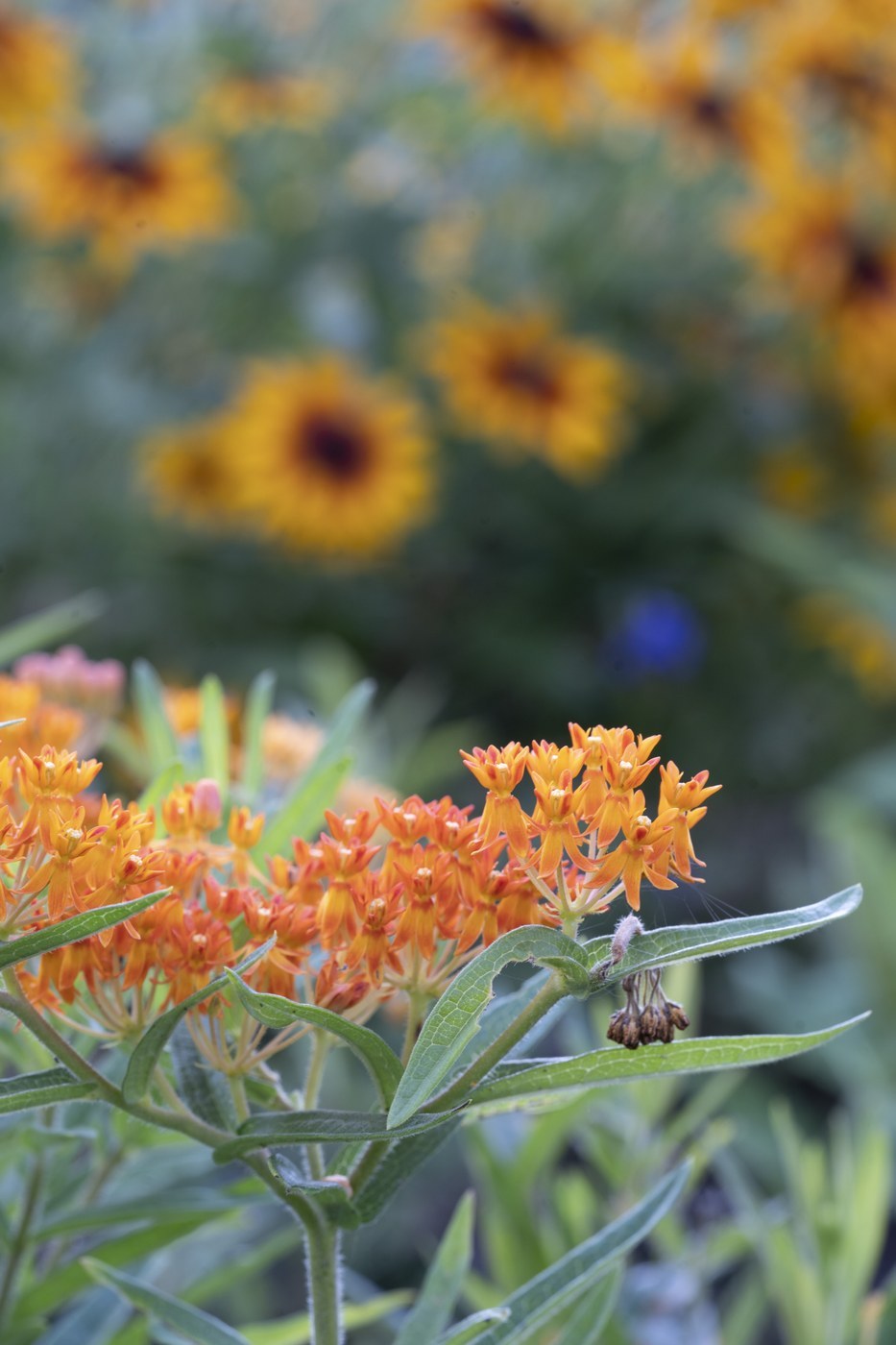
Key Identifying Features
Butterfly Weed (Asclepias tuberosa) is a native milkweed grown for its brilliant flat-topped clusters of orange flowers that swarm with butterflies. Unlike most milkweeds, it has clear, not milky, sap and alternate leaves, two of its best ID clues.
- Showy orange (sometimes yellow or red-orange) flower clusters
- Bushy clumps 1-2.5 feet tall
- Hairy stems with clear sap (not white latex)
- A magnet for monarchs and other butterflies
Leaves & Stems
Leaves are narrow, lance-shaped to oblong, 2-4 inches long, with smooth margins and a pointed tip, and they are arranged alternately along the stem (most other milkweeds have opposite leaves). Stems are stiff, hairy, and often multiple from the base, forming a rounded bushy clump. Break a leaf or stem and the sap runs clear/watery, a rare trait in milkweeds where the family norm is white latex.
Flowers & Fruit
Flowers cluster in flat-topped to slightly rounded umbels at the stem tips, usually a vivid orange, though yellow and red-orange forms exist. Each tiny flower has the classic milkweed structure: five reflexed petals below and an upright crown of five "hoods" with curved horns. After flowering, slender spindle-shaped seed pods (follicles) form; when ripe they split to release flat brown seeds with silky white parachutes that blow away on the wind.
How to Tell It Apart from Look-Alikes
- Common milkweed (Asclepias syriaca): broad opposite leaves, drooping pink-purple flower balls, and milky sap, versus Butterfly Weed's narrow alternate leaves, orange flat clusters, and clear sap.
- Swamp milkweed (A. incarnata): pink flowers, opposite leaves, wet habitat, milky sap.
- Orange hawkweed or butterfly bush: superficially orange-flowered but utterly different leaves and flower structure; neither has milkweed hoods or pods.
The orange umbels + alternate leaves + clear sap + milkweed pods combination is unique to Butterfly Weed.
Where You'll Find It
Butterfly Weed favors full sun and dry, sandy, well-drained soil: prairies, roadsides, open fields, and pollinator gardens across much of eastern and central North America. It has a deep taproot, making it drought-tolerant but hard to transplant. Look for its orange clusters from early to mid summer, often alive with butterflies and bees.
Quick ID Checklist
- Bright orange flat-topped flower clusters
- Flowers show milkweed hoods and horns
- Narrow, alternate leaves (unusual for milkweed)
- Clear, watery sap when stems are broken
- Dry sunny site; spindle pods with silky-parachute seeds
An orange-flowered, bushy plant with alternate leaves and clear sap producing milkweed pods is Butterfly Weed.
Frequently asked questions
Why doesn't butterfly weed have milky sap like other milkweeds?
Asclepias tuberosa is unusual within the milkweed genus in having clear, watery sap instead of white latex. This, plus its alternate leaves, helps distinguish it from relatives like common milkweed.
Is butterfly weed good for monarchs?
Yes. It is a true milkweed (Asclepias), so monarch caterpillars can feed on its leaves, and the nectar-rich flowers attract adult monarchs and many other pollinators.
How do I tell butterfly weed from common milkweed?
Butterfly weed has narrow alternate leaves, flat-topped orange flower clusters, and clear sap, while common milkweed has broad opposite leaves, drooping pink-purple flower balls, and milky sap.
Why is butterfly weed hard to move?
It grows a deep taproot that makes mature plants difficult to transplant successfully, so it is best established from seed or young plants in its permanent spot.