Butterfly Weed
Asclepias tuberosa
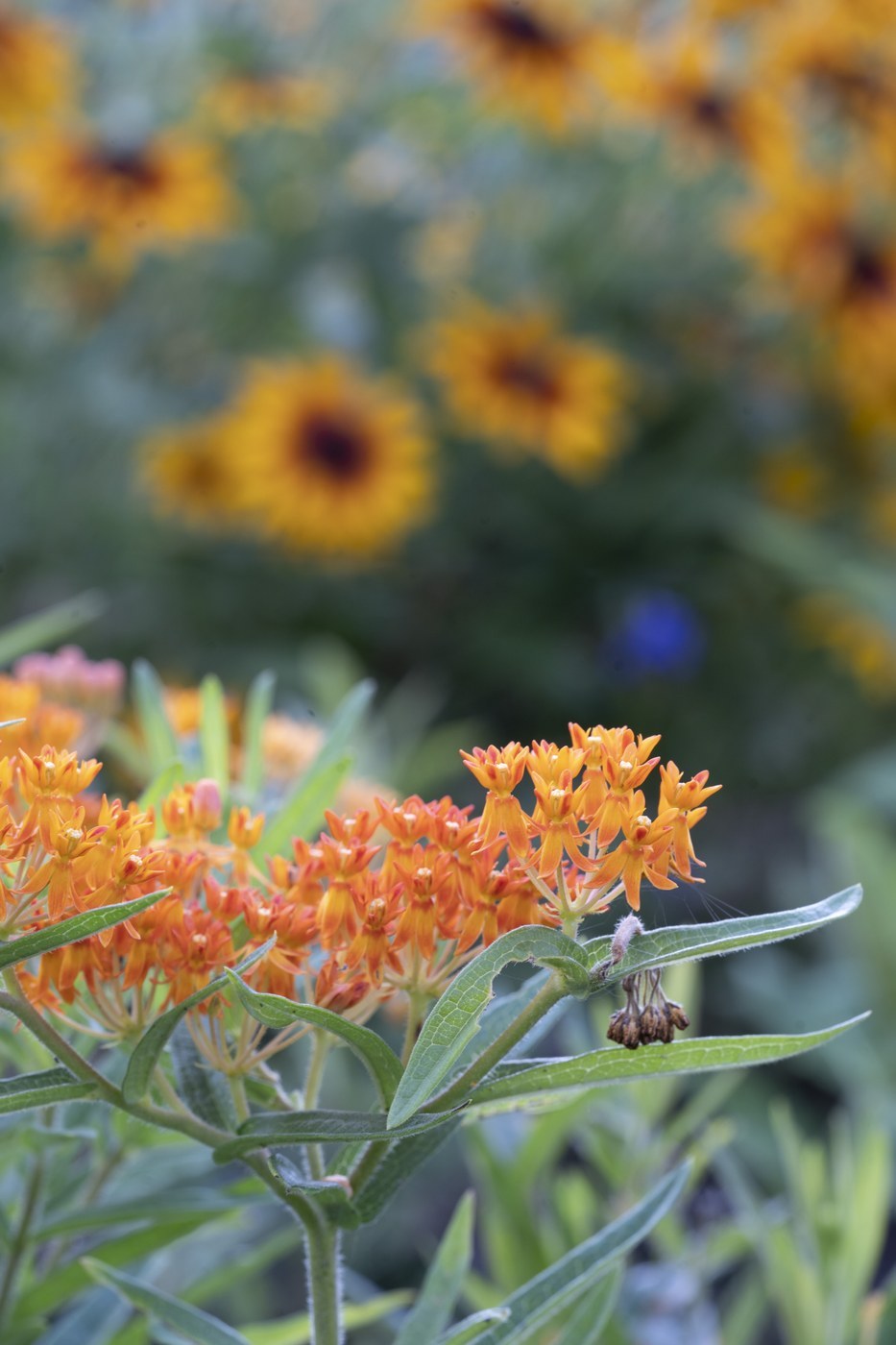
Butterfly weed is a native milkweed bearing flat clusters of brilliant orange flowers in summer. It is a top nectar plant for butterflies and a larval host for monarchs.
- Light
- Full sun
- Water
- Low; drought-tolerant
- Difficulty
- Easy
Got a plant like this?
Identify any plant from a photo, free.
Overview
Butterfly weed (Asclepias tuberosa) is a drought-tough North American perennial milkweed celebrated for its vivid orange flower clusters that bloom through summer. Unlike most milkweeds, its stems carry clear rather than milky sap.
It grows from a deep taproot, making it exceptionally drought-tolerant once established but resentful of transplanting. The flowers buzz with bees and butterflies, and the foliage feeds monarch caterpillars.
It is a flagship plant of pollinator and native gardens, and was named Perennial Plant of the Year in 2017.
How to identify it
- Flowers: Flat-topped clusters (umbels) of small, star-shaped flowers, typically bright orange (sometimes yellow or red-orange), in summer
- Foliage: Narrow, lance-shaped leaves arranged spirally; stems carry clear (not milky) sap
- Height: Bushy clumps 1-2.5 ft tall
- Seed pods: Slender spindle-shaped pods that split to release silk-tufted seeds
- Roots: Deep, woody taproot
Care & growing
- Light: Full sun is essential
- Water: Low; very drought-tolerant once established and prone to rot in wet soil
- Soil: Lean, sandy or gritty, well-drained soil; avoid rich or soggy ground
- Temperature: Hardy roughly USDA zones 3-9
- Feeding: None needed; it thrives in poor soil
- Propagation: Best from seed (often needs cold stratification); the taproot makes division and transplanting of established plants difficult, so site it permanently
Habitat & origin
Butterfly weed is native to eastern and southern North America, from Canada through the United States into Mexico, growing in dry prairies, open fields, roadsides, and sandy or rocky open woods.
It is widely planted in native, prairie, and pollinator gardens and tolerates poor, dry sites where many perennials fail.
Frequently asked questions
Why is my butterfly weed slow to appear in spring?
It is one of the last perennials to emerge, often not breaking ground until late spring. Mark its spot so you don't dig it up or assume it has died.
Can I transplant butterfly weed?
It is difficult to move once established because of its deep taproot. Start it from seed or set out young plants in their permanent location.
Does butterfly weed really help monarchs?
Yes. As a milkweed it serves as a host plant where monarchs lay eggs and caterpillars feed, in addition to providing nectar.
Butterfly Weed guides
In-depth guides for identifying, growing, and caring for Butterfly Weed.
How to Care for Butterfly Weed
Butterfly Weed (Asclepias tuberosa) is an easy, drought-tolerant native milkweed with brilliant orange blooms for full sun and lean soil.
Butterfly Weed Identification Guide
How to identify Butterfly Weed (Asclepias tuberosa), the orange-flowered milkweed with clear (not milky) sap, alternate leaves, and flat-topped clusters that draw butterflies.