
Cabbage Identification Guide
Identify the cabbage plant (Brassica oleracea var. capitata) by its dense ball-shaped head of tightly wrapped, smooth, waxy leaves on a short stalk.
Read the full Cabbage encyclopedia entry →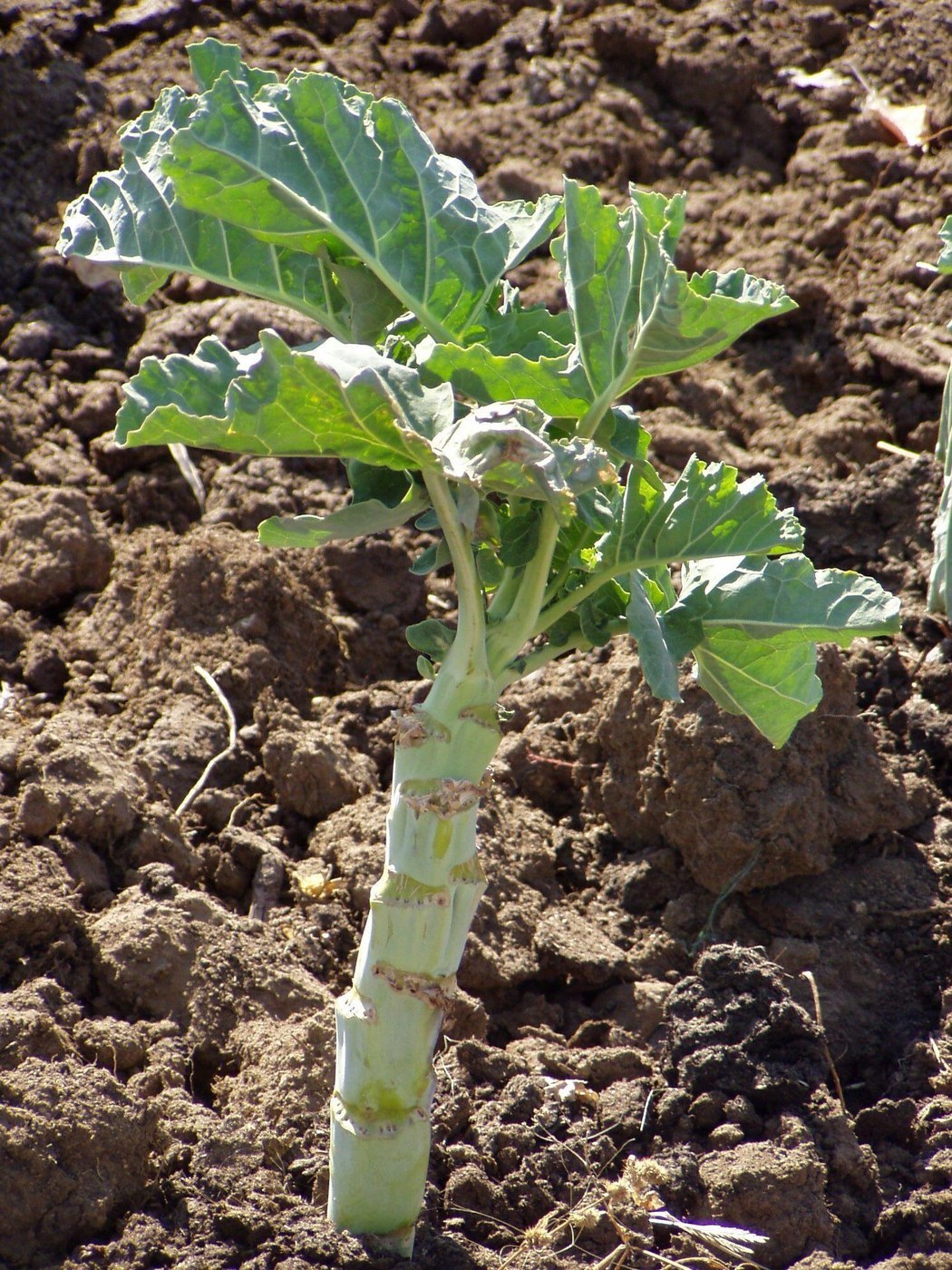
Key Identifying Features
Cabbage (Brassica oleracea var. capitata) is a cool-season biennial in the cabbage family (Brassicaceae). Its unmistakable feature is the dense, ball-shaped head (capitata = "with a head") formed by tightly overlapping, smooth, waxy leaves wrapped around a short central core. Outer leaves spread open while the inner ones fold into a firm head.
Leaves & Stems
- A short, thick stem bears a few large spreading wrapper leaves and an enclosing firm head.
- Leaves are broad, smooth or savoyed (crinkled), with a heavy waxy bloom and prominent pale midribs and veins.
- Color ranges from pale green to blue-green and deep red-purple; savoy types are crinkled.
- The head feels solid and heavy for its size when squeezed.
Flowers & Fruit
- Cabbage is biennial; in its second year (or when bolting) the head splits and sends up a tall branched flower stalk.
- Flowers are bright-yellow, four-petaled crosses typical of brassicas.
- These mature into slender seed pods (siliques).
How to Tell It Apart from Look-Alikes
- Lettuce (esp. iceberg): also forms a round head, but lettuce has milky sap, thinner crispier leaves, and no waxy brassica bloom; cabbage leaves are thicker and the head much denser.
- Brussels sprouts (B. oleracea var. gemmifera): tall stalk lined with many mini cabbage-like heads in the leaf axils, not one big head.
- Kale/collards: open, headless leafy rosettes of the same species.
- Cauliflower/broccoli: form flower-bud curds, not solid leafy heads.
Where You'll Find It
Cabbage is a cool-season field and garden vegetable grown in rows and beds in full sun and fertile soil, in spring and fall. It tolerates frost (which sweetens it). Look for a single firm, rounded head sitting low among large spreading blue-green wrapper leaves.
Quick ID Checklist
- Dense, solid ball-shaped head, heavy for its size
- Tightly overlapping smooth or savoyed leaves
- Waxy bloom and pale midribs (no milky sap)
- Green, blue-green, or red-purple color
- Short central core/stem
- Yellow four-petaled flowers if it bolts
Frequently asked questions
How do I tell cabbage from iceberg lettuce?
Cut or break a leaf: lettuce releases milky sap, while cabbage does not. Cabbage leaves are thicker, waxier, and pack into a much denser, heavier head than the crisp, watery leaves of iceberg lettuce.
Why did my cabbage head split open?
Splitting happens when rapid water uptake (often after rain) swells the inner leaves faster than the head can hold, or when the plant begins to bolt. A bolting cabbage then sends up a tall yellow-flowered stalk.
Is red cabbage a different species?
No. Red (purple) cabbage is the same species and variety as green cabbage, just with anthocyanin pigments. It shares the dense head, waxy leaves, and short core that identify all head cabbages.
How is cabbage different from Brussels sprouts?
Both are forms of Brassica oleracea, but cabbage makes one large head at the base while Brussels sprouts produce many small cabbage-like buds along a tall upright stalk.