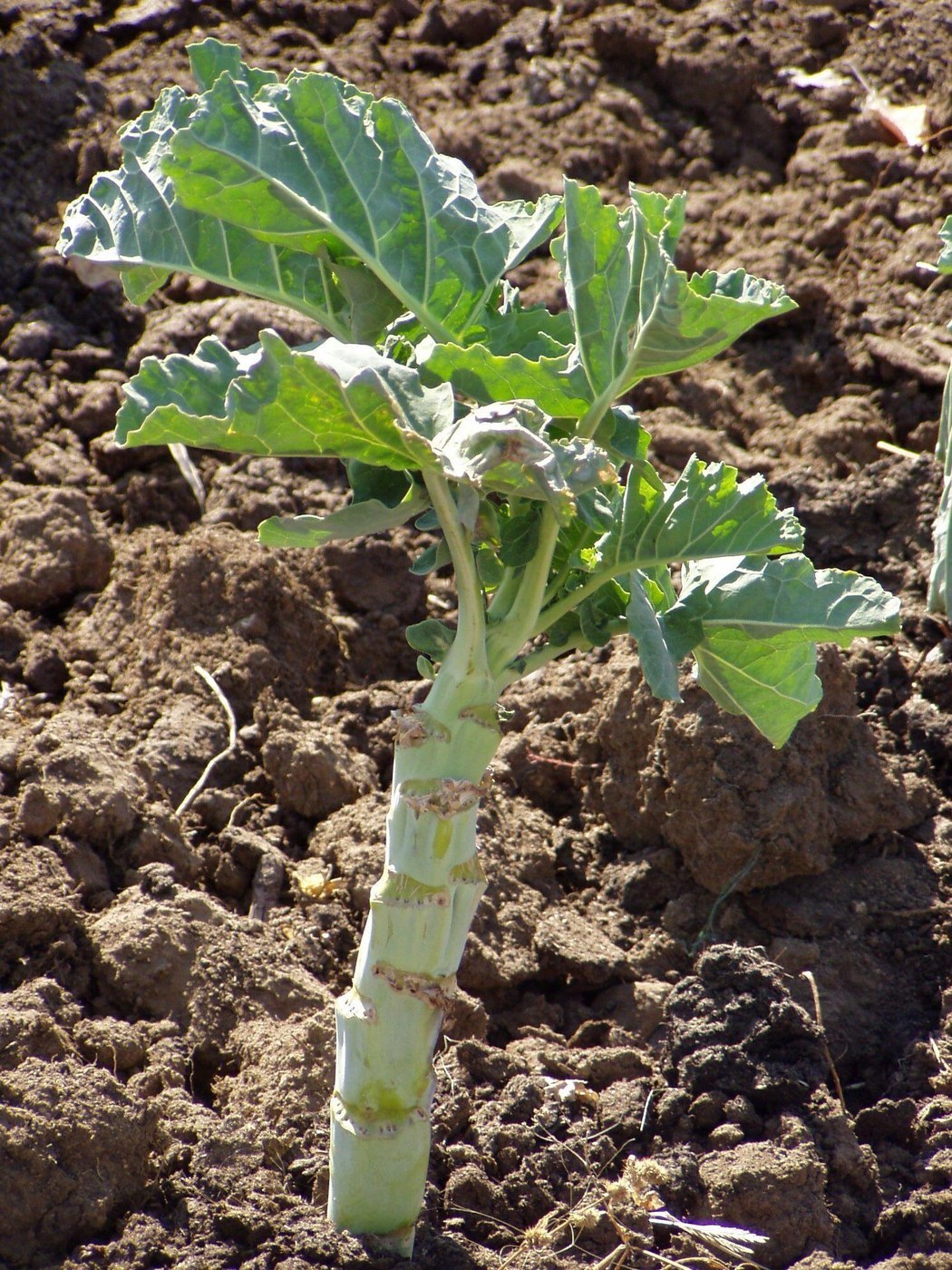
Cabbage
Brassica oleracea
Cabbage is a cool-season leafy garden vegetable that forms a dense, rounded head of tightly packed leaves. A staple worldwide, it comes in green, red, and crinkled savoy types.
- Light
- Full sun
- Water
- Consistent, even moisture
- Difficulty
- Moderate
Got a plant like this?
Identify any plant from a photo, free.
Overview
Cabbage is a leafy cultivar group of Brassica oleracea, the same species as broccoli, kale, and cauliflower. It is grown for its compact head of overlapping leaves and has been cultivated for thousands of years.
It is a cool-season biennial grown as an annual, forming its head in the first year. Types include smooth green, red (purple), and crinkled savoy cabbage, in shapes from round to pointed to flattened.
Cabbage is hardy and stores for long periods.
How to identify it
Cabbage is best recognized by its dense, rounded head of tightly wrapped leaves.
- Head: Compact ball of overlapping leaves, green, red-purple, or crinkled (savoy)
- Leaves: Broad, smooth or wrinkled, with a waxy bloom and prominent veins
- Habit: Low and broad with a short stem and spreading outer wrapper leaves
- Flowers: Yellow four-petaled flowers on a tall stalk in the second year
- Size: Heads range from grapefruit-sized to several pounds
Care & growing
Cabbage rewards steady, cool-weather care.
- Light: Full sun
- Water: Consistent, even moisture; irregular watering causes heads to split
- Soil: Fertile, firm, well-draining soil rich in organic matter; pH 6.0 to 7.5
- Temperature: Cool-season; thrives 55 to 70 F and tolerates frost
- Feeding: Nitrogen-rich feeding early for strong leaf growth before heading
- Propagation: From seed, started indoors for spring or sown in summer for fall. Space generously and protect young plants from cabbage pests.
Habitat & origin
Cabbage descends from wild cabbage native to the coastal cliffs of the Mediterranean and Atlantic Europe. Heading forms were developed in Europe during the Middle Ages.
It is now one of the most widely grown vegetables in the world, important in temperate climates everywhere. It is grown in home gardens and large commercial fields alike.
Frequently asked questions
Why did my cabbage head split open?
Splitting happens when a sudden surge of water reaches a mature head. Water evenly, and once heads are firm, you can twist the plant slightly to break some roots and slow uptake.
How do I protect cabbage from caterpillars?
Cabbage worms and loopers are the main pests. Use floating row covers, hand-pick, or apply an organic Bt spray to keep them off the leaves.
Will cabbage regrow after I cut the head?
Leave the outer leaves and root in place and many varieties form smaller secondary heads from the stump.
What is the difference between green and red cabbage?
They are the same vegetable in different varieties. Red cabbage owes its color to anthocyanin pigments and tends to be slightly firmer, with similar growth habits.
Cabbage guides
In-depth guides for identifying, growing, and caring for Cabbage.
How to Care for Cabbage
Grow full, tight cabbage heads with steady moisture, rich soil, and cool-season timing in a sunny bed.
Cabbage Identification Guide
Identify the cabbage plant (Brassica oleracea var. capitata) by its dense ball-shaped head of tightly wrapped, smooth, waxy leaves on a short stalk.