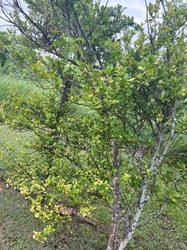
Calamondin Identification Guide
Identifying the calamondin, a small ornamental citrus, by its glossy leaves, fragrant white flowers, and abundant marble-sized orange fruit.
Read the full Calamondin encyclopedia entry →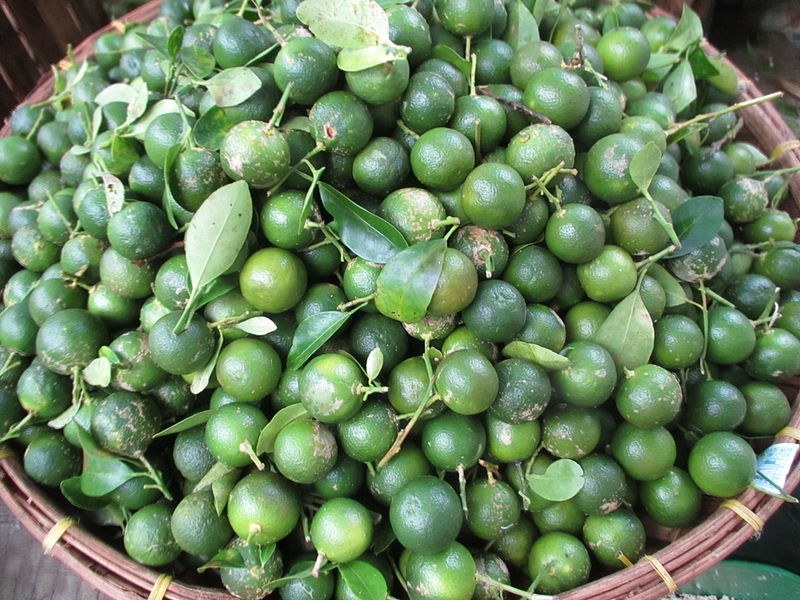
Key Identifying Features
The calamondin (Citrus × microcarpa, also called calamansi) is a compact, bushy citrus hybrid — a cross of mandarin and kumquat ancestry — grown widely as an ornamental houseplant and patio tree. Its signature feature is a heavy crop of very small, round, thin-skinned orange fruit about 2.5–4 cm across, far smaller than any common orange.
- Dense, shrubby evergreen, often 1–3 m tall
- Hundreds of marble-sized orange fruits borne nearly year-round
- Frequently sold as a potted gift plant
Leaves & Stems
Leaves are glossy, dark green, broadly oval, 4–8 cm long, smaller and rounder than a sweet orange's. The petiole is only narrowly winged or nearly wingless. Stems are slender, green when young, usually thornless or with very small spines, and the whole plant has a tidy, twiggy habit that responds well to pruning.
Flowers & Fruit
Flowers are small, white, fragrant, five-petaled, borne singly or in small clusters, and appear repeatedly through the year so a plant often shows flowers, green fruit, and ripe fruit at the same time. The fruit is round, ripening from green to bright orange, with a thin, loose peel and a few seeds in the orange-yellow segments. Ripe fruit may stay on the plant for weeks.
How to Tell It Apart from Look-Alikes
- Kumquat: fruit is oval/oblong; calamondin fruit is round.
- Mandarin/clementine: much larger fruit (5–8 cm); calamondin fruit is tiny.
- Otaheite/dwarf ornamental oranges: similar small size, but calamondin is distinguished by its abundant round marble-sized fruit and thin, loose peel.
- The combination of round, marble-sized orange fruit borne in abundance + thin loose peel is diagnostic.
Where You'll Find It
Native to and ubiquitous in the Philippines (where it's "calamansi") and across Southeast Asia. Worldwide it is a popular patio and indoor citrus in temperate regions because it tolerates pot culture and fruits readily indoors. Hardy outdoors in USDA zones 9–11.
Quick ID Checklist
- Small bushy evergreen citrus, often potted
- Glossy dark-green oval leaves, barely winged petiole
- Fragrant small white flowers, often blooming alongside fruit
- Round, 2.5–4 cm, bright orange fruit in abundance
- Thin, loose peel
- Flowers and fruit present nearly year-round
Frequently asked questions
Is calamondin the same as calamansi?
Yes. Calamondin is the international name and calamansi is the Filipino name for the same plant, Citrus × microcarpa.
How do I tell a calamondin from a kumquat?
Calamondin fruit is round, while kumquat fruit is oval or oblong. The fruit shape is the quickest tell, along with calamondin's denser, bushier habit.
Why does my plant have flowers and fruit at once?
Calamondin is everbearing, flowering and fruiting in repeated flushes, so it commonly displays fragrant white blossoms, green fruit, and ripe orange fruit simultaneously.
What do calamondin leaves look like?
Leaves are glossy, dark green, and broadly oval, 4–8 cm long, with a petiole that is only narrowly winged or nearly wingless, smaller and rounder than a sweet orange's foliage.
Calamondin identified by the community
Recent Calamondin specimens identified with Plant Identifier.