
Calathea Triostar Identification Guide
Identify the Stromanthe 'Triostar' by its tricolor green, cream, and pink variegated leaves with bright magenta undersides.
Read the full Calathea Triostar encyclopedia entry →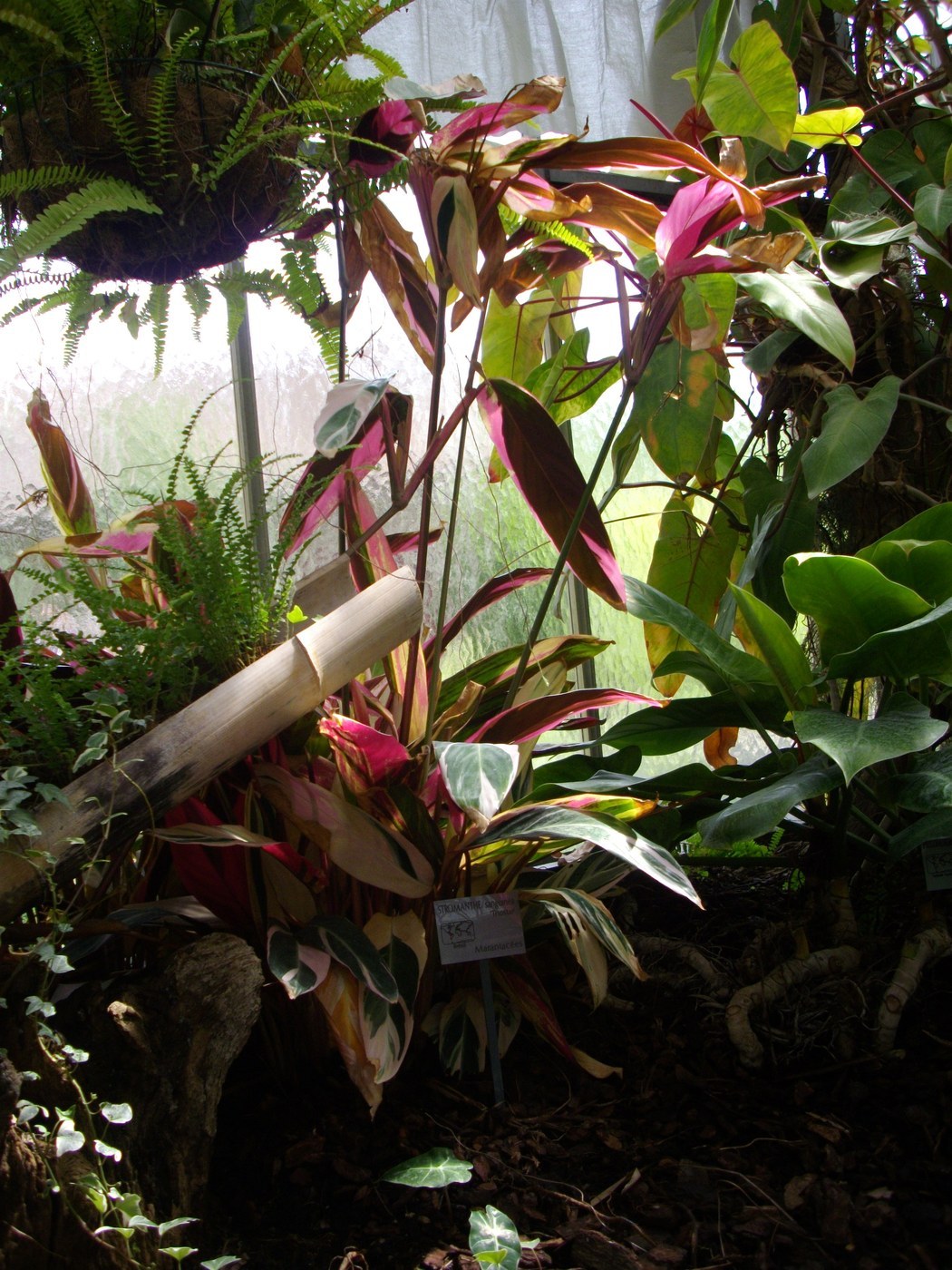
Key Identifying Features
Calathea Triostar (botanically Stromanthe sanguinea 'Triostar', a prayer-plant relative) is famed for its multicolor foliage. Identify it by:
- Variegated leaves blending green, cream-white, and pink
- Striking magenta-pink undersides visible as leaves move
- Lance-shaped (elliptical) leaves on tall pink-tinged petioles
- Prayer-plant movement (leaves fold up at night)
Leaves & Stems
Leaves are long, lance-shaped (oblong-elliptic) with a glossy upper surface painted in irregular streaks of dark green and creamy white, often flushed with pink especially in new growth. The underside is a vivid burgundy-magenta, one of the most reliable ID traits, flashing as the plant performs nyctinasty (nightly leaf folding) powered by a swollen joint (pulvinus) at the leaf base. Petioles are long, reddish-pink, lifting leaves into an upright fan. Each leaf's variegation is unique.
Flowers & Fruit
In maturity it can produce small reddish-pink bracts with modest white flowers on branched stalks. Flowering is uncommon indoors; the plant is grown for its foliage.
How to Tell It Apart from Look-Alikes
- Calathea (Goeppertia) orbifolia / makoyana: have rounded or feather-patterned leaves, not pink-and-cream tricolor with magenta backs.
- Stromanthe 'Magicstar': similar but with finer white speckling rather than bold cream-and-pink sectors.
- Ctenanthe 'Tricolor': related and similar coloring, but generally bushier with differently shaped leaves.
- Maranta (prayer plant): also folds at night but has flat, oval leaves with herringbone patterns, not tricolor magenta-backed blades.
The green/cream/pink top + magenta underside + lance shape combo is distinctive.
Where You'll Find It
Stromanthe sanguinea is native to Brazilian rainforests, growing on the humid forest floor. As a houseplant Triostar needs high humidity, bright indirect light (to keep variegation and pink), warmth, and consistent moisture. You will find it in homes and shops, often mislabeled simply as 'Calathea'. Edges crisp easily in dry air.
Quick ID Checklist
- Tricolor leaves: green + cream + pink
- Magenta-pink undersides
- Lance-shaped glossy leaves
- Long reddish-pink petioles
- Leaves fold up at night
- Each leaf uniquely patterned
Frequently asked questions
Is Triostar a true Calathea?
No. Despite the common name, Triostar is botanically Stromanthe sanguinea 'Triostar', a close relative of Calathea in the prayer-plant family (Marantaceae).
What is the easiest way to confirm a Triostar?
Check the leaf underside: a vivid magenta-pink back combined with green, cream, and pink streaking on top is the giveaway.
Why do the leaves move up and down?
Like other prayer plants, it folds its leaves upward at night and lowers them by day using a joint at the leaf base called a pulvinus.
Why is my Triostar losing its pink color?
Insufficient light fades the pink and cream variegation. Bright indirect light helps maintain the vivid tricolor pattern.