Calendula Identification Guide
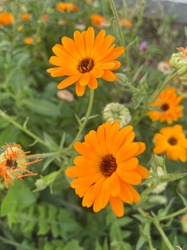
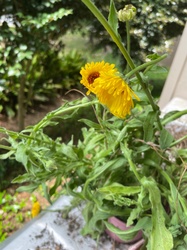
Identify Calendula (pot marigold) by its bright orange-yellow daisy flowers, aromatic sticky leaves, and distinctive curved C-shaped seeds.
Read the full Calendula encyclopedia entry →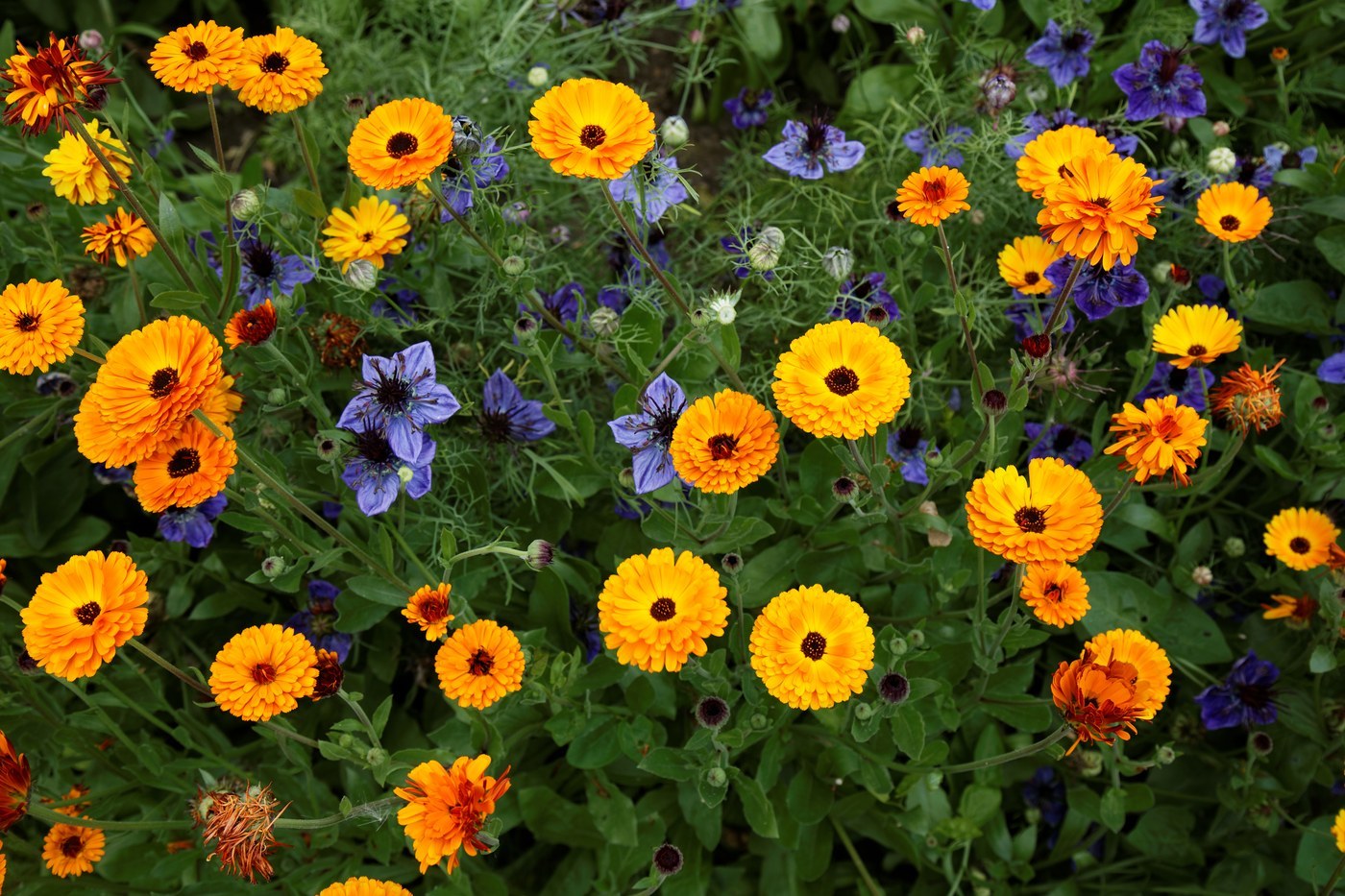
Key Identifying Features
Calendula (Calendula officinalis), or pot marigold, is a cool-season annual in the daisy family grown for its cheerful orange and yellow flowers. Key recognition clues are the flat daisy-like blooms, resinous sticky aromatic foliage, and curved seeds.
- Bushy, branching habit, usually 12-24 in (30-60 cm) tall
- Flower heads 2-4 in (5-10 cm) across, single or double
- Colors range from pale yellow through gold to deep orange, sometimes with darker centers
- Whole plant has a distinct resinous, slightly spicy scent
- Flowers open with the sun and partly close in dull weather
Leaves & Stems
Leaves are alternate, oblong to lance-shaped (spatulate), 2-6 in long, with smooth or slightly toothed wavy margins. They are soft, light green, and noticeably sticky-hairy and aromatic when touched. Stems are ribbed, hairy, and somewhat brittle, branching to form a loose bushy mound.
Flowers & Fruit
Each "flower" is a composite head with rows of strap-shaped ray florets surrounding a center of tiny disc florets — classic Asteraceae structure. The flowers track the sun and close at night. The most distinctive feature appears in the seed: calendula produces curved, ridged, C-shaped or boat-shaped seeds (achenes) arranged in a ring — quite unlike the straight slender seeds of true marigolds.
How to Tell It Apart from Look-Alikes
- French/African marigold (Tagetes): often confused by name, but Tagetes has fern-like, deeply divided pungent foliage and a strong musky odor; calendula has simple oblong leaves and a milder resinous scent.
- Gazania / Osteospermum: similar daisy shape, but those have smoother, often glossy or silvery leaves and different seed structures.
- The curved C-shaped seeds + simple sticky aromatic leaves confirm calendula over any marigold.
Where You'll Find It
Calendula is grown in vegetable gardens, herb gardens, cottage borders, and containers, thriving in cool spring and fall weather and tolerating light frost. It readily self-seeds, returning year after year, so you'll often find it spreading along garden edges.
Quick ID Checklist
- Bright yellow-to-orange daisy flower heads, 2-4 in
- Flowers open in sun, close in dull weather
- Simple oblong, sticky, aromatic light-green leaves
- Resinous, mildly spicy scent (not pungent like Tagetes)
- Curved, ridged C-shaped seeds in a ring
- Cool-season bloomer that self-sows
Frequently asked questions
Is calendula the same as the marigolds I buy in spring?
No. Calendula is 'pot marigold' (Calendula officinalis), while the common bedding marigolds are Tagetes. Calendula has simple oblong leaves and curved seeds; Tagetes has fern-like pungent foliage and straight seeds.
Why are calendula seeds curved?
Calendula produces distinctive curved, ridged, C- or boat-shaped achenes arranged in a ring. This unusual seed shape is one of the most reliable ways to confirm the plant's identity.
When does calendula bloom?
It is a cool-season annual, blooming heavily in spring and fall and tolerating light frost. In hot summers flowering slows, then resumes as temperatures cool.
Calendula identified by the community
Recent Calendula specimens identified with Plant Identifier.