Calendula
Calendula officinalis
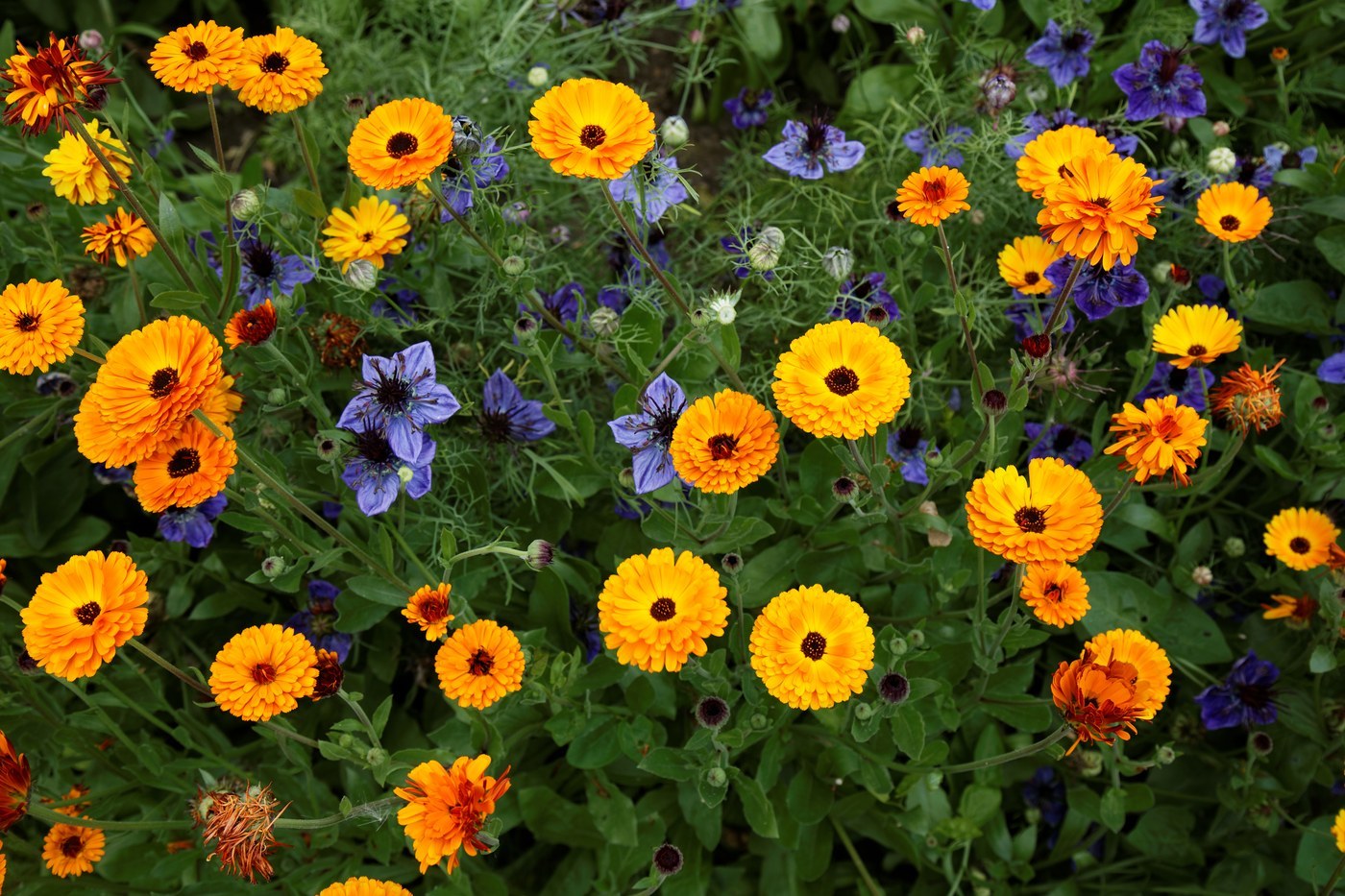
Pot marigold is an easy cool-season annual with cheerful daisy-like orange and yellow flowers, long grown in cottage gardens and herb beds.
- Light
- Full sun to part shade
- Water
- Moderate; even moisture
- Difficulty
- Easy
Got a plant like this?
Identify any plant from a photo, free.
Overview
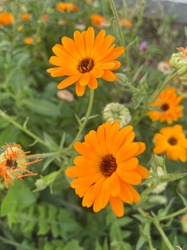
Calendula, or pot marigold, is a cheerful, fast-growing garden annual bearing single or double daisy-like blooms in warm shades of yellow, gold, orange, and apricot. It is unrelated to the bedding marigolds (Tagetes) despite the shared common name.
A cool-season favorite, it blooms prolifically in spring and fall and self-sows readily, with a long history of cultivation in cottage and herb gardens.
How to identify it
- Habit: Upright, bushy, 12-24 in tall
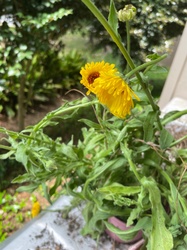
- Flowers: Daisy-like, 2-4 in, single or double, in yellow, gold, orange, apricot
- Leaves: Oblong, slightly sticky and aromatic, pale green
- Seeds: Curved, ridged, C-shaped (the name comes from this and from monthly bloom)
- Bloom time: Heaviest in cool spring and fall weather
Care & growing
Light: Full sun is best; tolerates part shade, especially in hot climates.
Water: Keep evenly moist; avoid prolonged drought.
Soil: Average, well-drained soil; not fussy.
Temperature: Loves cool weather; may flag in midsummer heat and revive in fall.
Feeding: Light feeding is plenty.
Propagation: Very easy from seed sown directly; deadhead to prolong bloom or leave heads to self-sow.
Habitat & origin
Calendula officinalis is of uncertain wild origin but is thought to derive from southern Europe and the Mediterranean; it has been cultivated for centuries and is unknown in a truly wild state.
It is grown worldwide in herb gardens, vegetable plots, and cottage borders, and naturalizes easily in temperate climates.
Frequently asked questions
Is calendula the same as the marigold I see in garden centers?
No. Calendula (pot marigold) is a different genus from the common bedding marigolds (Tagetes), though both share the marigold name.
Why did my calendula stop blooming in summer?
It prefers cool weather and often slows in midsummer heat. Keep it watered and deadheaded and it usually rebounds when temperatures drop.
Does calendula reseed?
Readily. If you leave some seed heads to mature, it will often return on its own the following season.
How do I tell calendula apart from other daisies?
Look for 2-4 in single or double daisy-like blooms in yellow to orange, pale green sticky aromatic leaves, and distinctive curved, C-shaped ridged seeds.
Calendula guides
In-depth guides for identifying, growing, and caring for Calendula.
How to Care for Calendula
Grow Calendula officinalis, a cheerful cool-season annual with bright orange and yellow daisy-like blooms that are easy and quick from seed.
Calendula Identification Guide
Identify Calendula (pot marigold) by its bright orange-yellow daisy flowers, aromatic sticky leaves, and distinctive curved C-shaped seeds.
Calendula identified by the community
Real specimens identified with Plant Identifier.