
California Lilac Identification Guide
Recognize California lilac (Ceanothus) by its dense clusters of tiny intensely blue flowers, small glossy three-veined leaves, and tough drought-hardy habit.
Read the full California Lilac encyclopedia entry →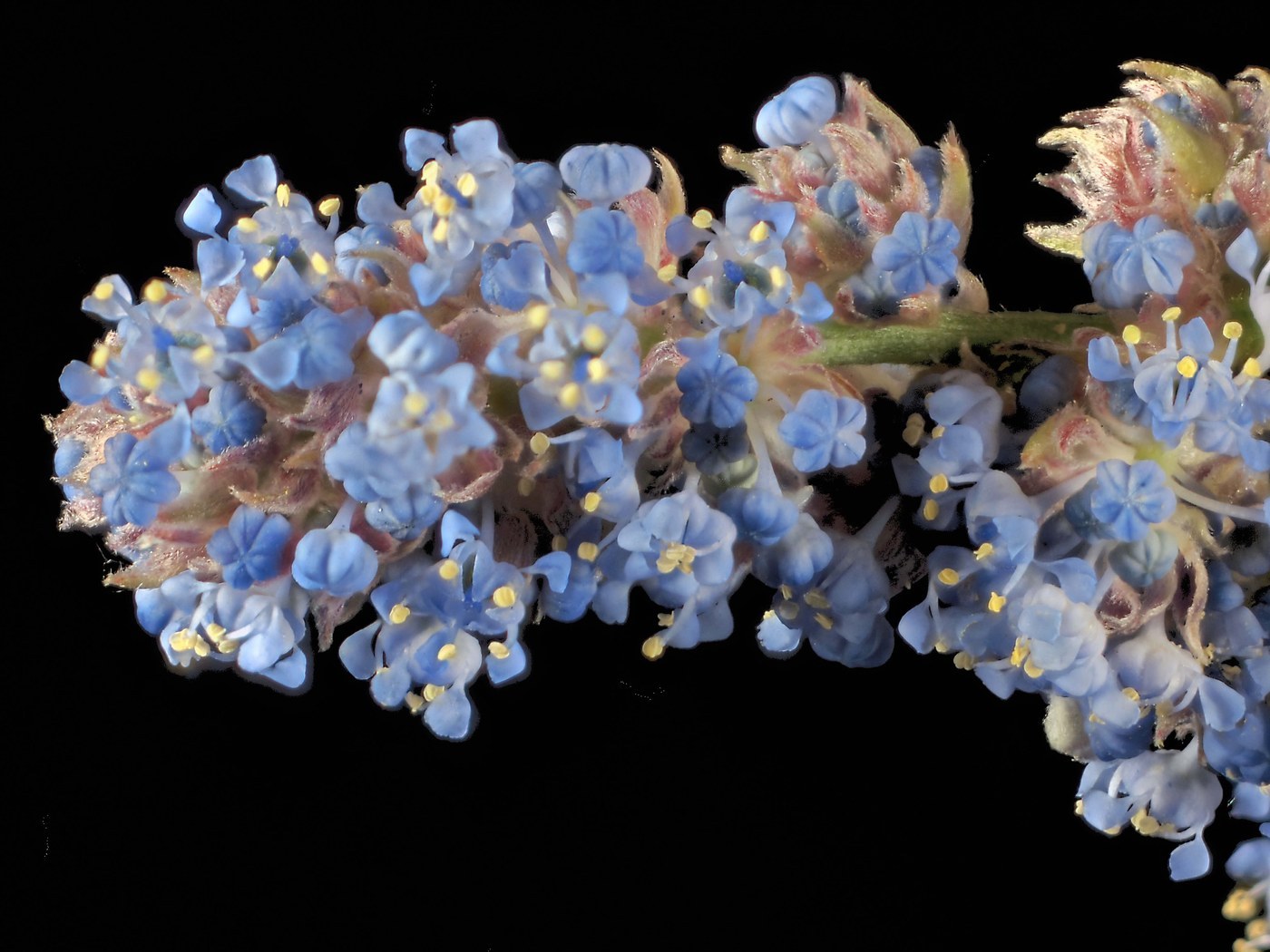
Key Identifying Features
California lilac (genus Ceanothus) is a Western-native evergreen (sometimes deciduous) shrub famous for a spring explosion of densely packed, tiny flowers in vivid sky-blue to deep cobalt — colors rarely seen in other shrubs. Despite the name, it is not a true lilac (Syringa); the resemblance is only in the flower clusters.
- Mounding to upright shrub or small tree, 3–20 ft depending on species
- Flowers in frothy rounded or elongated clusters of minute blooms
- Blooms are usually blue or purple-blue, occasionally white
- Small, glossy dark-green leaves, often with three prominent veins
Leaves & Stems
Leaves are typically small (½–2 in), alternate or opposite, oval to broad, and often glossy dark green above with a paler, slightly fuzzy underside. A key cue in many species is three distinct veins radiating from the leaf base (palmate venation). Leaf margins may be smooth or finely toothed, and many species have a leathery, crinkled texture. Stems are woody, sometimes reddish or with a slight zigzag; a few species have small stiff thorns.
Flowers & Fruit
The flowers are unmistakable up close: clusters of dozens to hundreds of minute 5-parted blooms, each only a few millimeters wide, massed into showy panicles that can smother the plant in spring. They produce a light honey scent and are highly attractive to bees. Fruit is a small, three-lobed sticky capsule that ripens and pops to scatter seed.
How to Tell It Apart from Look-Alikes
- True lilac (Syringa): has large heart-shaped leaves and a strong sweet perfume; California lilac has small leaves and only faint scent.
- Plumbago (Ceratostigma/Plumbago auriculata): blue flowers but larger, tubular, phlox-like blooms, not tiny frothy clusters.
- Hardenbergia: a blue-purple pea-flowered vine, not a shrub with frothy clusters.
- Russian sage / lavender: blue spikes, but those have aromatic gray foliage and herbaceous stems.
The pairing of electric-blue frothy flower clusters + small glossy often three-veined leaves + tough evergreen Western habit clinches Ceanothus.
Where You'll Find It
Native to California and the western US, especially chaparral, coastal scrub, and dry foothills. In gardens it's a staple of drought-tolerant, water-wise, and pollinator landscapes. It demands full sun and excellent drainage, resents summer water once established, and is often short-lived (5–15 years) but spectacular while it lasts.
Quick ID Checklist
- Evergreen (or deciduous) shrub/small tree
- Dense frothy clusters of tiny flowers
- Brilliant blue to purple-blue (sometimes white) blooms
- Small glossy leaves, often three-veined
- Light honey fragrance, bee magnet
- Dry, sunny, fast-draining site, often Western US
If a tough sun-loving shrub erupts in clouds of tiny true-blue flowers each spring and has small leathery leaves, you're looking at California lilac.
Frequently asked questions
Is California lilac a real lilac?
No. It's Ceanothus, in the buckthorn family, and is unrelated to true lilacs (Syringa). The name comes only from the superficial resemblance of its flower clusters; the leaves, fragrance, and growth are quite different.
What makes the blue color so distinctive?
Few shrubs produce flowers in such intense, saturated true-blue and cobalt tones. Combined with the frothy texture of hundreds of tiny massed blooms, the blue is so vivid it's often the first identification clue from a distance.
Why do California lilacs often die after a few years?
Most species are naturally short-lived (5–15 years) and are very sensitive to summer irrigation and poor drainage, which cause root rot. Planting in lean, fast-draining soil and withholding summer water greatly extends their life.
How can I tell it from true lilac when not in bloom?
Look at the leaves: California lilac has small, leathery, glossy leaves often under 2 inches with three prominent veins, while true lilac has large, soft, heart-shaped leaves. The evergreen habit of most Ceanothus is also a giveaway.