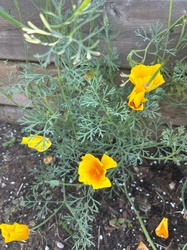
California Poppy Identification Guide
Recognize the California poppy (Eschscholzia californica) by its silky cup-shaped orange flowers, finely dissected blue-green foliage, and the pointed cap that pops off opening buds.
Read the full California Poppy encyclopedia entry →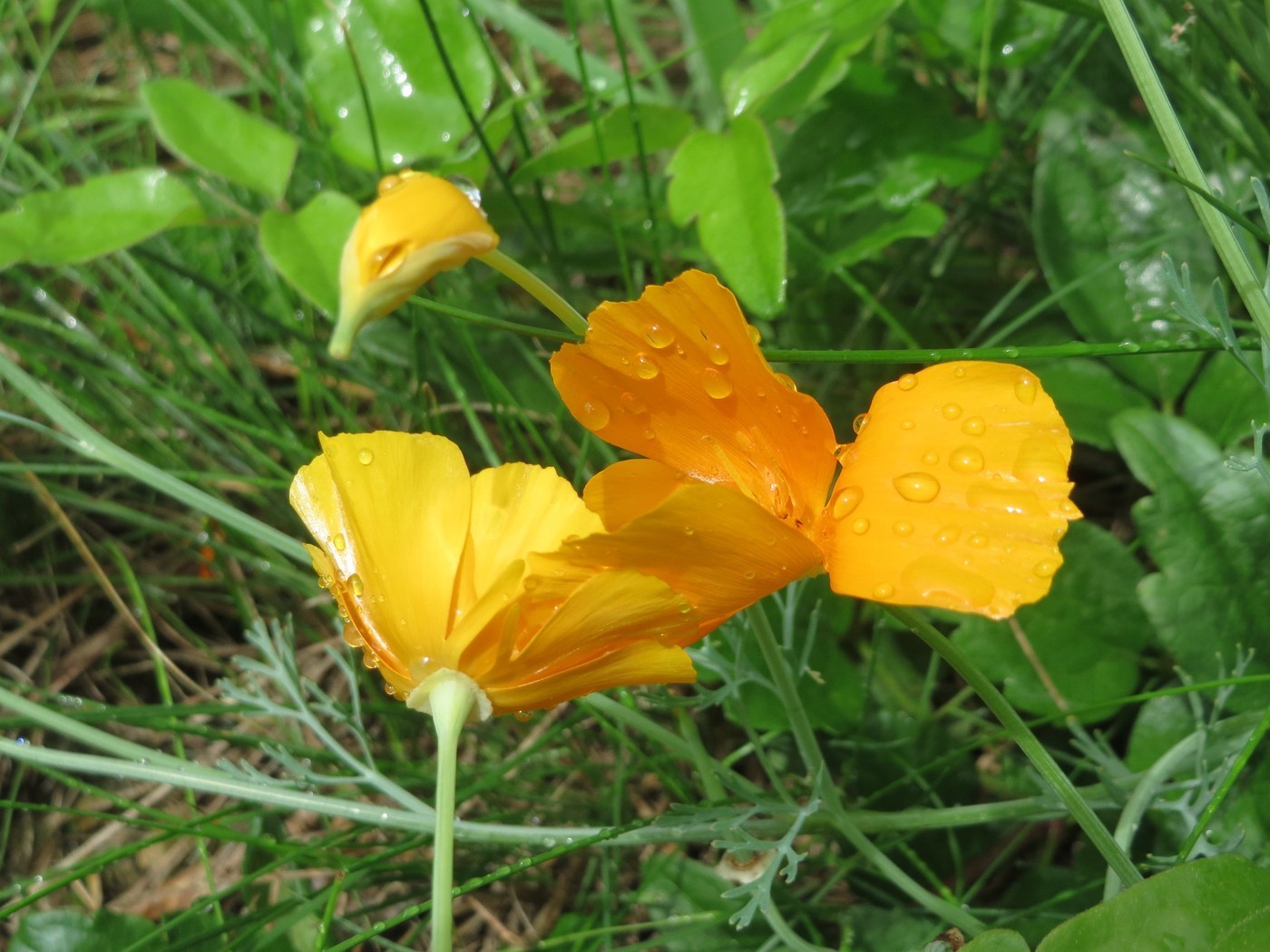
Key Identifying Features
The California poppy (Eschscholzia californica), the state flower of California, is identified by its satiny, cup-shaped flowers in vivid orange to golden-yellow, its lacy blue-green foliage, and the distinctive pointed conical cap that the bud sheds as the flower opens.
- Four silky, overlapping petals forming a cup or bowl
- Bright orange-gold (sometimes cream, pink, or red in cultivars)
- Finely divided, fern-like, blue-green leaves
- Low, spreading plant 8–18 inches tall
Leaves & Stems
Leaves are highly dissected into narrow, almost thread-like segments, giving a soft, ferny, feathery appearance. They are a waxy blue-green to gray-green and arise mostly from the base. Stems are slender, smooth, and also bluish-green, exuding a clear to slightly colored sap when broken. The plant forms a low, sprawling clump.
Flowers & Fruit
The flowers are the standout: four fan-shaped, silky petals about 1–2 inches across that open flat in bright sun and close at night and on cloudy days. A unique feature is the pointed cap (operculum) covering the bud — as the flower opens, this cap is pushed off as a little dunce-cap. After bloom, a long, slender, ribbed seed capsule forms (2–3 inches) that splits explosively to fling seeds. Bloom season is spring into summer, longer with moisture.
How to Tell It Apart from Look-Alikes
- Other poppies (Papaver): True poppies have a different bud (two sepals, not a pointed cap), papery petals, and coarser or hairy foliage; California poppy's bud cap and fine blue-green leaves are distinctive.
- Buttercups: Have glossy yellow flowers but lobed green (not blue-green ferny) leaves and lack the cup-and-cap structure.
- The conical bud cap + blue-green lacy foliage + silky orange cup is unmistakable.
Where You'll Find It
California poppy blankets open hillsides, grasslands, roadsides, and deserts across California and the western U.S., creating famous orange spring 'superblooms.' It is widely sown in wildflower gardens and meadows worldwide. It loves full sun and dry, sandy, well-drained soil, and reseeds prolifically. It typically closes its blooms at dusk and reopens with morning sun.
Quick ID Checklist
- Silky, cup-shaped flower with four petals in bright orange-gold
- Blue-green, fern-like, finely divided leaves
- Pointed conical cap pops off the opening bud
- Flowers close at night and on cloudy days
- Long ribbed seed pod that splits to scatter seed
Frequently asked questions
What color are California poppies?
The classic wild form is brilliant orange to golden-yellow, though cultivated strains can be cream, pink, red, or bicolored. The silky, cup-shaped four-petaled bloom is the key flower feature.
What is the pointed cap on a California poppy bud?
It is the operculum, a fused cap of sepals that covers the developing bud. As the flower opens it is pushed off like a tiny dunce cap, a distinctive trait that separates it from true Papaver poppies.
Why do California poppy flowers close up?
The blooms close at night and during cloudy or cool weather, reopening in bright sunlight. This light-responsive behavior is normal and helps confirm the plant.
How do I tell a California poppy from a true poppy?
Look at the foliage and bud. California poppy has waxy blue-green, fern-like leaves and a pointed bud cap, while true poppies (Papaver) have greener, coarser or hairy leaves and two sepals that fall away from the bud.
California Poppy identified by the community
Recent California Poppy specimens identified with Plant Identifier.