
Camellia Tree Identification Guide
Identify the camellia (Camellia japonica/sasanqua) by its glossy evergreen toothed leaves and large rose-like flowers in white, pink, or red blooming in fall through spring.
Read the full Camellia Tree encyclopedia entry →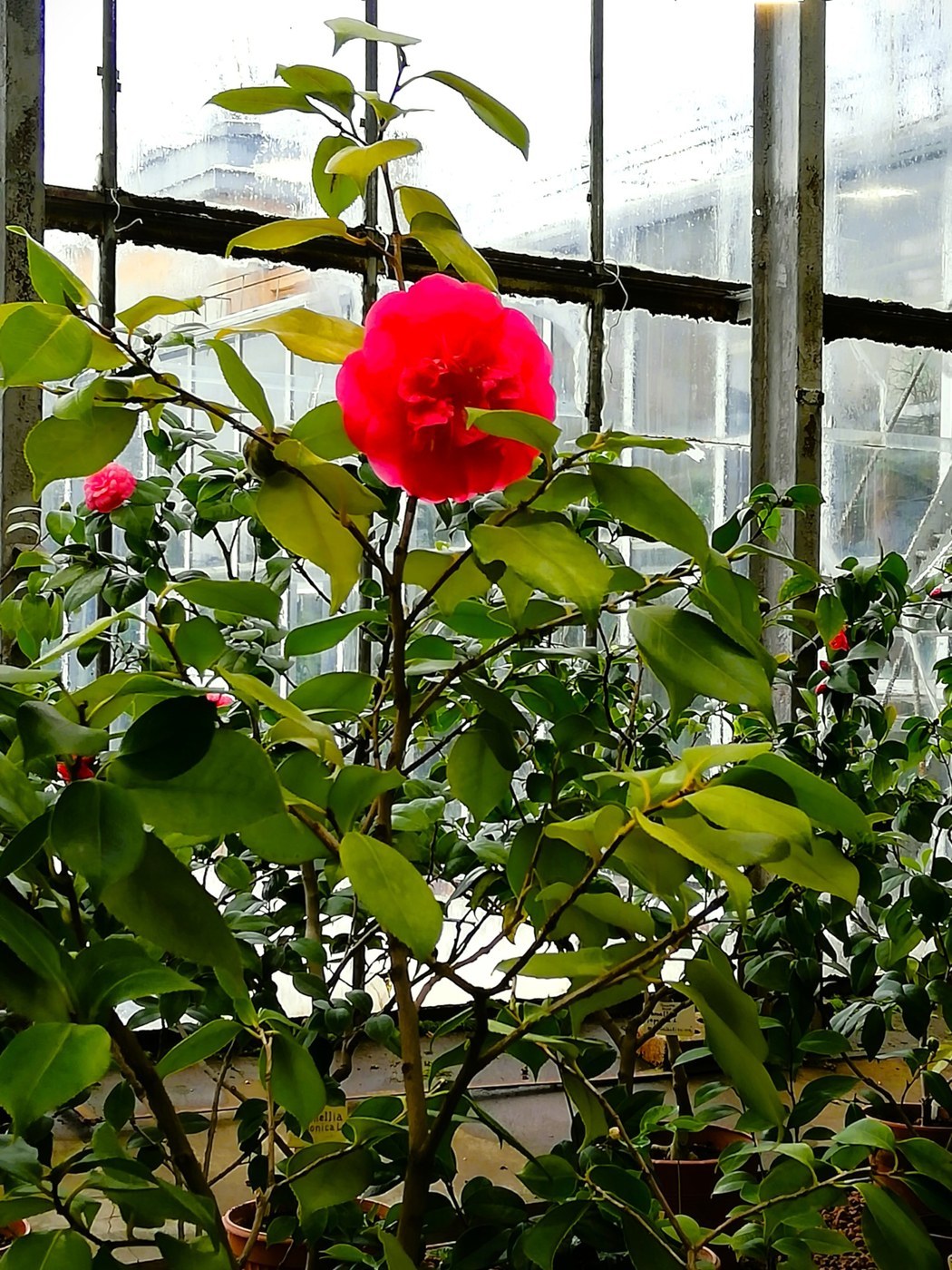
Key Identifying Features
The camellia (most often Camellia japonica or Camellia sasanqua) is a broadleaf evergreen shrub or small tree grown for its cool-season blooms. Identify it by:
- Large, rose- or peony-like flowers in white, pink, red, or bicolors, blooming fall through early spring when little else does
- Thick, glossy, dark green evergreen leaves with finely toothed margins
- A dense, rounded to upright form, often a multi-stemmed large shrub or small tree
- Smooth gray-tan bark on older stems
Leaves & Stems
Leaves are alternate, simple, elliptical to oval, 2-4 inches long, leathery and stiff, with a highly glossy dark green upper surface, a paler underside, and finely serrated (toothed) margins. They persist year-round (evergreen) and have a short, stout petiole. The dense, layered foliage gives the plant a polished, formal look even out of bloom.
Stems are smooth; bark is smooth and gray to tan, sometimes mottled on old specimens. Camellias are slow-growing and densely twiggy, forming a rounded shrub or, with age and training, a small multi-trunked tree.
Flowers & Fruit
Flowers are the showpiece: 2-5 inches across, ranging from single (with a central boss of golden stamens) to fully double, peony-, or rose-form with overlapping petals that hide the stamens. Colors span white, blush, pink, rose, red, and striped/variegated forms.
- Camellia sasanqua blooms earliest (fall to early winter), with smaller, more open, often fragrant flowers and a looser habit; petals tend to drop individually.
- Camellia japonica blooms later (winter to spring), with larger, showier flowers that usually drop as a whole bloom.
Fruit is a rounded, woody, brownish capsule that splits to release a few large seeds; it is inconspicuous compared to the flowers.
How to Tell It Apart from Look-Alikes
- Rose: flowers look similar but roses are deciduous, thorny, with compound toothed leaves — camellia leaves are simple, glossy, thornless, evergreen.
- Gardenia: evergreen glossy leaves too but flowers are white and intensely fragrant with a different form, blooming in summer.
- Rhododendron/azalea: evergreen but flowers are trumpet/bell clusters, leaves untoothed.
The glossy evergreen toothed simple leaves + large rose-like cool-season flowers + thornless smooth gray stems identify a camellia.
Where You'll Find It
Native to East Asia, camellias are planted ornamentals in mild climates, USDA zones 7-9 (some to 6 with protection), common in southern U.S. gardens, foundation plantings, and woodland borders. They prefer part shade and acidic, well-drained soil. A glossy evergreen shrub flowering in the cold months is almost always a camellia.
Quick ID Checklist
- Dense evergreen shrub/small tree, smooth gray bark, thornless
- Thick, glossy, dark green, finely toothed simple leaves
- Large rose/peony-like flowers (white/pink/red), single to double
- Blooms fall through spring (cool season)
- Woody rounded seed capsules
A polished, thornless evergreen shrub covered in big rose-like flowers in fall, winter, or early spring is a camellia.
Frequently asked questions
How do I tell Camellia sasanqua from Camellia japonica?
Sasanqua blooms earlier (fall to early winter) with smaller, often fragrant, more open flowers whose petals drop individually, and a looser habit. Japonica blooms later (winter to spring) with larger, showier flowers that usually fall as a whole bloom, on a denser plant with bigger leaves.
Why does a camellia bloom in winter?
Camellias are adapted to flower in the cool season, fall through early spring depending on species and variety, which is part of their garden value since they provide color when most other shrubs are dormant.
How is a camellia different from a rose?
Though the flowers can look alike, camellias are thornless evergreens with simple, glossy, leathery toothed leaves, while roses are deciduous, thorny, and have compound leaves made of several leaflets.
Are camellias evergreen?
Yes. They keep their thick, glossy, dark green leaves year-round, so the plant looks lush even when not in bloom, which helps distinguish it from deciduous look-alikes.