
How to Care for Camellia
Grow lush, glossy-leaved Camellia japonica with the right acidic soil, dappled shade, and even moisture for waves of showy winter-to-spring blooms.
Read the full Camellia encyclopedia entry →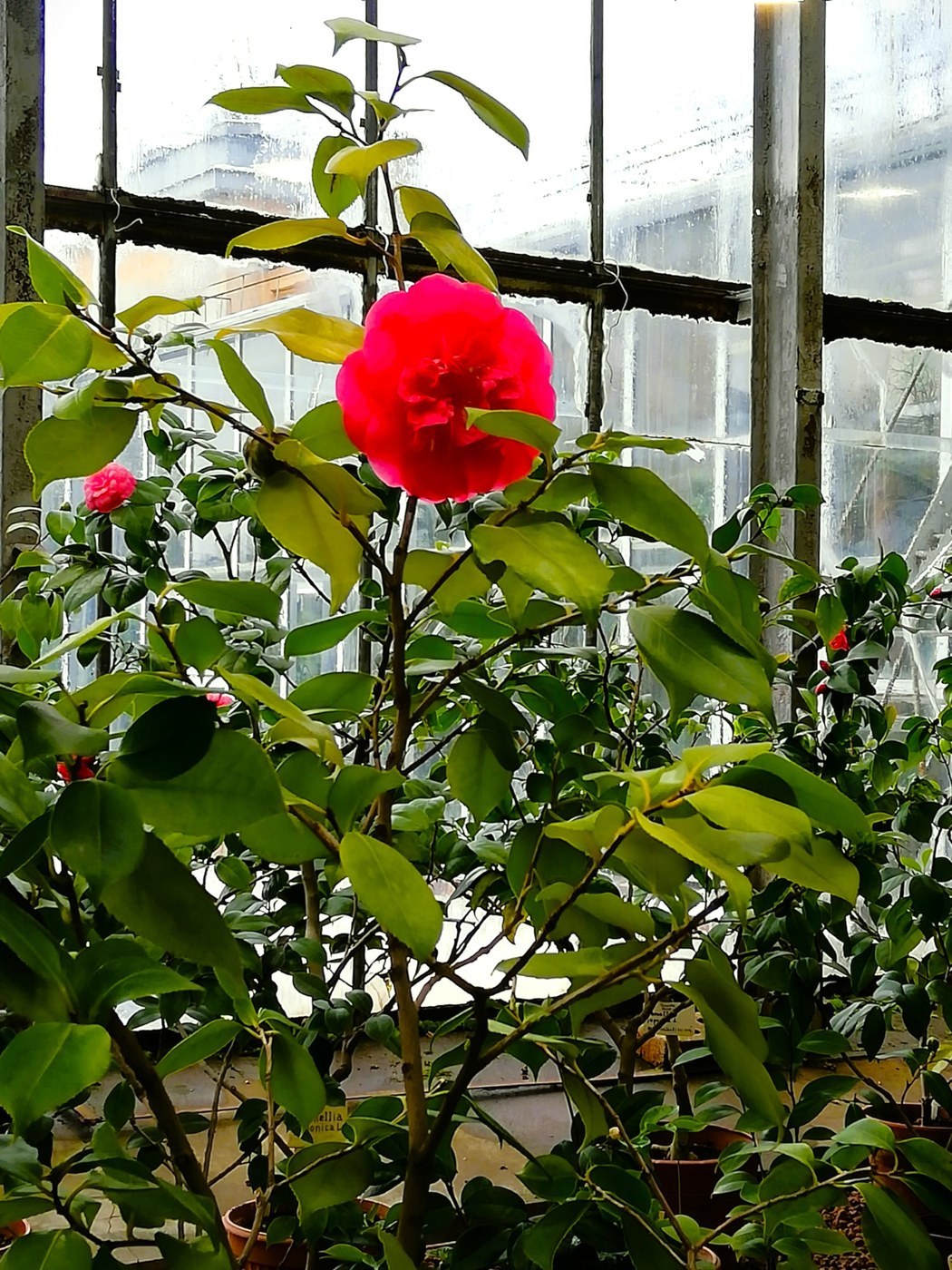
Camellia japonica is a slow-growing, broadleaf evergreen shrub prized for its glossy dark foliage and opulent rose-like blooms that open from late autumn through early spring. It rewards patience and consistency, thriving in the same cool, woodland-edge conditions that suit rhododendrons and azaleas.
Light
Give camellias bright dappled shade, ideally beneath high, open tree canopies or on a north- or east-facing aspect. Morning sun with afternoon shade is perfect. Harsh midday and hot afternoon sun scorches leaves and bleaches flower color, while deep shade produces leggy growth and sparse blooming. Young plants are especially sensitive and appreciate more protection than established ones.
Water
Keep the root zone evenly moist but never soggy. Camellias have shallow, fibrous roots that dry out quickly, so water deeply and regularly during the growing season, tapering slightly in winter. A 5-8 cm layer of organic mulch (pine bark, leaf mold) conserves moisture and keeps roots cool. Use rainwater where possible, as camellias dislike hard, alkaline tap water. Avoid letting the soil swing between bone-dry and waterlogged, which causes bud drop.
Soil & Potting
Plant in acidic soil (pH 5.5-6.5) that is rich in organic matter and, crucially, free-draining. Amend heavy clay with composted bark and leaf mold. For containers, use an ericaceous (lime-free) potting mix. Set the plant so the top of the root ball sits slightly proud of the surrounding soil, as deep planting invites collar rot.
Humidity & Temperature
Camellias favor cool, humid, temperate conditions. Most japonica cultivars tolerate light frost once established but flowers and buds can be damaged by hard freezes and cold drying winds, so shelter them from exposed sites. In hot climates, extra shade and humidity help. Avoid planting where early morning sun hits frozen buds, which causes browning.
Feeding
Feed with an acidic (ericaceous) fertilizer formulated for camellias, rhododendrons, and azaleas. Apply in spring after flowering as new growth begins, and again in early summer. Stop feeding by late summer so growth hardens off before cold weather. Yellowing leaves with green veins signal chlorosis from alkaline soil, correctable with chelated iron and sulfur.
Propagation
Propagate from semi-hardwood cuttings taken in mid- to late summer. Take 8-10 cm cuttings, remove lower leaves, dip in rooting hormone, and insert into a gritty, lime-free rooting mix kept humid and warm. Rooting is slow, often taking several months. Layering low branches is an easy alternative for the home gardener. Seed-grown plants are variable and slow to flower.
Repotting / Pruning
Repot container camellias every 2-3 years in early spring, moving up one pot size with fresh ericaceous mix. Pruning is minimal: after flowering, thin crowded growth, remove dead or crossing branches, and shape lightly. Camellias tolerate harder renovation pruning if overgrown, but recovery is slow. Deadhead spent blooms to keep plants tidy.
Common Problems & Pests
Bud drop is the most common frustration, usually from inconsistent watering, sudden temperature swings, or overly dry air. Yellowing (chlorosis) points to alkaline soil. Watch for scale insects, aphids on new growth, and vine weevil in containers. Sooty mold on leaves indicates a sap-sucking pest below. Camellia petal blight browns and collapses flowers in wet springs; clear fallen petals promptly. Good airflow and drainage prevent most fungal issues.
Seasonal Care Tips
In autumn and winter, enjoy the blooms and protect buds from hard frost and cold winds. In spring, prune and begin feeding after flowering finishes. Through summer, water diligently, maintain mulch, and take cuttings. Reduce watering in late autumn as growth slows, but never let container plants dry out completely.
Frequently asked questions
Why are my camellia buds falling off before they open?
Bud drop is almost always caused by irregular moisture or environmental stress. Keep the soil evenly moist (never dry, never waterlogged), mulch to buffer the roots, and shelter the plant from cold drying winds and sudden temperature swings during bud development.
Why are my camellia's leaves turning yellow between green veins?
That pattern is chlorosis, caused by soil that is too alkaline for a camellia to absorb iron. Grow it in acidic soil, feed with an ericaceous fertilizer, water with rainwater where possible, and apply chelated iron and sulfur to correct the pH.
How much sun does a camellia need?
Bright dappled shade is ideal, with gentle morning sun and protection from hot afternoon sun. Too much direct sun scorches the leaves and fades the flowers, while deep shade leads to leggy stems and few blooms.
Can I grow a camellia in a pot?
Yes. Use a lime-free ericaceous potting mix in a container with excellent drainage, keep it evenly moist, feed in spring and early summer, and repot every 2-3 years. Container camellias dry out fast, so watch moisture closely in warm weather.