
Camellia Identification Guide
Recognize camellias by their large rose-like blooms, glossy evergreen leaves, and winter-to-spring flowering on woody shrubs. Covers how to separate the major species and similar plants.
Read the full Camellia encyclopedia entry →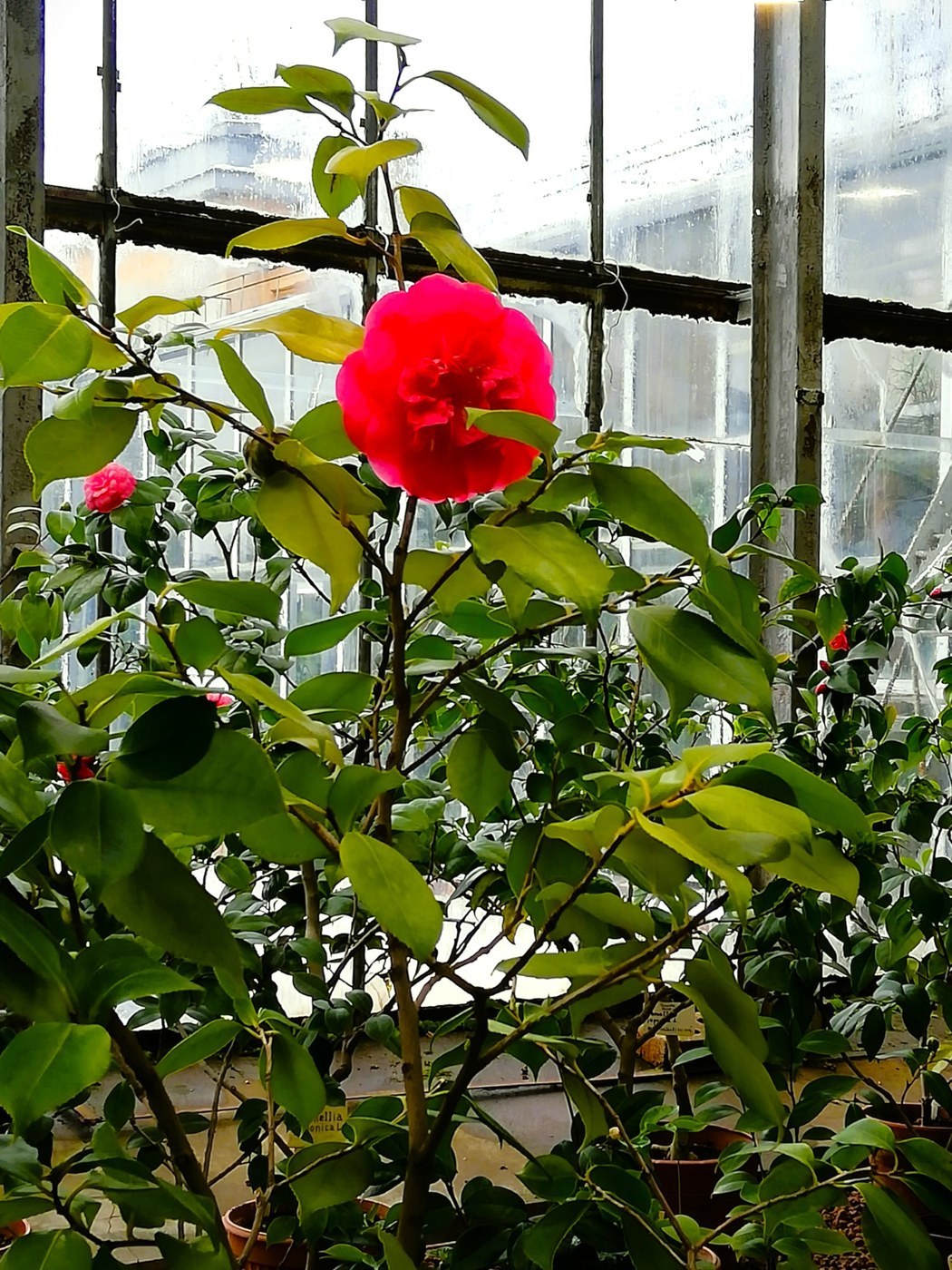
Key Identifying Features
Camellias are broadleaf evergreen shrubs and small trees prized for showy, rose-like flowers that open in the cold months. The combination of thick glossy leaves and a large multi-petaled bloom in winter is the giveaway.
- Large flowers (2-5 in) in white, pink, red, or bicolor, single to fully double
- A central boss of bright yellow stamens (visible in single forms)
- Thick, leathery, glossy dark-green leaves
- Blooms in fall through early spring, when little else flowers
Leaves & Stems
Leaves are alternate, simple, oval to elliptical, 2-4 in long, with finely serrated (toothed) edges and a pointed tip. The upper surface is dark and lustrous; the underside is paler. Stems are woody; young shoots are green and smooth. Plants form dense, rounded shrubs, typically 6-12 ft, and grow slowly.
Flowers & Fruit
Flowers may be single (one row of petals around obvious stamens), semi-double, or fully double (so many petals the stamens are hidden, resembling a rose or peony). Unlike roses, camellias have no fragrance in most varieties and no thorns. Spent blooms often drop whole rather than shattering petal by petal. The fruit is a woody capsule containing a few large seeds.
How to Tell It Apart from Look-Alikes
- Roses: have thorny stems, compound leaves, and fragrance; camellias have smooth woody stems, simple glossy leaves, and bloom in winter.
- Gardenia: glossy evergreen leaves too, but its white flowers are intensely fragrant and bloom in summer.
- Common camellia (C. japonica): large leaves, big formal blooms, winter to spring.
- Sasanqua camellia (C. sasanqua): smaller leaves and flowers, fall-blooming, often fragrant, more open habit.
- Tea plant (C. sinensis): the same genus; smaller white flowers, leaves are the source of tea.
Where You'll Find It
Camellias are popular ornamentals in mild temperate and subtropical gardens (USDA zones 7-9), especially across the southeastern US, Asia, and parts of Europe. They favor acidic, well-drained soil and partial shade, and are common foundation plantings, hedges, and woodland-garden shrubs.
Quick ID Checklist
- Evergreen shrub with thick glossy serrated leaves
- Large rose-like blooms, white to red
- Yellow stamen cluster in single forms
- Flowers in fall to spring, usually no scent
- Smooth woody stems, no thorns
- Whole flowers drop when spent
A glossy evergreen shrub covered in rose-shaped, often unscented blooms in the dead of winter is almost certainly a camellia.
Frequently asked questions
How do I tell a camellia from a rose?
Camellias have smooth thornless woody stems, simple glossy evergreen leaves, no fragrance, and bloom in winter, while roses have thorns, compound leaves, scent, and summer bloom.
What is the difference between Camellia japonica and sasanqua?
Japonica has larger leaves and formal blooms in winter to spring, while sasanqua has smaller leaves and flowers, blooms in fall, and is often fragrant with a more open habit.
Is the tea plant a camellia?
Yes. Camellia sinensis is in the same genus; its leaves are processed into green, black, and oolong tea, and it bears small white flowers.
Why do camellia flowers drop whole?
Many camellias shed the entire spent bloom intact rather than dropping individual petals, which is a useful identifying trait under the shrub.