
How to Care for Canary Creeper
Grow Tropaeolum peregrinum, the canary creeper, for fast-climbing vines and frilly, canary-yellow flowers all summer on a sunny support.
Read the full Canary Creeper encyclopedia entry →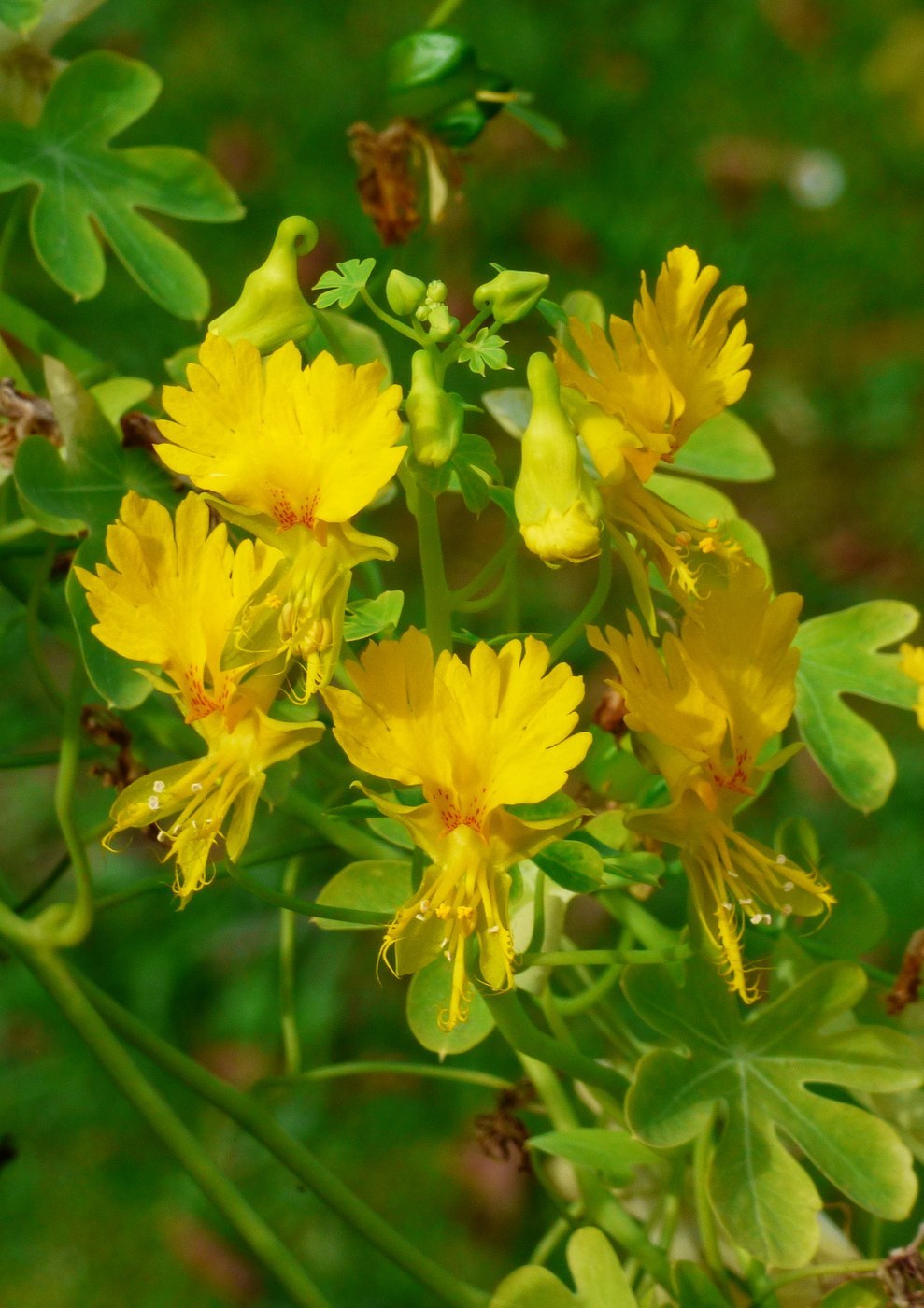
Tropaeolum peregrinum, the canary creeper, is a vigorous annual climbing nasturtium relative grown for its dainty, fringed, canary-yellow flowers and delicate lobed foliage. Fast-growing and easy, it scrambles up trellises, fences, and other plants using coiling leaf stalks, delivering a summer-long show of bird-like blooms.
Light
Canary creeper flowers best in full sun but tolerates part shade, which suits its listed light range of full sun to part shade. In hot climates a little afternoon shade keeps foliage fresh, while in cooler regions the most sun you can give produces the heaviest flowering. Too much shade yields lush leaves but fewer blooms.
Water
Keep the soil evenly moist through the growing season, watering regularly so the fast-growing vine never dries out badly during hot spells. Consistent moisture supports continuous flowering. Avoid waterlogging, however, especially in containers; the soil should be moist, not soggy. Mulching the root zone helps retain even moisture in summer heat.
Soil & Potting
Grow in moderately fertile, well-drained soil. This plant actually flowers more freely in leaner soils; overly rich ground pushes leafy growth at the expense of blooms. In containers use a general-purpose potting mix with a container large enough to support the extensive vining growth, and provide a trellis or netting to climb from the start.
Humidity & Temperature
Canary creeper is a warm-season annual that thrives in mild to warm temperatures and typical outdoor humidity. It is frost-tender, so sow or plant out only after the danger of frost has passed. It dislikes intense, dry heat, which can stall flowering, and often performs best in regions with warm days and cooler nights.
Feeding
Feed lightly, if at all. A single application of balanced fertilizer at planting is usually plenty, and heavy feeding, especially high-nitrogen fertilizer, produces abundant foliage but suppresses flowers. For container plants a monthly diluted liquid feed keeps growth steady, but restrain nitrogen to keep the flower display strong.
Propagation
Canary creeper is grown from seed sown fresh each year. Sow seeds indoors a few weeks before the last frost, or direct-sow outdoors once the soil has warmed. The seeds have a hard coat, so soaking them overnight before sowing speeds germination. Seedlings resent root disturbance, so sow into individual pots or their final position where possible.
Repotting / Pruning
As an annual it is not repotted, but container-grown plants should be started in a suitably large pot to avoid disturbance. Pinch the growing tips of young plants to encourage bushier, more branched climbing. Trim wayward stems to guide the vine along its support, and deadhead spent flowers to prolong the blooming season.
Common Problems & Pests
Aphids are the main pest, clustering on tender shoot tips and undersides of leaves; dislodge them with a jet of water or treat with insecticidal soap. Cabbage-white caterpillars sometimes chew the foliage. Poor flowering usually traces back to too much shade or overly rich, nitrogen-heavy soil. In cool, damp conditions watch for occasional fungal leaf spotting, which good air circulation helps prevent.
Seasonal Care Tips
Start seeds in spring after frost danger passes and provide support immediately. Through summer keep the soil evenly moist, deadhead regularly, and enjoy peak flowering in the warm months. Growth accelerates rapidly in high summer, so guide and tie in stems as needed. The plant is killed by the first hard frost of autumn, at which point it is simply cleared away and resown the following year.
Frequently asked questions
Why is my canary creeper all leaves and few flowers?
This almost always means the soil is too rich in nitrogen or the plant is in too much shade. Move it to a sunnier spot and stop applying high-nitrogen fertilizer. Leaner soil and full sun encourage the vine to shift its energy into producing more of its yellow blooms.
How do I get canary creeper to climb?
It climbs by twining its leaf stalks around thin supports, so give it netting, string, wire, or a slender trellis to grab. Guide young stems toward the support and tie them loosely at first. Once established, the vine scrambles upward quickly on its own.
Does canary creeper come back every year?
No, it is a frost-tender annual that completes its life cycle in one season and dies with the first hard frost. It can self-seed in mild climates, but in most gardens you sow fresh seed each spring to grow it again.
Can I grow canary creeper in a pot?
Yes. Use a large container with a general-purpose mix, add a trellis or netting for support, and keep the soil evenly moist since pots dry out faster. Give it full sun and avoid overly rich feeding to keep the flowers coming all summer.