Canary Creeper
Tropaeolum peregrinum
Canary creeper is a delicate climbing relative of the nasturtium, named for its fringed, bright yellow flowers that resemble tiny birds in flight. It quickly clothes trellises and fences with lacy blue-green foliage.
- Light
- Full sun to part shade
- Water
- Regular; keep evenly moist
- Difficulty
- Easy
Got a plant like this?
Identify any plant from a photo, free.
Overview
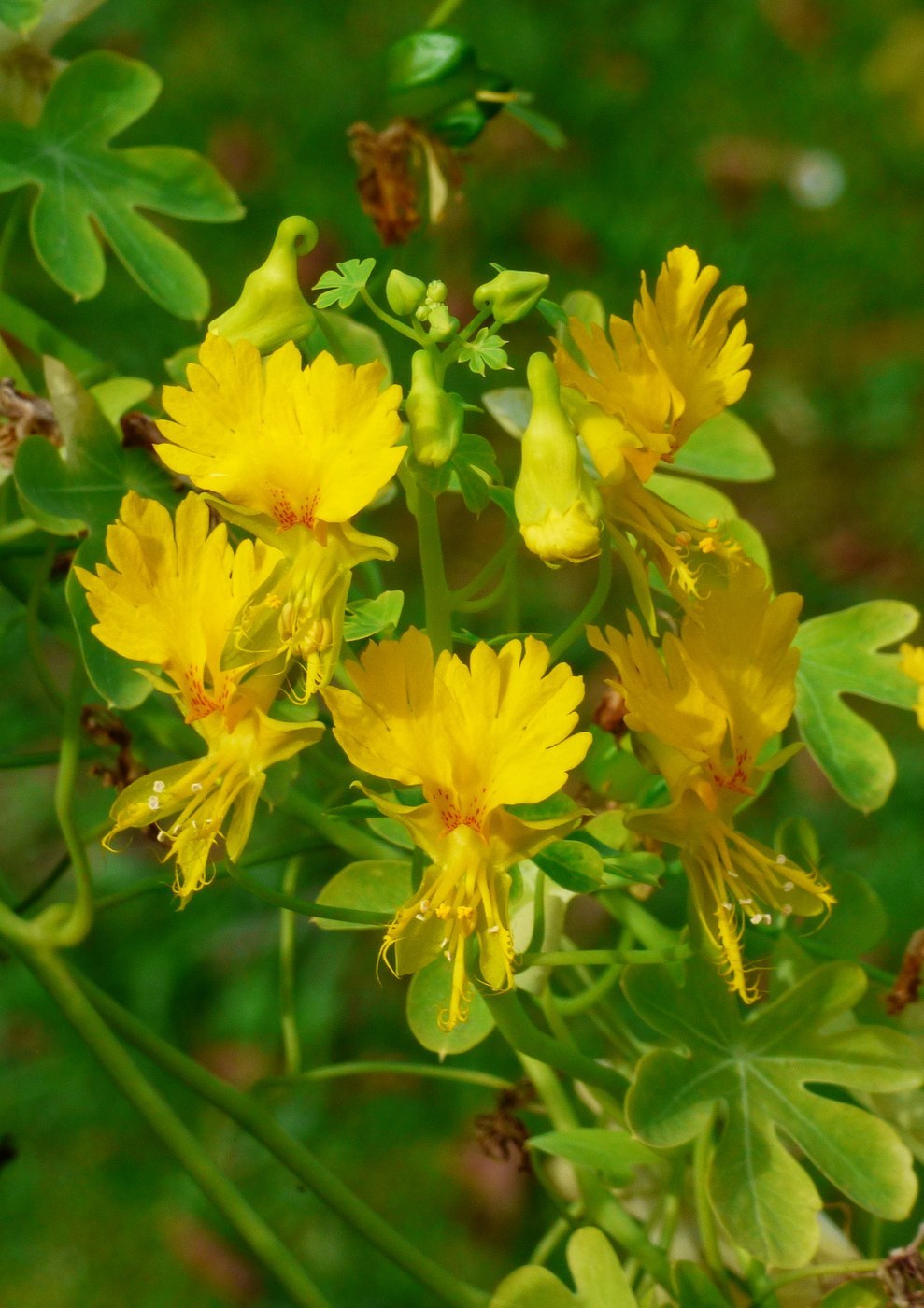
Canary creeper is a graceful climbing annual in the nasturtium family, grown for its distinctive frilly yellow flowers. Each bloom has upper petals fringed like a bird's wings, giving the look of a small canary perched among the leaves.
Native to the Andes of South America, it climbs by twisting leaf stalks rather than tendrils and can reach 8-12 feet in a season.
With its airy habit, lobed blue-green leaves, and long flowering period, it is a charming choice for softening fences, trellises, and arbors.
How to identify it
- Habit: Slender climbing annual reaching 8-12 ft, twining via its leaf stalks.
- Flowers: Small, bright canary-yellow flowers with two larger fringed upper petals (like wings) and a small green spur.
- Leaves: Distinctive five-lobed, blue-green, palmate leaves.
- Bloom: Long flowering season from summer to frost.
- Form: Light and lacy, less dense than common nasturtium.
Care & growing
Light: Full sun to part shade; tolerates light shade better than many climbers.
Water: Keep soil evenly moist; do not let it dry out in heat.
Soil: Moderately fertile, well-drained soil; very rich soil promotes leaves over flowers.
Temperature: A cool-tolerant warm-season annual, frost-tender.
Feeding: Little needed; lean soil encourages more blooms.
Propagation: Grown from seed sown directly after frost or started indoors. Provide netting or a trellis for the twining leaf stalks to grip.
Habitat & origin
Native to the Andes of western South America (Peru, Ecuador, Colombia), where it grows as a climbing plant in cool, moist mountain habitats.
Grown worldwide as an ornamental warm-season annual for trellises, fences, and arbors, popular in cottage gardens for its delicate appearance.
Frequently asked questions
Why is it called canary creeper?
Its small, fringed yellow flowers resemble tiny canaries or birds in flight, and the plant is a creeping, climbing vine.
Is it related to nasturtium?
Yes, it is a Tropaeolum, the same genus as the common garden nasturtium, with similarly shaped flowers and lobed foliage.
How does it climb?
It climbs by twining its leaf stalks around supports rather than using tendrils, so give it netting, string, or a trellis.
Does it grow in shade?
It prefers full sun but tolerates part shade better than many flowering climbers, making it useful for lightly shaded spots.
Canary Creeper guides
In-depth guides for identifying, growing, and caring for Canary Creeper.
How to Care for Canary Creeper
Grow Tropaeolum peregrinum, the canary creeper, for fast-climbing vines and frilly, canary-yellow flowers all summer on a sunny support.
Canary Creeper Identification Guide
Identify canary creeper (Tropaeolum peregrinum) by its lobed gray-green leaves and frilly, fringed canary-yellow flowers resembling tiny birds in flight.