
Cantaloupe Identification Guide
A practical guide to identifying the cantaloupe (muskmelon) vine, its sprawling stems, lobed leaves, yellow flowers, and netted fruit.
Read the full Cantaloupe encyclopedia entry →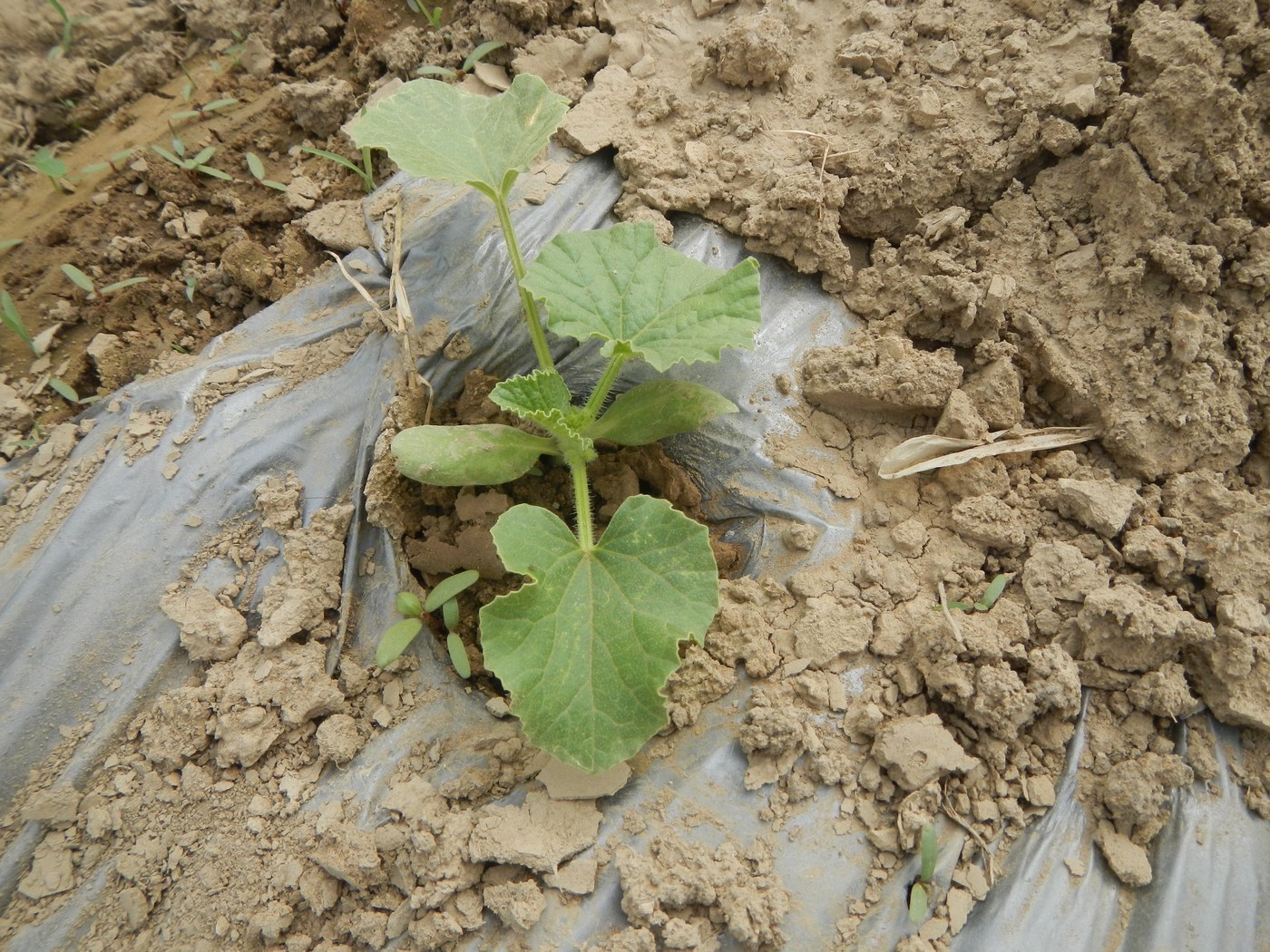
Key Identifying Features
Cantaloupe (Cucumis melo var. cantalupensis / reticulatus) is a sprawling annual vine in the gourd family (Cucurbitaceae). The single most reliable clue is the round to slightly oval fruit with a raised, corky tan netting over a greenish-to-buff rind, attached to a soft, scrambling vine. Crush a leaf or stem and you'll notice a faint cucumber-melon scent.
- Growth habit: trailing/climbing annual vine, often 3–8 ft long, running over the ground
- Tendrils: unbranched, coiling tendrils at leaf bases (used to grip)
- Hairs: stems and leaves are bristly-hairy to the touch
Leaves & Stems
Leaves are alternate, roughly rounded to kidney-shaped (reniform), 3–6 inches wide, with 3–7 shallow, rounded lobes and lightly toothed margins. They are palmately veined and slightly rough-haired on both sides. Stems are angular, hollow-feeling, green, and covered in short stiff hairs that feel scratchy. Unlike cucumber, the lobes are shallower and the leaf edge is more wavy than sharply pointed.
Flowers & Fruit
Cantaloupe is monoecious — separate male and female flowers on the same plant. Flowers are bright yellow, 5-petaled, about 1 inch across, bell- to star-shaped. Female flowers have a tiny swollen ovary (a miniature melon) just behind the petals; male flowers sit on a slim stalk with no swelling.
The fruit is the giveaway: a musk melon 4–6 inches across, round to oval, with prominent raised net-like webbing. True North American "cantaloupe" (reticulatus type) shows beige netting with little or no sutures; European cantaloupe (cantalupensis) is warty/ribbed with light netting. Ripe flesh is orange and fragrant, and the fruit slips cleanly from the stem ("full slip").
How to Tell It Apart from Look-Alikes
- Honeydew melon: smooth, waxy, pale rind with no netting; green flesh.
- Cucumber: elongated cylindrical fruit, deeper-lobed leaves, fruit warty/spiny not netted.
- Winter/butternut squash: much larger leaves often with white mottling, hard rind, branched tendrils.
- Watermelon: deeply dissected, lacy leaves (almost fern-like) and smooth striped rind.
The combination of shallow-lobed rounded leaves + yellow flowers + netted aromatic melon is essentially diagnostic for cantaloupe.
Where You'll Find It
Grown worldwide in warm-season vegetable gardens and farm fields; it needs full sun, heat, and well-drained soil. You'll see it sprawling across garden beds, mulch, or trained up a trellis. It is a cultivated plant, not a wild native, though vines occasionally volunteer from compost or seed.
Quick ID Checklist
- Vine: hairy, trailing annual with coiling unbranched tendrils
- Leaves: rounded, 3–7 shallow lobes, scratchy-hairy, 3–6 in wide
- Flowers: yellow, 5-petaled, separate male/female
- Fruit: round-oval melon with raised tan netting and orange, musky flesh
- Scent: sweet, musky aroma when ripe; cucumber-ish foliage
Frequently asked questions
How can I tell cantaloupe from honeydew on the vine?
Look at the rind: cantaloupe has a raised, corky tan net over the surface and turns aromatic when ripe, while honeydew stays smooth, waxy, and pale with no netting. Cut flesh is orange in cantaloupe, green in honeydew.
Are the male and female flowers different?
Yes. Female flowers have a tiny melon-shaped swelling (the ovary) directly behind the petals; male flowers are on a plain thin stalk with no swelling. Both are yellow and five-petaled.
How do I know a cantaloupe is ripe and ready?
Ripe cantaloupes develop full netting, the background rind turns from green to tan/buff, they smell sweet and musky at the blossom end, and the fruit detaches from the vine with gentle pressure (a 'full slip').
Could I mistake a young cantaloupe vine for a cucumber?
It's possible early on, but cantaloupe leaves are more rounded with shallower lobes and a wavy edge, while cucumber leaves are more triangular with sharper points. The fruit removes all doubt: netted melon versus warty cylinder.