
How to Care for Cape Daisy
Grow Cape Daisy (Osteospermum) for masses of vivid daisy blooms in full sun with light, well-drained soil and regular deadheading.
Read the full Cape Daisy encyclopedia entry →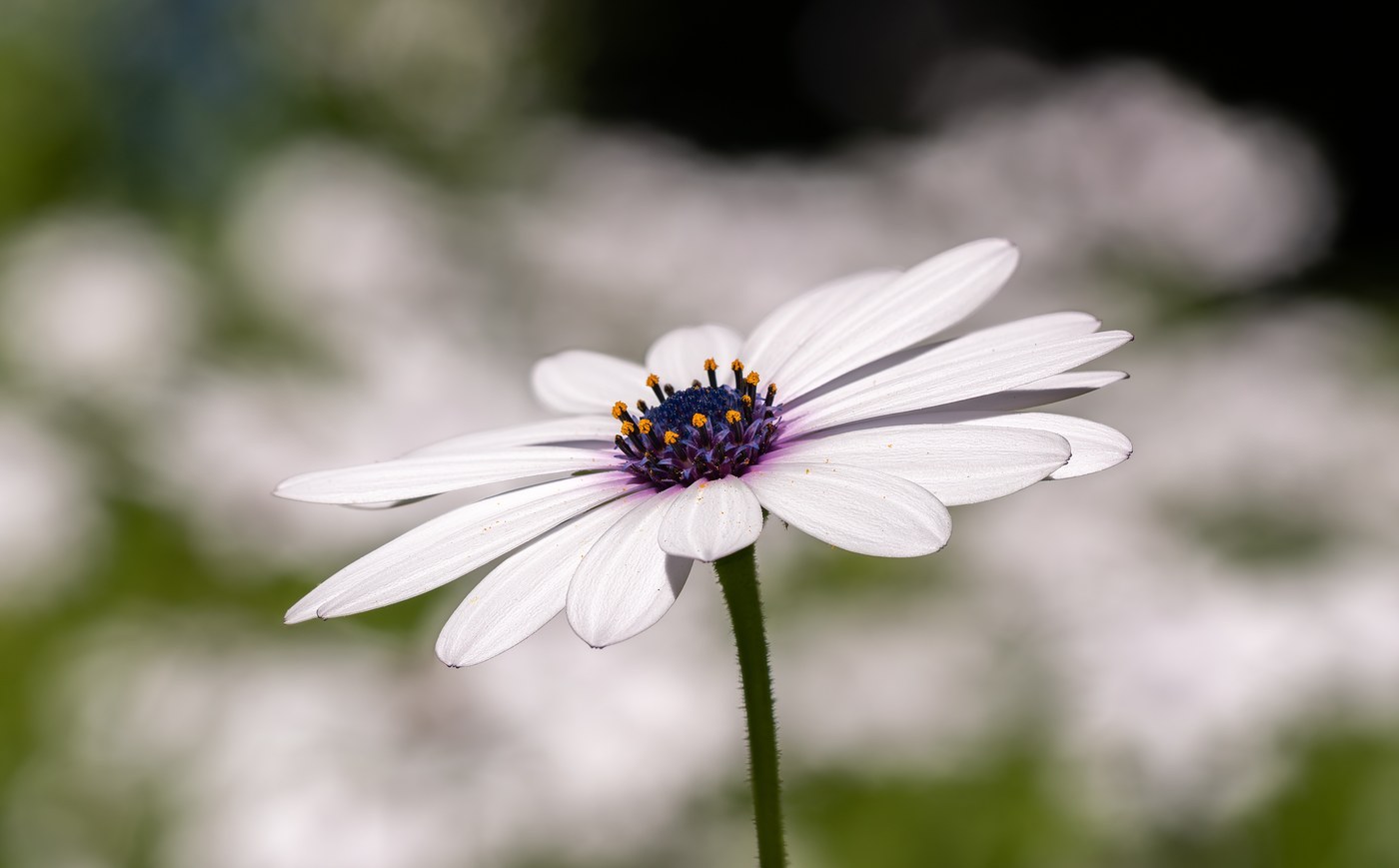
Cape Daisy (Osteospermum ecklonis) is a South African sun-lover prized for its bold, daisy-like flowers in shades of purple, white, pink and orange, often with a contrasting metallic-blue central eye. It is an easy, floriferous plant for borders, containers and window boxes wherever summers are warm and sunny.
Light
Give Cape Daisy full sun, at least 6 hours of direct light a day. Ample sun is essential for heavy flowering and compact growth; in too much shade plants stretch, flop and bloom sparsely. Many varieties close their flowers in low light and cloudy weather and reopen when the sun returns, so a bright, open position keeps the display looking its best.
Water
Water moderately, letting the top of the soil dry between waterings. Osteospermum tolerates short dry spells once established but performs best with even moisture during active growth and bloom. Avoid waterlogging, which quickly leads to root rot; always let excess drain from containers. Water at the base to keep foliage dry and reduce disease.
Soil & Potting
Use light, fast-draining soil. In beds, a fertile loam amended with grit or compost is ideal; in pots use a quality potting mix with added perlite or coarse sand. Good drainage is the single most important factor. A slightly acidic to neutral pH suits it well.
Humidity & Temperature
Cape Daisy thrives in mild, warm conditions, roughly 60-75F (15-24C), and appreciates good air circulation. It handles heat well if kept watered but may pause blooming during extreme heat, resuming as temperatures moderate. It is frost-tender and usually grown as an annual where winters freeze; in mild climates it can persist as a short-lived perennial.
Feeding
Feed container plants every 2-3 weeks through spring and summer with a balanced liquid fertilizer, or work a slow-release granular feed into the mix at planting. Bedding plants benefit from a light monthly feed. Avoid excess nitrogen, which encourages leafy growth at the expense of flowers.
Propagation
Propagate named cultivars from stem tip cuttings taken in late summer; they root readily in a gritty, moist mix and overwinter as young plants. Species and seed strains can also be raised from seed sown indoors 6-8 weeks before the last frost.
Repotting / Pruning
Pinch young plants once or twice early on to encourage bushy, branching growth. Deadhead spent blooms regularly to keep flowers coming and prevent legginess. A light shearing mid-season rejuvenates tired plants. Pot on into a container one size larger if roots fill the pot.
Common Problems & Pests
Root rot from soggy soil is the main threat, so prioritize drainage. Watch for aphids on new growth and whitefly under leaves; rinse or treat with insecticidal soap. Downy mildew and gray mold can appear in cool, damp, crowded conditions, so space plants and improve airflow. Poor flowering usually signals too little sun or too much nitrogen.
Seasonal Care Tips
Plant out after frost danger passes and feed through the growing season. Deadhead and shear to maintain bloom into autumn. In frost-prone areas take cuttings in late summer or discard plants after first frost; in mild regions cut back lightly in late winter to refresh spring growth.
Frequently asked questions
Why won't my Cape Daisy flowers open?
Osteospermum flowers close in low light and cloudy or cool conditions and reopen in bright sun. If they stay shut, the plant likely needs a sunnier position with at least 6 hours of direct light.
Can Cape Daisy survive winter?
It is frost-tender and usually grown as an annual where winters freeze. In frost-free climates it can persist as a short-lived perennial, or you can overwinter rooted cuttings indoors.
How do I keep Cape Daisy blooming all season?
Deadhead spent flowers regularly, feed every 2-3 weeks in containers, give full sun, and shear plants lightly mid-season if they get leggy to trigger a fresh flush of blooms.
Why is my Cape Daisy leggy and not flowering?
Legginess and few flowers usually mean too little light or too much nitrogen fertilizer. Move it to full sun, switch to a balanced feed, and pinch the stems to encourage bushier growth.