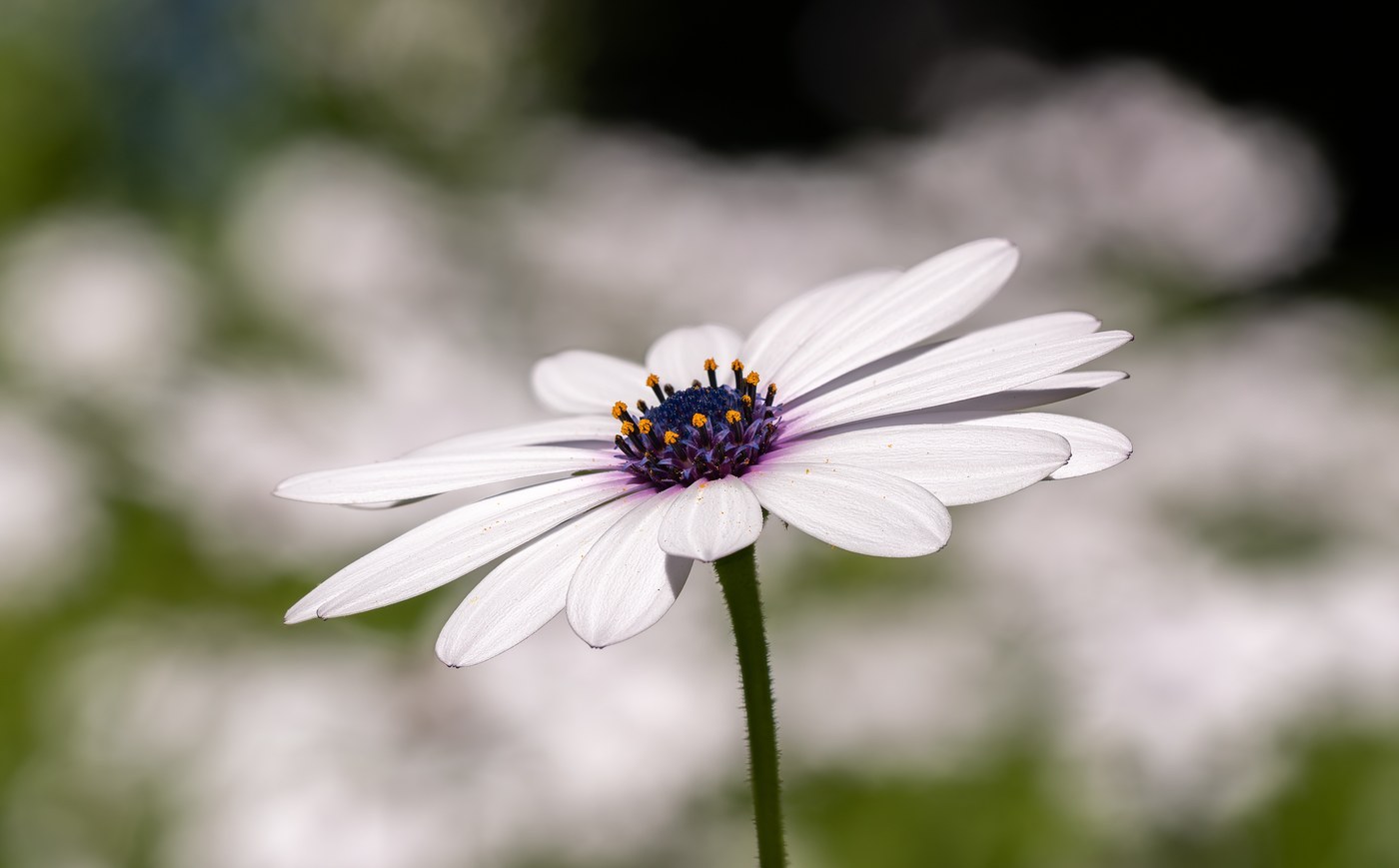
Cape Daisy
Osteospermum ecklonis
A sun-loving South African daisy with vivid, often metallic-blue-centered blooms in purple, white, and orange, prized for nonstop color in beds and containers.
- Light
- Full sun
- Water
- Moderate; let topsoil dry between waterings
- Difficulty
- Easy
Got a plant like this?
Identify any plant from a photo, free.
Overview
Cape daisy, also widely sold as osteospermum or African daisy, is a tender perennial from southern Africa grown as a flowering annual in cooler climates. Its daisy-like flowers open in sun and come in a brilliant palette, often with a shimmering blue or violet central disc.
Drought-tolerant and free-flowering, it is a staple of summer container displays and sunny borders. Modern hybrids bloom continuously from spring into autumn and include unusual spoon-shaped petal forms.
How to identify it
A bushy, mounding plant covered in single daisy flowers.
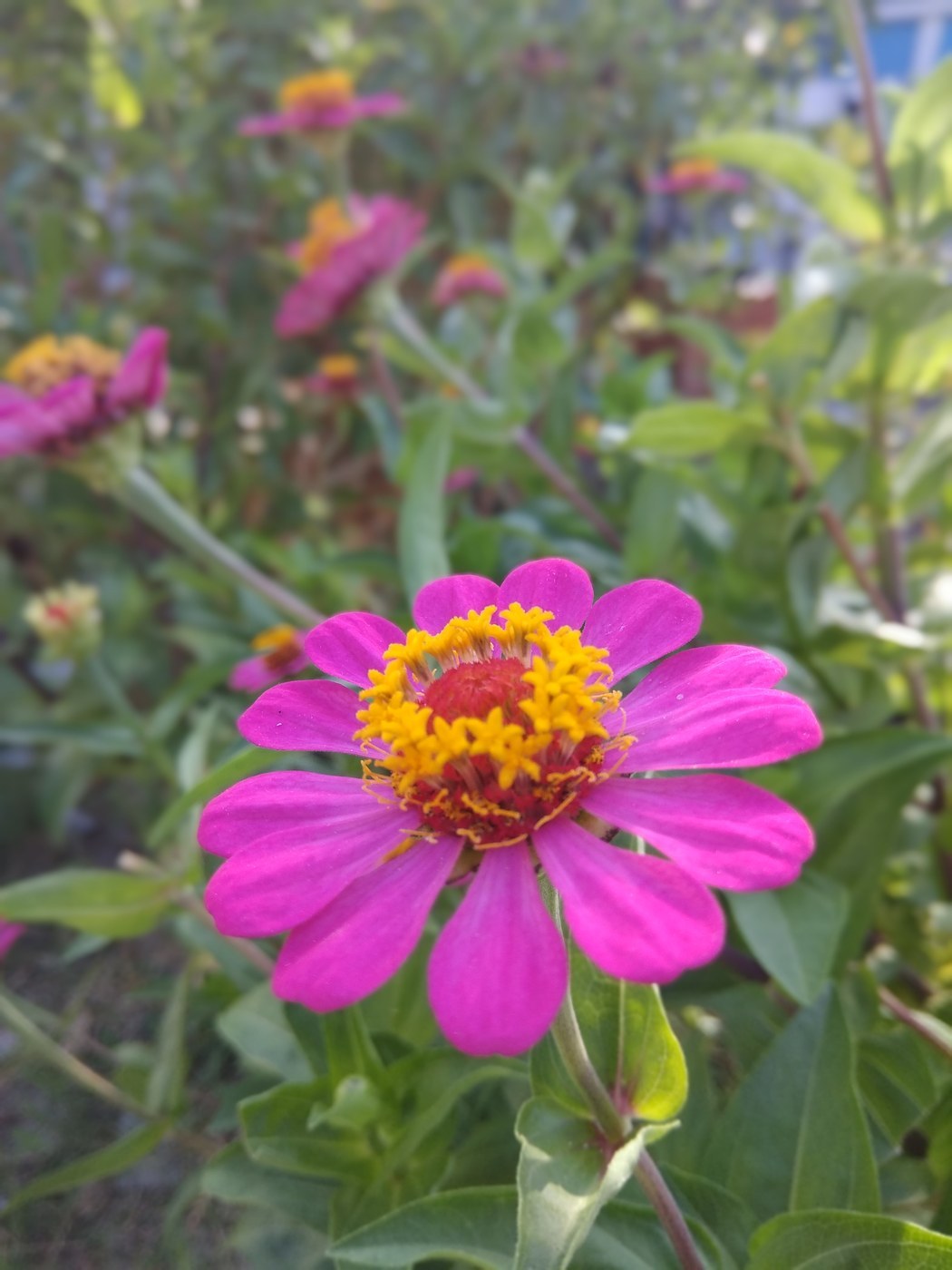
- Flowers: classic daisy form 5-8 cm across, with a ring of ray petals around a central disc that is often metallic blue or purple
- Colors: white, purple, pink, yellow, and orange, sometimes bicolored
- Petals: flat or, in some cultivars, pinched into a spoon shape
- Leaves: lance-shaped to oval, gray-green, slightly aromatic
- Height: 30-50 cm, mounding to slightly trailing
- Behavior: many flowers close at night and in dull weather
Care & growing
- Light: full sun is essential; flowers close in shade and dull conditions
- Water: moderate; let the topsoil dry between waterings, as it dislikes soggy roots
- Soil: light, well-drained soil; tolerates poor ground
- Temperature: thrives in mild warmth; tender to frost and may pause flowering in extreme heat
- Feeding: a balanced fertilizer every few weeks keeps blooms coming
- Propagation: from seed or, for named cultivars, soft stem cuttings; deadhead to prolong flowering
Habitat & origin
Osteospermum is native to South Africa, growing on coastal scrub, rocky slopes, and open ground in a climate of mild, dry conditions.
It is now cultivated worldwide as a bedding and container plant, grown as a perennial in frost-free zones and as a summer annual elsewhere. It is especially popular in Mediterranean-style and water-wise gardens.
Frequently asked questions
Why do my cape daisy flowers close up?
Many varieties naturally close their blooms at night and in cloudy or shady conditions, reopening when the sun returns.
Is cape daisy the same as osteospermum?
Yes. Cape daisy and African daisy are common names for Osteospermum, a South African genus.
Will cape daisy survive winter?
It is frost-tender; it overwinters only in mild, frost-free climates and is grown as an annual where winters are cold.
How do I keep it blooming all season?
Give it full sun, deadhead spent flowers, feed regularly, and avoid overwatering for the longest display.
Cape Daisy guides
In-depth guides for identifying, growing, and caring for Cape Daisy.
How to Care for Cape Daisy
Grow Cape Daisy (Osteospermum) for masses of vivid daisy blooms in full sun with light, well-drained soil and regular deadheading.
Cape Daisy Identification Guide
Recognize the cape daisy by its bright daisy flower heads with a distinctive metallic blue or dark central disc and aromatic gray-green foliage. This guide details its traits.