
Cape Daisy Identification Guide
Recognize the cape daisy by its bright daisy flower heads with a distinctive metallic blue or dark central disc and aromatic gray-green foliage. This guide details its traits.
Read the full Cape Daisy encyclopedia entry →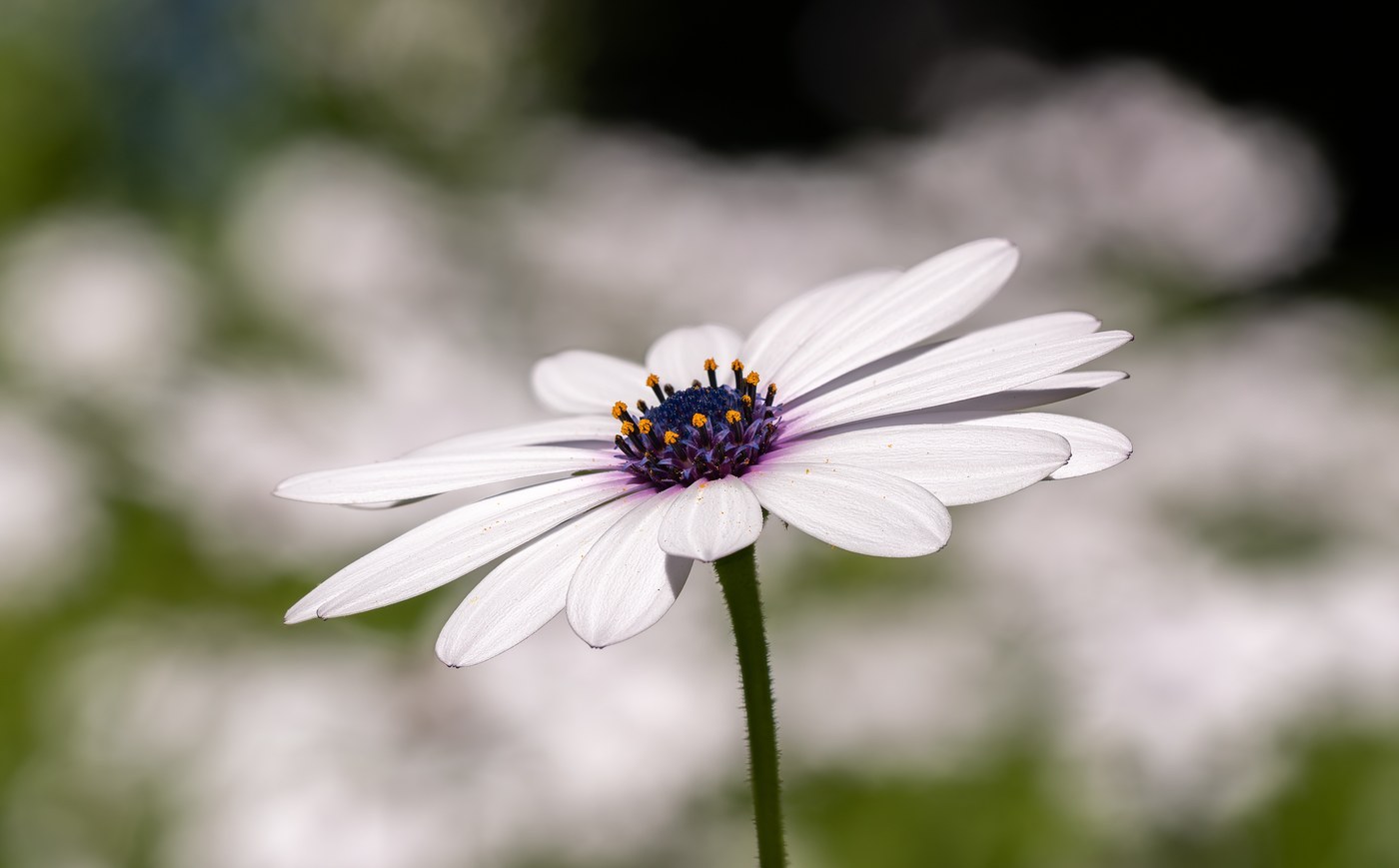
Key Identifying Features
Cape daisy (Osteospermum and the closely related Dimorphotheca), also called African daisy, is a South African member of the sunflower family grown for its showy daisy blooms.
- Flower heads: classic daisy form, 4-8 cm across, with a ring of ray florets surrounding a central disc
- Disc color: often a striking deep blue, steely violet or dark center (especially in Osteospermum), a strong ID clue
- Ray colors: white, purple, pink, orange, yellow, often with a contrasting reverse or bluish base
- Behavior: many flowers close at night and in cloudy weather
- Habit: bushy subshrub or spreading annual, 20-60 cm
Leaves & Stems
Leaves are alternate, lance-shaped to spoon-shaped, gray-green, sometimes with shallow teeth or lobes, and slightly aromatic when crushed. The foliage and stems may be somewhat hairy or glandular. Stems are branched and often woody at the base in perennial Osteospermum, more herbaceous in annual Dimorphotheca.
Flowers & Fruit
The heads sit singly on long stalks. A diagnostic feature of Osteospermum is that the disc florets are often sterile and brightly colored (blue/purple), while only the ray florets set seed along the rim. Some cultivars have unusual spoon-shaped or pinched ray petals. Seeds differ between the two genera: Dimorphotheca produces two seed shapes (hence the name), a useful botanical marker. The frequent night-closing of the flowers is characteristic.
How to Tell It Apart from Look-Alikes
- Gerbera daisy: larger solitary heads, rosette of deeply lobed basal leaves, no metallic blue eye
- Shasta / oxeye daisy: white rays with a flat yellow disc, toothed dark green leaves, no blue center
- Gazania: also South African, but flowers have banded/zoned markings at the petal base and stay close to the ground with narrow leaves white-woolly beneath
- Marguerite daisy (Argyranthemum): white/yellow daisies with finely divided leaves and a plain yellow disc
The metallic blue or dark central disc + gray-green aromatic foliage + night-closing daisies point to cape daisy.
Where You'll Find It
Native to South Africa, cape daisies are grown worldwide as bedding plants, container and border flowers, thriving in full sun and well-drained soil. They flower prolifically in spring and early summer (and again in autumn), and can naturalize in mild, dry-summer climates.
Quick ID Checklist
- Daisy heads with ray florets around a central disc
- Disc often metallic blue, violet or dark
- Rays white, purple, pink, orange or yellow
- Flowers close at night and in dull weather
- Gray-green, lance- to spoon-shaped alternate leaves
- Bushy subshrub or spreading annual habit
Frequently asked questions
What is the easiest way to recognize a cape daisy?
Look for a daisy flower with a striking metallic blue, violet or dark central disc combined with gray-green aromatic foliage, plus the habit of closing at night.
Are Osteospermum and Dimorphotheca both cape daisies?
Yes, both South African genera are sold as cape or African daisy; Dimorphotheca is generally annual and named for its two seed shapes, while Osteospermum is often a woody-based perennial.
How do I tell cape daisy from gazania?
Gazania flowers have zoned or banded markings at the petal bases and leaves that are white-woolly underneath, while cape daisies usually show a solid blue or dark central disc.
Why do the flowers close up?
Many cape daisies close their flower heads at night and during cloudy weather, an adaptation that helps confirm their identity in the field.