
Cardamom Identification Guide
Identify green cardamom by its tall reed-like leafy shoots, long lance-shaped aromatic leaves, sprawling flower stalks at ground level, and ribbed three-sided green seed pods.
Read the full Cardamom encyclopedia entry →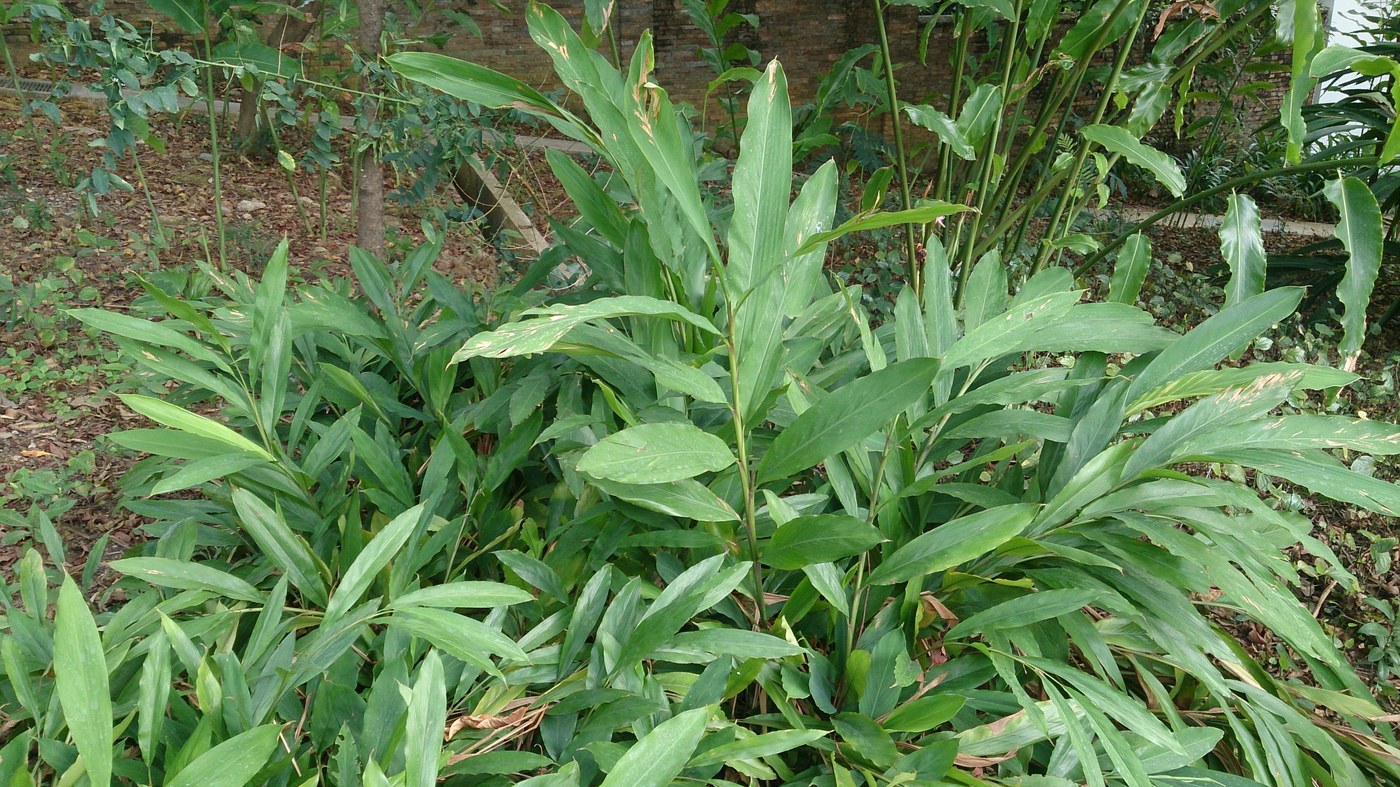
Key Identifying Features
Green cardamom (Elettaria cardamomum) is a large tropical perennial herb in the ginger family (Zingiberaceae). It grows as tall, reed-like leafy stems (pseudostems) rising from underground rhizomes, with long, lance-shaped leaves, and — crucially — flower and fruit stalks that sprawl along or near the ground, separate from the leafy shoots. The fruit is the familiar small, pale-green, three-sided ribbed pod filled with aromatic black seeds.
- Clumping plant 2–5 m (6–16 ft) tall
- Long, narrow, lance-shaped leaves on cane-like pseudostems
- Sprawling ground-level flowering stalks
- Green, three-angled ribbed seed pods
- Warm, sweet, eucalyptus-like aroma
Leaves & Stems
The leafy pseudostems are formed by tightly rolled leaf sheaths, resembling bamboo or reed canes. Leaves are large (30–60 cm long), lance-shaped (lanceolate), dark green, smooth, with pointed tips, arranged in two ranks along the stem. The plant arises from a thick branching rhizome at the soil surface. Crushed leaves are mildly aromatic.
Flowers & Fruit
Unlike the upright leafy stems, the flowering shoots emerge separately from the rhizome and sprawl horizontally along the ground. Flowers are small, white to pale green with a violet-streaked or pink-veined lip (labellum). The fruit is a small (1–2 cm) oval-to-oblong capsule, pale green, with longitudinal ribs and three sides (chambers), containing many small dark brown-black seeds. The pods are the prime ID feature.
How to Tell It Apart from Look-Alikes
- Black cardamom (Amomum subulatum): has much larger, dark brown, rough hairy pods and a smoky aroma; the plant is related but distinct.
- Ginger / turmeric (other Zingiberaceae): share reed-like leafy shoots and rhizomes, but lack the three-sided green pods and have very different flowers/rhizomes.
- Galangal: similar foliage, different rhizome and no cardamom pod.
The sprawling ground flower stalks plus small ribbed three-sided green pods confirm green cardamom.
Where You'll Find It
Native to the moist evergreen forests of the Western Ghats of southern India and Sri Lanka, cardamom is cultivated across tropical, humid, shaded plantations (India, Sri Lanka, Guatemala). It needs warm, humid, shaded understory conditions with rich, moist soil, and does not tolerate frost.
Quick ID Checklist
- Tall reed-like leafy pseudostems from a rhizome
- Long lance-shaped dark green leaves in two ranks
- Flower stalks sprawling at ground level
- Small pale-green, three-sided, ribbed pods
- Black aromatic seeds; warm sweet scent
A tall ginger-family plant with reed-like leaf canes and separate ground-creeping stalks bearing small ribbed green three-sided pods is green cardamom.
Frequently asked questions
Why do cardamom flowers grow along the ground?
In green cardamom the flowering and fruiting stalks emerge separately from the rhizome and sprawl horizontally near the soil, distinct from the tall upright leafy stems. This separation of leaf and flower shoots is a key identifying trait.
How is green cardamom different from black cardamom?
Green cardamom (Elettaria cardamomum) has small, pale-green, smooth, three-sided ribbed pods with a sweet aroma. Black cardamom (Amomum subulatum) has much larger, dark brown, rough hairy pods with a smoky flavor and comes from a different species.
What do the pods look like?
Small oval-to-oblong capsules, about 1–2 cm, pale green with lengthwise ribs and three chambers, packed with small dark brown to black aromatic seeds.
Where is cardamom grown?
It is native to the humid evergreen forests of southern India's Western Ghats and is cultivated in shaded, warm, humid tropical plantations in India, Sri Lanka, and Guatemala.