
How to Care for Castor Bean
Grow castor bean (Ricinus communis) as a bold, fast-growing ornamental with huge tropical leaves in full sun and rich, moist soil.
Read the full Castor Bean encyclopedia entry →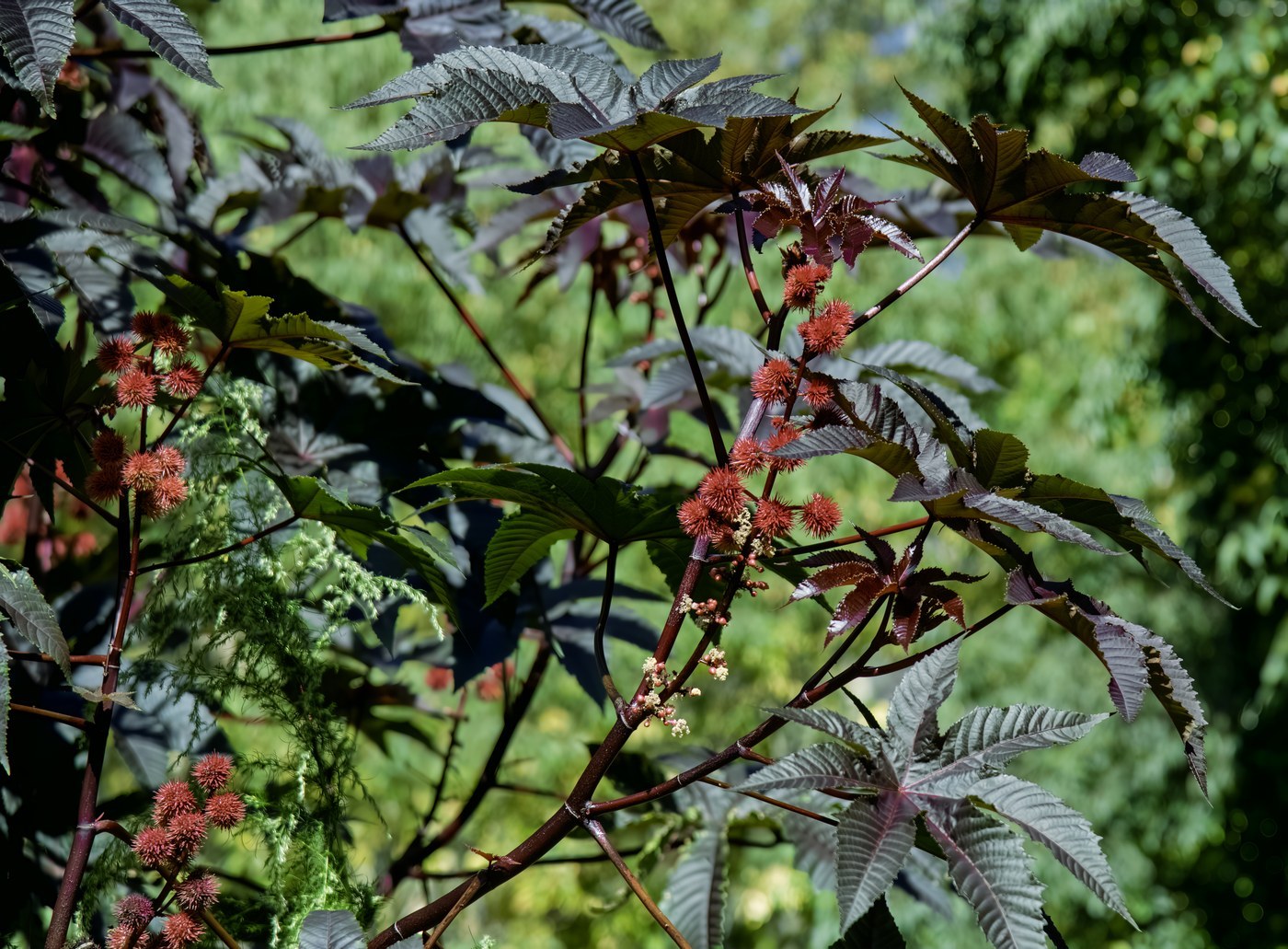
Castor bean (Ricinus communis) is a dramatic, fast-growing ornamental grown for its enormous, deeply lobed tropical leaves and towering architectural form. Often used as a bold summer accent, it is easy to grow from seed in full sun and reaches impressive size in a single season.
Light
Castor bean demands full sun for its most vigorous growth and richest leaf color, especially in the bronze and red-leaved cultivars whose pigments deepen with strong light. Give it at least six to eight hours of direct sun daily. In too much shade it grows leggy, pale, and far less imposing.
Water
Provide regular, moderate watering to sustain the plant's rapid, lush growth and huge leaves. The soil should stay evenly moist during the active growing season, particularly in heat, though the plant tolerates brief dry spells once its deep roots are down. Avoid constant waterlogging, but do not let this thirsty grower dry out for long, or the big leaves will wilt and scorch at the edges.
Soil & Potting
Grow castor bean in deep, fertile, well-drained soil rich in organic matter to fuel its fast growth. It adapts to most garden soils but performs best where compost or aged manure has been worked in. In containers use a large, heavy pot with a rich potting mix, since the tall plant becomes top-heavy and needs both root room and a stable base against wind.
Humidity & Temperature
This is a warm-climate plant, treated as a tender annual in temperate regions and killed by frost. It loves heat and thrives through hot summers. Do not plant out until the soil has warmed and all danger of frost has passed. It appreciates warmth and shelter from strong winds, which can tatter or topple the large leaves and stems.
Feeding
As a heavy feeder making prodigious growth, castor bean benefits from generous feeding. Enrich the soil at planting and supplement with a balanced fertilizer through the growing season to keep leaves large and richly colored. Regular feeding supports the plant's massive size; well-fed specimens easily tower overhead in a single summer.
Propagation
Castor bean is grown from its large seeds, which are easy to germinate. Nicking or soaking the hard seed coat overnight speeds sprouting. Start seeds indoors a few weeks before the last frost or sow directly once the soil is warm. Growth is extremely rapid, and a spring-sown seed becomes a towering plant by late summer. Handle seeds with clean hands and wash afterward.
Repotting / Pruning
Little pruning is needed; the plant's appeal lies in its bold, unbranched, tree-like form. Pinching the growing tip early encourages a bushier, multi-stemmed shape if desired. Staking is often wise for tall plants in exposed sites. In containers, repot promptly if roots fill the pot, or simply pot up into a larger vessel as the plant surges in size.
Common Problems & Pests
Castor bean is generally trouble-free. In hot, dry conditions spider mites can stipple and bronze the leaves, so maintain moisture and airflow. Watch for occasional aphids or caterpillars. Wind is a bigger threat than pests, tearing the large leaves and toppling tall stems, so provide a sheltered spot and support. Wilting usually signals underwatering.
Seasonal Care Tips
Start seeds in spring and plant out only after frost, spacing plants generously to accommodate their eventual size. Through summer, water and feed steadily to drive the spectacular growth and enjoy the bold foliage and curious spiny seed pods. In autumn the first frost blackens the plant, ending the display in cold climates; pull and compost the stems. In frost-free areas it can persist and grow woody, and pruning keeps it in bounds.
Frequently asked questions
How big does a castor bean plant get?
In a single warm season it can shoot up to 6 to 10 feet or more, with huge palmate leaves, giving a fast, dramatic tropical effect in the garden.
How do I grow castor bean from seed?
Nick or soak the large seeds overnight, then start them indoors a few weeks before the last frost or sow directly once soil is warm. Germination and subsequent growth are rapid.
Is castor bean an annual or perennial?
It is a tender perennial grown as an annual in cold climates, where frost kills it each year. In frost-free regions it can persist and become woody and shrub-like.
Why are my castor bean leaves wilting or scorched?
The large leaves lose water fast, so wilting and edge scorch usually mean the plant is too dry. Keep the soil evenly moist during heat and shelter it from drying winds.