Castor Bean
Ricinus communis
Castor bean is a fast-growing, dramatic plant with huge tropical leaves and spiny seed pods, often used as a bold ornamental for an instant tropical effect in gardens.
- Light
- Full sun
- Water
- Regular; moderate
- Difficulty
- Easy
Got a plant like this?
Identify any plant from a photo, free.
Overview
Castor bean is a vigorous plant grown for its bold, palmate leaves and architectural presence. In a single season it can reach 6-10 feet or more, giving an instant tropical look to gardens.
Native to tropical Africa and the Mediterranean, it is a woody perennial or small tree in frost-free regions but is grown as a fast annual in temperate climates.
Its thick stems, large lobed leaves, and spiny seed capsules give it a striking, architectural silhouette in the landscape.
How to identify it
- Size: Robust, reaching 6-10+ ft in one season; a small tree where frost-free.
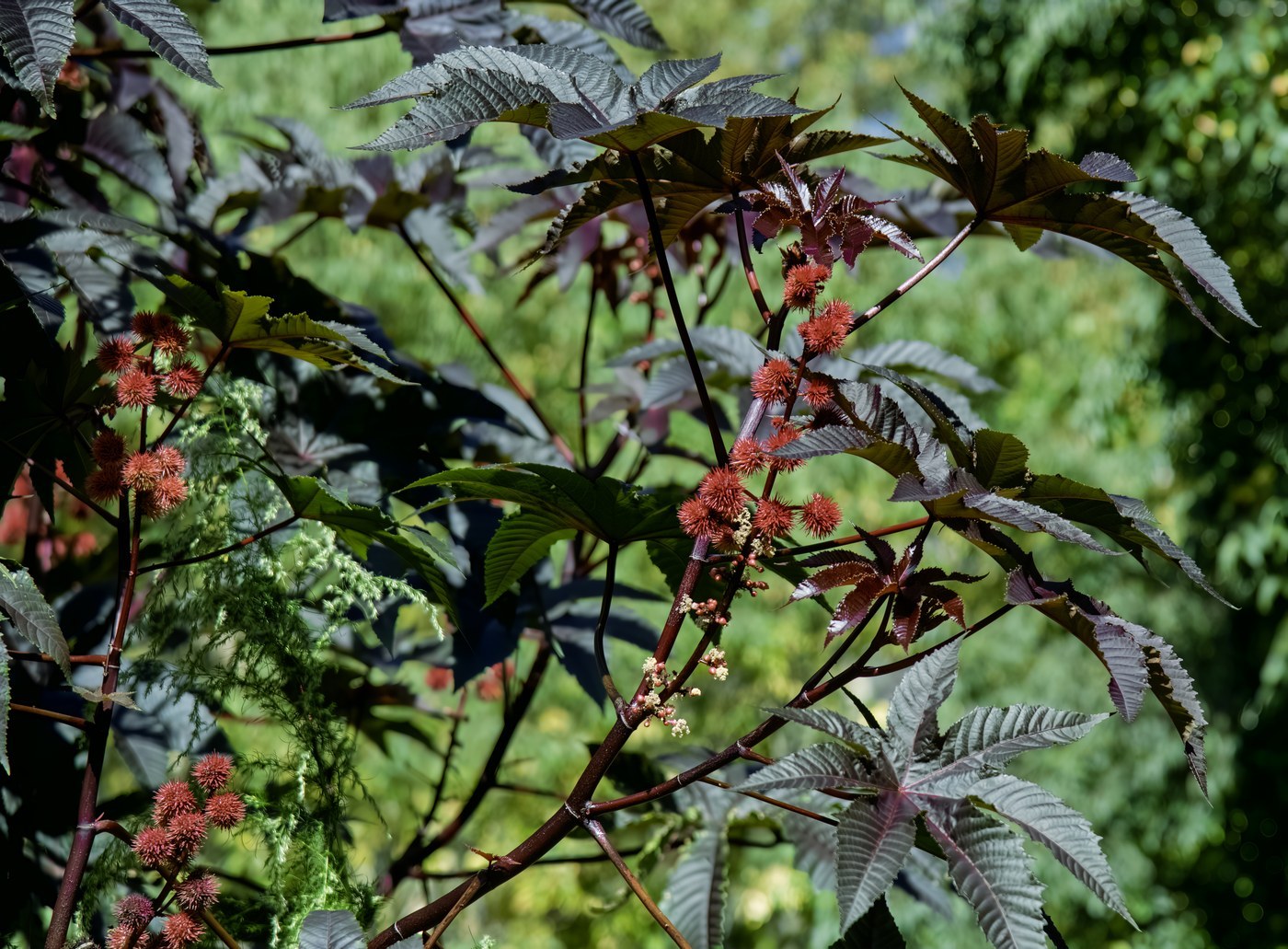
- Leaves: Very large (1-2 ft), glossy, deeply lobed palmate leaves, often bronze, red, or purple in colored cultivars.
- Stems: Thick, hollow, often red-tinged.
- Flowers: Clusters of small flowers, with spiky red female flowers above paler male flowers.
- Seed pods: Round, soft-spiny capsules containing mottled, bean-like seeds.
Care & growing
Light: Full sun for strong, upright growth.
Water: Regular, moderate watering; it appreciates steady moisture for lush leaves.
Soil: Rich, well-drained soil.
Temperature: Heat-loving and frost-tender; grown as a warm-season annual in cool climates.
Feeding: Responds to feeding with rapid, large growth.
Propagation: Grown from seed, often soaked before sowing.
Habitat & origin
Native to tropical East Africa and the southeastern Mediterranean, now naturalized throughout tropical and subtropical regions worldwide.
It grows on roadsides, riverbanks, and disturbed ground in warm climates and is cultivated as a bold ornamental for its dramatic foliage.
Frequently asked questions
How big does it get?
In one warm season it can reach 6-10 feet or more, and in frost-free climates it grows into a small woody tree.
What do the leaves look like?
They are very large, up to 1-2 feet across, glossy, and deeply lobed in a palmate, star-like shape. Colored cultivars show bronze, red, or purple tones.
Where does castor bean grow?
Native to tropical East Africa and the southeastern Mediterranean, it is now naturalized across warm regions worldwide on roadsides, riverbanks, and disturbed ground.
How do I grow it for a tropical look?
Give it full sun, rich soil, and regular water. It is heat-loving and frost-tender, so grow it as a warm-season annual in cool climates for fast, dramatic foliage.
Castor Bean guides
In-depth guides for identifying, growing, and caring for Castor Bean.
How to Care for Castor Bean
Grow castor bean (Ricinus communis) as a bold, fast-growing ornamental with huge tropical leaves in full sun and rich, moist soil.
Castor Bean Identification Guide
Identify castor bean (Ricinus communis) by its huge star-shaped lobed leaves, reddish stems, and spiny seed pods holding mottled, bean-like seeds.