Catalpa Tree Identification Guide
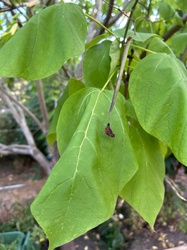
How to identify Catalpa trees by their giant heart-shaped leaves, showy white bell-flowers, and long slender bean-like seed pods.
Read the full Catalpa Tree encyclopedia entry →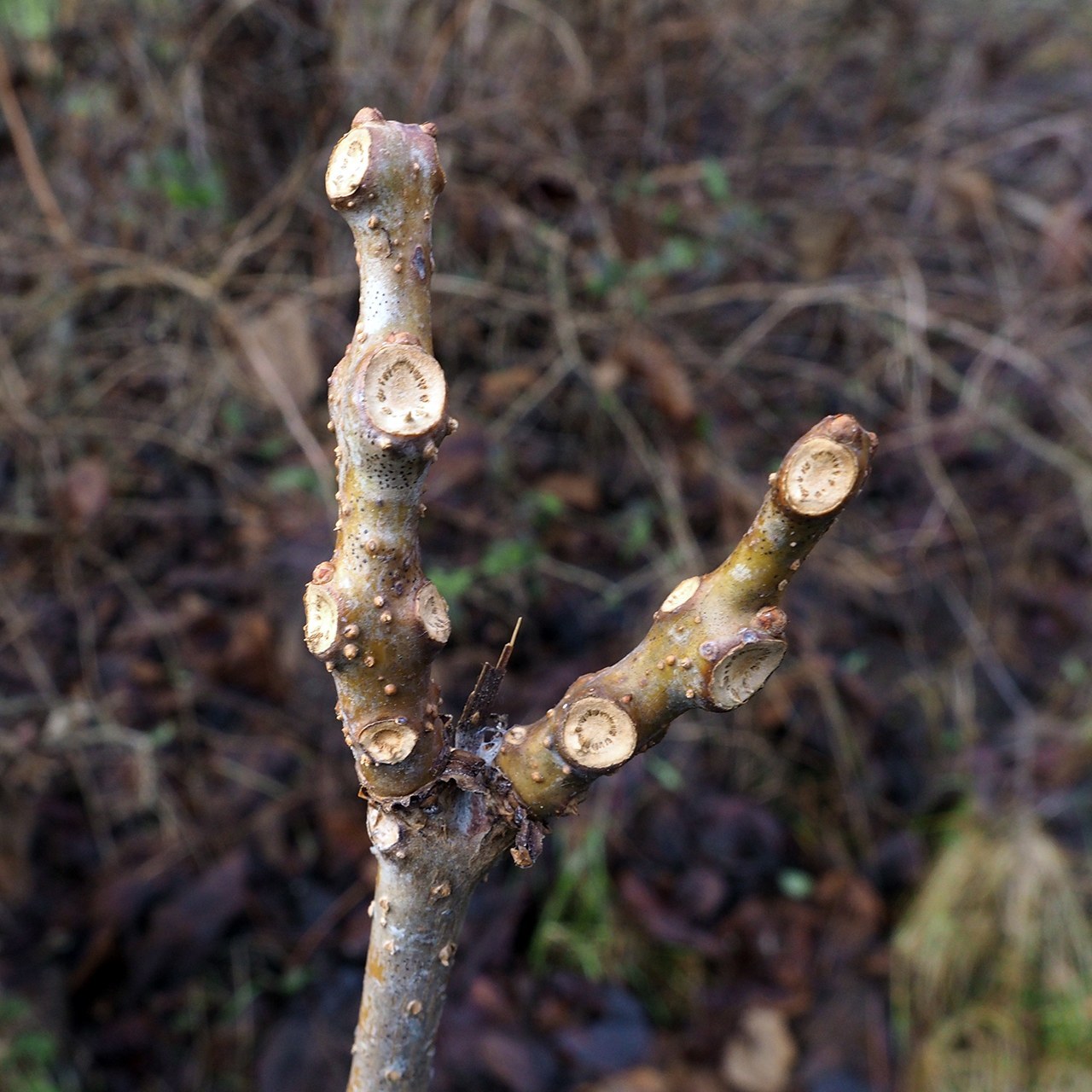
Key Identifying Features
Catalpa trees (Catalpa bignonioides, the Southern Catalpa, and C. speciosa, the Northern Catalpa) are easy to spot thanks to three standout traits:
- Huge heart-shaped leaves up to 25-30 cm long
- Showy clusters of white trumpet flowers in early summer
- Long, narrow, cigar- or bean-like seed pods that dangle through winter
They are medium-sized deciduous trees, typically 10-18 m tall, with a broad, irregular, spreading crown.
Leaves & Stems
The leaves are the most reliable feature year-round. They are large, broadly heart-shaped (ovate to cordate), with a pointed tip and smooth (untoothed) margins. Leaves are arranged in whorls of three or in opposite pairs — a useful detail, since most large-leaved trees are alternate. The upper surface is bright green; the underside is paler and often slightly hairy. Crushed leaves of C. bignonioides give off a faintly unpleasant smell.
Twigs are stout, and the leaf scars are large and rounded. The bark is grayish-brown, ridged or scaly. New growth appears late in spring, so a leafless Catalpa in May is normal.
Flowers & Fruit
- Flowers appear in June-July in large upright pyramidal panicles. Each bloom is a 2-5 cm white bell with frilled lobes, marked inside with yellow stripes and purple/brown spots and freckles — orchid-like and fragrant.
- Fruit is the signature feature: long, slender, hanging pods 20-45 cm long (longest in Northern Catalpa), green ripening to dark brown. They split open to release flat, papery, fringe-winged seeds. The pods persist on bare branches all winter, giving the tree the nicknames "Indian bean tree" and "cigar tree."
How to Tell It Apart from Look-Alikes
- Northern vs. Southern Catalpa: Northern (C. speciosa) has larger leaves with a long-pointed (taper) tip, fewer/larger flowers with fainter spotting, and thicker-walled pods; Southern (C. bignonioides) has more densely spotted flowers and thinner pods. Crushed Southern leaves smell unpleasant; Northern leaves are nearly odorless.
- Paulownia (Empress Tree) also has huge heart-shaped leaves but bears purple foxglove-like flowers and egg-shaped woody capsules, not long bean pods.
- Basswood/Linden has heart-shaped leaves but they are toothed and the tree bears small fragrant flowers with a leafy bract, not trumpets or pods.
Where You'll Find It
Native to the central and southeastern United States, Catalpas are widely planted as ornamental and street/park trees across temperate North America and Europe. They thrive in moist soils along streams, fencerows, and disturbed ground, and tolerate urban conditions well.
Quick ID Checklist
- Very large heart-shaped leaves, untoothed, in whorls or pairs
- White frilled trumpet flowers with yellow and purple markings (early summer)
- Long, slender bean-like pods hanging into winter
- Stout twigs with large round leaf scars
- Broad, irregular spreading crown; leafs out late
Frequently asked questions
Why does a Catalpa have those long bean pods if it isn't a legume?
Catalpa belongs to the Bignoniaceae (trumpet-vine family), not the bean family. The pods only resemble giant beans; their seeds are flat and papery-winged, not bean-like, and they hang on bare branches all winter.
How do I distinguish a Catalpa from an Empress Tree (Paulownia)?
Both have huge heart-shaped leaves, but Catalpa has white trumpet flowers and long bean-like pods, while Paulownia has purple foxglove-shaped flowers and rounded woody seed capsules.
Is the Catalpa's leaf arrangement opposite or whorled?
Both occur. Leaves are often in whorls of three around the twig, or in opposite pairs. This whorled/opposite pattern on such a large-leaved tree is a strong identification clue.
When do Catalpa trees flower?
In early summer, typically June to July, when the crown fills with large upright clusters of white frilled trumpet flowers marked with yellow and purple inside.
Catalpa Tree identified by the community
Recent Catalpa Tree specimens identified with Plant Identifier.